
By Mukhtar Ya’u Madobi
Energy remains one of the most critical drivers of national development. Across the world, access to reliable electricity serves as the foundation upon which other sectors—including healthcare, education, agriculture, industrialization, and commerce—thrive.
Recognizing this reality, Nigeria has continued to pursue universal access to affordable, reliable, and sustainable electricity as a means of improving living standards and expanding economic opportunities, particularly for unserved and underserved communities.
To achieve this objective, the Federal Government established the Rural Electrification Agency (REA), a specialized institution responsible for expanding electricity access through sustainable and renewable energy solutions across Nigeria.
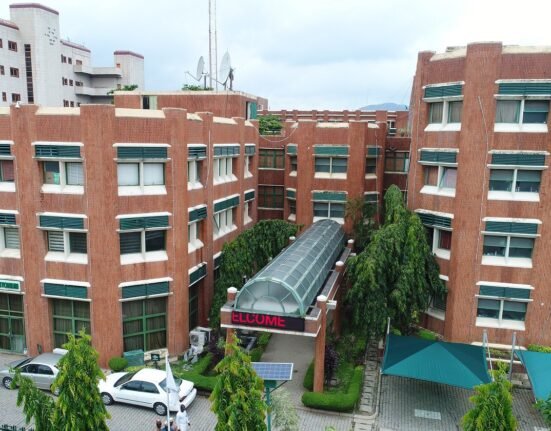
The Rural Electrification Agency (REA) is an implementing agency of the Federal Government of Nigeria under the Federal Ministry of Power. It is charged with electrifying unserved and underserved communities to stimulate economic growth and improve the quality of life of Nigerians.
The agency was originally established under the Electric Power Sector Reform Act (EPSRA) of 2005 to promote and support rural electrification nationwide. Its continued existence and expanded mandate were further reinforced under Section 127 of the Electricity Act, 2023.
To fulfil its mandate, REA develops and implements electrification projects, facilitates private-sector participation, and manages strategic programmes aimed at increasing electricity access across the country.

Key Functions of REA
The agency is mandated to:
Provide reliable and affordable electricity to communities without access to the national grid.
Develop and implement rural electrification projects.
Promote renewable energy solutions, including solar mini-grids and solar home systems.
Manage the Rural Electrification Fund (REF), which supports private-sector investments in rural energy projects.
Create an enabling environment for private developers through feasibility studies, energy audits, stakeholder engagement, and project coordination.
Roles of REA in Expanding Electricity Access Across Communities
Nigeria continues to face one of the world’s largest electricity access deficits. According to the World Bank’s 2025 report, approximately 86.8 million Nigerians lack access to electricity—the highest number globally. This marked the third consecutive year that Nigeria ranked among the countries with the largest electricity access gaps.
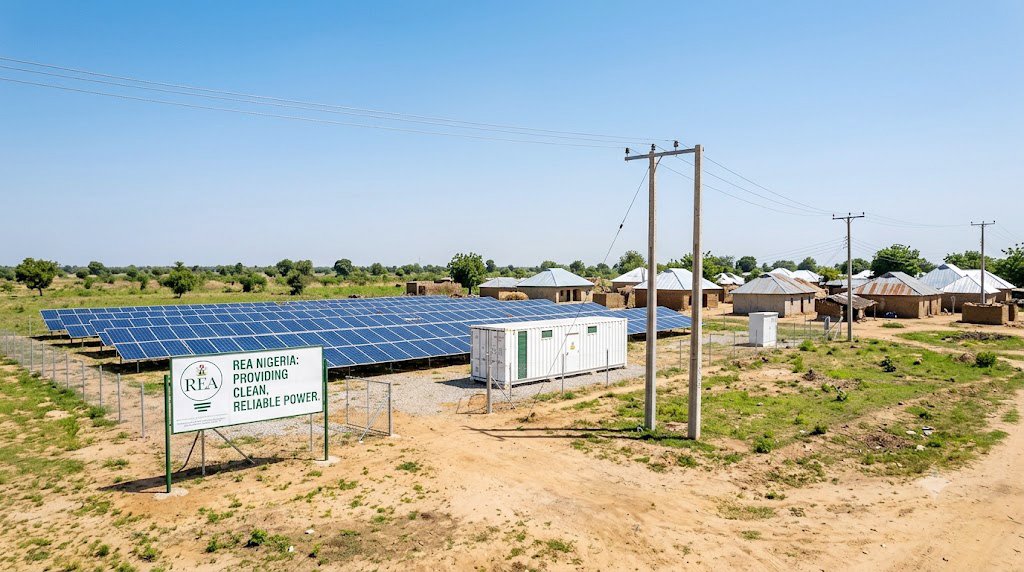
The establishment of REA was therefore a strategic response to this challenge. Through grid extensions, solar mini-grids, and standalone solar systems, the agency provides electricity to homes, schools, hospitals, farms, markets, and businesses in areas where conventional power infrastructure is unavailable or unreliable.
Over the years, REA-supported projects have transformed rural communities by improving healthcare delivery, educational outcomes, agricultural productivity, and economic activities.
In August 2023, the agency’s former Managing Director and Chief Executive Officer, Ahmad Salihijo, disclosed that REA had deployed over 103 mini-grids nationwide under the Nigeria Electrification Project (NEP). By delivering clean, decentralized electricity to off-grid communities, these installations have enhanced livelihoods, empowered small businesses, improved healthcare services, expanded educational opportunities, and reduced dependence on fossil fuels.

Major Programmes Implemented by REA
To expand electricity access nationwide, REA implements several strategic programmes and interventions.
- Nigeria Electrification Project (NEP)
The Nigeria Electrification Project (NEP) was launched in 2018 through a partnership between the Federal Government, the World Bank, the African Development Bank (AfDB), and other development partners. It is a private sector-driven initiative implemented by REA to provide energy access to under-served and unserved communities through renewable energy technologies.
The project promotes electricity access for households, Micro, Small and Medium Enterprises (MSMEs), and public educational institutions through four major components:
Solar Hybrid Mini-Grids
Standalone Solar Home Systems
Energizing Education Programme (EEP)
Technical Assistance and Capacity Building
By February 2026, REA reported that more than 1.1 million households had been electrified through over 200 mini-grid projects implemented under NEP.
- Distributed Access through Renewable Energy Scale-Up (DARES)
The Distributed Access through Renewable Energy Scale-Up (DARES) programme is a World Bank-supported initiative aimed at expanding clean energy access across Nigeria.
The project seeks to provide reliable electricity to approximately 17.5 million Nigerians through mini-grids and standalone solar systems while supporting more than 200,000 MSMEs by 2030.
According to REA, the programme secured $750 million in funding in 2024 and is expected to attract an additional $1.1 billion in private-sector investment. The project plans to deploy approximately 1,350 new mini-grids nationwide. - Energizing Education Programme (EEP)
The Energizing Education Programme seeks to provide sustainable electricity to 37 federal universities and seven university teaching hospitals across Nigeria.
The programme aims to deliver a combined 89.6 megawatts of power, install solar-powered street lighting, and establish renewable energy training centres for students and researchers.
Phases I and II, implemented in partnership with the World Bank, have significantly improved power supply in beneficiary institutions, enhancing academic research, healthcare services, and student welfare.
Phase III, funded by the African Development Bank under NEP, is currently under implementation across eight universities representing Nigeria’s six geopolitical zones. The phase is expected to provide reliable electricity to over 148,000 students, install 250 streetlights, and save approximately 6.08 kilotons of carbon emissions annually. - Korean Energy Project (KEP)
The Korean Energy Project is a collaborative initiative between Nigeria and the Republic of Korea aimed at deploying solar mini-grids in rural communities.
Supported by approximately $12.4 million in funding, the project aligns with Nigeria’s ambition of achieving 30 gigawatts of installed electricity capacity by 2030, with 30 per cent generated from renewable energy sources.
In February 2026, REA and the Government of Korea commissioned a one-megawatt clean energy project in Rubochi and Ikwa communities of Kuje Area Council, Federal Capital Territory. The project provides reliable electricity to more than 4,000 homes, businesses, schools, and healthcare facilities. - Energizing Economies Initiative (EEI)
The Energizing Economies Initiative provides clean off-grid electricity to economic clusters, markets, industrial centres, and commercial hubs.
Implemented through private-sector investment, the programme targets over 80,000 shops across 16 economic clusters and seeks to empower more than 340,000 MSMEs while creating over 2,500 jobs.
By 2023, approximately 12,000 businesses had benefited from renewable energy solutions under the initiative. Notable projects include the Sura Shopping Complex Independent Power Project in Lagos and the Ariaria International Market Power Project in Aba, Abia State. - e-Healthcare, Education, Agriculture, Rural Development and Transportation (e-HEART)
The e-HEART initiative is a comprehensive development programme that integrates renewable energy solutions into critical sectors including healthcare, education, agriculture, transportation, and rural development.
Backed by a $1.7 billion investment from development partners, the initiative aims to electrify over 3,700 primary healthcare centres, schools, communities, and transport infrastructure across Nigeria.
REA reports that nearly 200,000 electricity connections have already been established under the programme. - Global Cleantech Innovation Programme (GCIP)
GCIP is a United Nations Industrial Development Organization (UNIDO)-coordinated programme funded by the Global Environment Facility (GEF) to promote clean technology innovation and entrepreneurship.
Implemented in Nigeria through partnerships involving the Federal Ministry of Science, Technology and Innovation, REA, and Co-Creation Hub (CCHub), the programme supports clean-tech startups and SMEs to become investment-ready and commercially viable enterprises.
In May 2026, REA launched the GCIP Nigeria Accelerator Fund, offering grants of up to $20,000 to support innovative clean-energy businesses. - Solar Power Naija
Solar Power Naija is a flagship Federal Government initiative aimed at connecting 25 million Nigerians through five million new solar-based electricity connections.
Supported by a ₦140 billion intervention facility from the Central Bank of Nigeria, the programme also seeks to stimulate local solar manufacturing and create approximately 250,000 jobs.
The initiative forms a major component of Nigeria’s Economic Sustainability Plan and remains central to the country’s renewable energy expansion strategy. - Rural Electrification Fund (REF)
The Rural Electrification Fund serves as REA’s primary financing mechanism for supporting private-sector-led electrification projects.
The fund provides grants and incentives to renewable energy developers and facilitates collaboration with state governments through counterpart funding arrangements.
Recent interventions have attracted over ₦5.8 billion in private-sector investments, with dozens of companies partnering to deploy solar mini-grids and solar home systems nationwide. - Energizing Agriculture Programme (EAP)
The Energizing Agriculture Programme integrates renewable energy infrastructure with productive agricultural activities to improve rural livelihoods and strengthen food systems.
Through partnerships involving REA, the Rocky Mountain Institute (RMI), and the Global Energy Alliance for People and Planet (GEAPP), the programme seeks to modernize agricultural value chains while reducing poverty and enhancing economic opportunities.
If fully implemented, the programme could positively impact nearly four million Nigerians and support more than 150,000 jobs. - Africa Mini-grids Programme (AMP)
The Africa Minigrids Programme is a $50 million technical assistance initiative designed to accelerate solar-battery mini-grid deployment across Africa.
Funded by the Global Environment Facility and implemented by the United Nations Development Programme in partnership with the African Development Bank and RMI, the programme supports energy market transformation in 21 African countries, including Nigeria. - National Public Sector Solarization Initiative (NPSSI)
The National Public Sector Solarization Initiative is a landmark programme aimed at replacing costly diesel-powered electricity generation in public institutions with clean solar energy systems.
Implemented in collaboration with the Budget Office of the Federation, Infrastructure Corporation of Nigeria (InfraCorp), and the Ministry of Finance Incorporated (MOFI), the initiative targets hospitals, tertiary institutions, military formations, police facilities, correctional centres, and government agencies.
The programme worth N100bn seeks to reduce energy costs, improve operational efficiency, and ensure uninterrupted power supply for critical public services.

Way Forward for REA
To further expand electricity access across Nigeria, the Rural Electrification Agency (REA) should strengthen partnerships with the private sector and development partners, accelerate the deployment of renewable energy solutions, and promote local manufacturing of solar energy components. The agency should also enhance project monitoring and maintenance, encourage community participation, and support productive uses of electricity to drive economic growth.
Additionally, leveraging the opportunities provided by the Electricity Act 2023, investing in innovation and technical capacity, and adopting data-driven planning will help improve programme efficiency and sustainability. With sustained funding and stakeholder collaboration, REA can play an even greater role in achieving universal electricity access and advancing Nigeria’s socio-economic development.
Last Line
The Rural Electrification Agency has emerged as one of Nigeria’s most impactful institutions in the quest for universal energy access and sustainable development. Through innovative programmes, strategic partnerships, and a strong commitment to renewable energy deployment, the agency continues to bridge the country’s electricity access gap while empowering communities and stimulating economic growth.
As Nigeria pursues its energy transition agenda and broader development goals, the role of REA will become increasingly significant. Beyond simply providing electricity, the agency is helping to transform healthcare delivery, improve educational outcomes, boost agricultural productivity, support entrepreneurship, and create pathways out of poverty for millions of Nigerians.
The success of these interventions demonstrates that expanding energy access is not merely an infrastructure challenge—it is a catalyst for national development. Sustained investment, policy support, and stronger private-sector participation will therefore be essential to ensuring that every Nigerian, regardless of location, has access to reliable, affordable, and sustainable electricity. In that regard, the Rural Electrification Agency remains at the forefront of powering Nigeria’s inclusive growth and sustainable future.

Leave feedback about this