

By Comrade Dominic Ogakwu
The long-term economic sustainability of any nation is fundamentally tied to its ability to identify, harness, process, and efficiently utilize its local raw materials for industrial pro-duction and national development.
Countries that have successfully industrialized did not merely rely on exporting raw commodities; rather, they invested in systems that transformed local resources into finished goods, technological products, and industrial inputs capable of driving domestic growth and international competitiveness.
For developing economies, particularly resource-rich nations such as Nigeria, the strategic utilization of indigenous raw materials is not simply an economic option—it is an imperative for national survival, industrial self-reliance, and economic sovereignty.
Dependence on imported finished products and industrial inputs continues to expose many economies to external shocks, foreign exchange volatility, inflationary pressures, and supply chain disruptions. In contrast, countries that prioritize local resource processing and value addition are better positioned to create jobs, stimulate manufacturing, strengthen research and development (R&D), and build resilient industrial ecosystems.
Beyond industrial expansion, the effective development of local raw materials also generates broad socioeconomic benefits. Increased manufacturing activity stimulates employment opportunities across multiple sectors, including mining, agriculture, transportation, logistics, engineering, science, and technology. It supports small and medium-scale enterprises, promotes rural industrialization, reduces poverty, and expands government revenue through taxation and export earnings. More importantly, it enhances Gross Domes-tic Product (GDP) growth while improving living standards and reducing overdependence on foreign imports.
Recognizing the strategic importance of local resource development, successive Nigerian governments initiated policies and institutional frameworks aimed at promoting value addition and industrial self-sufficiency. Central to this national objective was the establishment of a specialized institution responsible for coordinating research, development, sourcing, and utilization of indigenous raw materials for industrial growth.
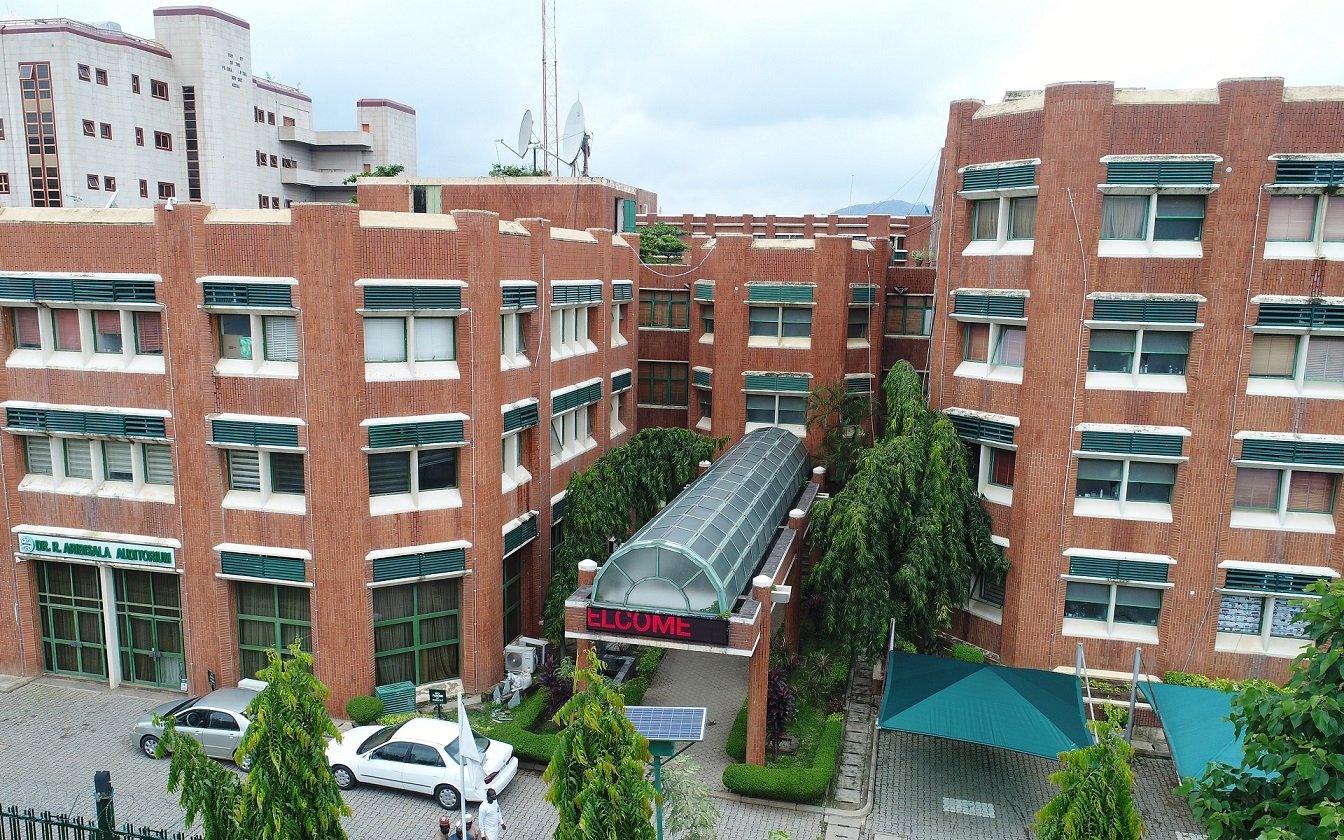
It was within this context that the Raw Materials Research and Development Council (RMRDC) was established during the reign of General Ibrahim Badamasi Babangida through Decree 39 of 1987, now codified as the RMRDC Act 2022. The Council formally commenced operations on February 10, 1988, in Lagos before relocating its headquarters to Abuja. Today, the institution maintains coordinating offices in all 36 states of the federation and the Federal Capital Territory, enabling it to engage directly with local industries, researchers, investors, and communities across the country.
Operating under the Federal Ministry of Innovation, Science and Technology, RMRDC serves as Nigeria’s apex institution for the promotion, development, and utilization of local raw materials. Its broad mandate includes reducing dependence on imported industrial inputs, strengthening domestic manufacturing capacity, encouraging scientific re-search, and facilitating industrial innovation through strategic policy interventions and partnerships.
Over the years, the Council has emerged as a critical driver of Nigeria’s industrialization agenda. Through policy advocacy, research commercialization, value-chain development, and industrial linkages, RMRDC has contributed significantly to the growth of resource-based industries and the promotion of local content across strategic sectors of the economy.
Mandate and Strategic Focus
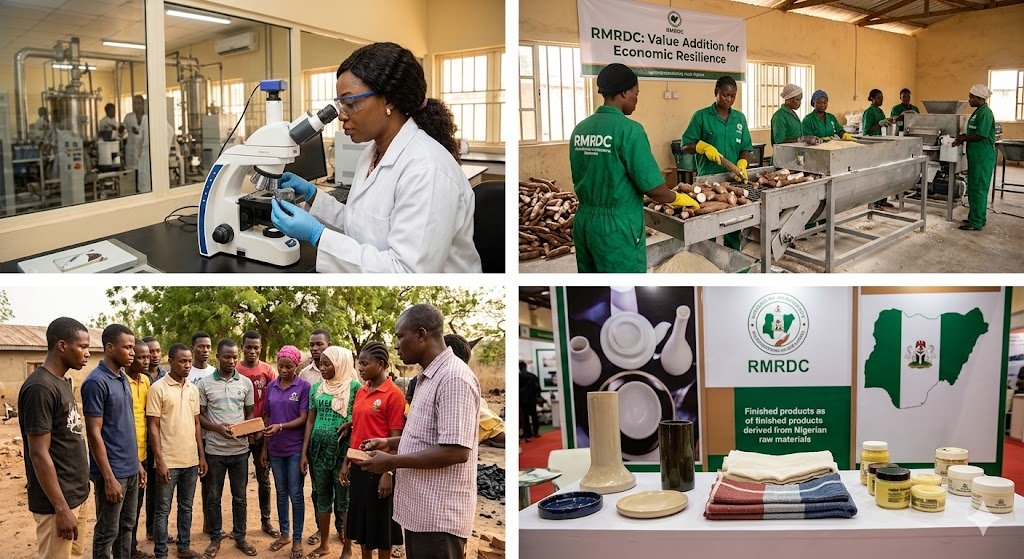
The Council’s mandate reflects Nigeria’s broader aspiration to transition from a raw commodity-exporting economy into a diversified industrial nation driven by value addi-tion, technological innovation, and sustainable resource management. Its functions span several interconnected areas essential to industrial transformation.
Policy Formulation: Formulate, evaluate, and implement policy guidelines and action programmes regarding raw material acquisition, exploitation, and development.
Resource Management: Review the availability and utilization of local raw materials to advise the Federal Government on strategic policies, such as depletion, conservation, and stockpiling.
Research & Development (R&D): Initiate, support, and promote R&D initiatives, including in-plant research capabilities in both academic and industrial settings.
Industrial Promotion: Encourage the local sourcing of raw materials by industries, re-ducing foreign exchange dependencies.
Technology Advancement: Advise on and facilitate the adoption of machinery, tech-nology, and, innovative processes to improve raw material usage.
Information Management: Set up data banks, organize workshops, and disseminate findings on raw materials to industries.
Quality Standardization: Create analytical laboratories and set standards for raw ma-terials to meet industrial specifications.
Awards and Recognition: Develop incentives or awards for industrial breakthroughs, innovations, and inventions in the sector.
Leadership And Institutional Momentum
While institutional mandates provide direction, effective implementation depends largely on visionary leadership and administrative efficiency. In May 2024, President Bola Ahmed Tinubu appointed Professor Nnanyelugo Martin Ike-Muonso as the sixth substantive Di-rector-General and Chief Executive Officer of RMRDC.
Since assuming office, Professor Ike-Muonso has intensified efforts aimed at repositioning the Council as a more innovation-driven and industry-oriented institution. Under his leadership, the Council has pursued reforms focused on local content expansion, digital transformation, infrastructure modernization, stakeholder engagement, and institutional efficiency.
His administration has emphasized the importance of linking scientific research with in-dustrial production while strengthening Nigeria’s capacity for self-reliant manufacturing. This strategic orientation aligns with broader national goals of economic diversification, industrial competitiveness, and sustainable development.
National Raw Materials Mapping and Digital Database Expansion
Among the Council’s flagship initiatives is the National Raw Materials Mapping and Data-base Update Project, designed to modernize Nigeria’s industrial raw materials database and improve access to critical resource information.
The project, currently implemented in multiple states including Zamfara, Kogi, Edo, Enu-gu, and Cross River, involves comprehensive field mapping, resource identification, and digital documentation of available industrial raw materials across the country.
By digitizing Nigeria’s raw materials inventory, the initiative seeks to provide manufac-turers, investors, researchers, and policymakers with accurate and accessible data for planning and investment decisions. The project also has significant implications for eco-nomic planning and national security. Improved resource mapping can support better regulation of extractive activities, reduce illegal mining operations, and strengthen trans-parency within the raw materials sector.
Further consolidating this effort, RMRDC launched the Nigerian Statistical Information System for Products and Raw Materials in April 2026. The digital platform provides real-time information on resource deposits and industrial materials across Nigeria.
The system represents a major step toward data-driven industrial policy and investment planning. It enhances transparency, supports evidence-based decision-making, and pro-motes investor confidence in Nigeria’s industrial resource base.
Advancing Quality Assurance and International Standards
In industrial production, quality assurance remains a critical determinant of market ac-ceptance and export competitiveness. Recognizing this reality, RMRDC has continued to strengthen its laboratory and testing capabilities.
A major milestone was achieved on November 16, 2024, when the Council’s laboratory received ISO/IEC 17025 accreditation from the Nigerian National Accreditation System (NiNAS). The certification confirmed the laboratory’s compliance with internationally recognized standards for testing and calibration.
It also positions the Council as a national reference center for quality validation and in-dustrial materials certification, thereby strengthening Nigeria’s industrial standards infra-structure.
Waste-to-Wealth Innovation and Circular Economy Development
One of the emerging areas of focus for RMRDC is the promotion of circular economy practices through waste valorization and resource recovery initiatives.
A notable example is the development of biodegradable crack-filling materials derived from chitosan extracted from seafood shell waste. This innovative project demonstrates how industrial and agricultural waste can be converted into useful infrastructure materi-als while simultaneously addressing environmental concerns.
Similarly, the Council’s research into sodium silicate production from rice husk ash and other agricultural residues highlights the enormous potential of agro-industrial waste uti-lization. Sodium silicate is widely used in detergents, ceramics, adhesives, water treat-ment, and construction industries.
Local production of such industrial inputs can significantly reduce import dependence, conserve foreign exchange, and support domestic manufacturing industries.
Biotechnology and Pharmaceutical Innovation
RMRDC has also expanded its engagement within biotechnology and pharmaceutical re-search, recognizing the growing importance of bio-based industries in global economic development.
In collaboration with institutions such as the National Biotechnology Development Agency (NABDA), the University of Nigeria, Nsukka, and the Sheda Science and Tech-nology Complex (SHESTCO), the Council developed a blueprint for establishing a Na-tional Microbial Culture Collection Centre.
The proposed center is expected to support industrial biotechnology research, microbial preservation, pharmaceutical development, food processing, and quality control systems. Importantly, it will help reduce Nigeria’s dependence on imported microbial cultures and industrial biological inputs.
The Council is equally promoting research into plant-based pharmaceutical materials, in-cluding analgesic products derived from Ximenia americana. Such initiatives demonstrate the untapped medicinal and commercial value of Nigeria’s biodiversity.
If effectively commercialized, these projects could strengthen Nigeria’s pharmaceutical manufacturing sector, reduce healthcare import costs, and encourage investment in in-digenous medicinal research.
Digital Transformation and Institutional Modernization
In response to the demands of the digital economy, RMRDC has intensified efforts to modernize its operational systems and improve institutional efficiency through technolo-gy-driven solutions.
The implementation of a Performance Management System (PMS) across the Council is aimed at improving accountability, automating staff evaluation processes, and enhancing organizational productivity nationwide.
The Council has also established a Special Digital Automation Unit responsible for de-veloping technology solutions capable of supporting research and industrial planning.
One of the outcomes of this initiative is the development of an AI-powered Research Assistant—a web-based platform that enables users to interact with Nigeria’s raw mate-rials database using natural language queries, including major Nigerian languages.
This innovation represents a significant advancement in knowledge accessibility, data management, and digital inclusion within Nigeria’s industrial research ecosystem.
Local Manufacturing and Industrial Substitution
A critical component of Nigeria’s industrialization strategy involves reducing reliance on imported industrial materials through local production and processing.
In this regard, RMRDC has intensified efforts to support local manufacturing of non-woven fabrics for medical and industrial applications. These materials are widely used in healthcare products, protective equipment, packaging, and industrial filtration systems.
The Council is also promoting the commercialization of locally processed talc for phar-maceutical and industrial purposes. Nigeria possesses substantial talc deposits, yet local industries have historically relied heavily on imported processed materials.
Additionally, the Council has pursued initiatives to modernize traditional food processing systems for products such as kuli-kuli and dakuwa. These interventions seek to improve hygiene, quality standards, packaging, and market competitiveness for indigenous food products.
Such efforts not only support food security and agro-industrial development but also create opportunities for small-scale entrepreneurs and rural processors.
Strategic Partnerships and Stakeholder Engagement
Recognizing that industrial transformation requires collaborative action, RMRDC contin-ues to strengthen partnerships with public institutions, financial organizations, research agencies, and private sector stakeholders.
In April 2026, the Council signed a Memorandum of Understanding with the Bank of In-dustry aimed at strengthening agricultural value chains and supporting value addition across critical sectors.
The partnership focuses on addressing constraints related to production, processing, storage, financing, and distribution—areas that continue to limit industrial growth and agro-processing development in Nigeria.
RMRDC has also intensified advocacy for increased utilization of locally sourced materi-als in aquaculture feed production. The high cost of imported feed ingredients has re-mained a major challenge within Nigeria’s fisheries sector.
Promoting local feed inputs not only reduces production costs but also minimizes foreign exchange exposure while encouraging local agricultural production.
The Council’s collaboration with the Nigeria Association of Women Journalists (NA-WOJ), FCT Chapter, further reflects its commitment to inclusive industrial development and women’s economic empowerment within the raw materials value chain.
Challenges and the Road Ahead
Despite these achievements, significant challenges remain. Nigeria’s industrial sector con-tinues to grapple with inadequate infrastructure, unstable power supply, limited industri-al financing, policy inconsistencies, weak technology commercialization systems, and low private sector investment in research and development.
There is also the persistent challenge of illegal mining, poor resource governance, and insufficient local processing capacity across many sectors.
Addressing these issues will require sustained political commitment, stronger inter-agency coordination, increased investment in industrial infrastructure, and greater col-laboration between government, academia, and industry.
Equally important is the need to strengthen intellectual property protection, expand in-dustrial research funding, and create incentives for local manufacturers to adopt indige-nous raw materials.
Conclusion: Engineering Nigeria’s Industrial Future
The trajectory of Nigeria’s economic transformation is increasingly tied to its ability to convert resource endowment into industrial capability. The Raw Materials Research and Development Council stands at the center of this transition—bridging science, policy, and industry.
Through strategic leadership, technological innovation, and multi-sectoral collaboration, RMRDC is redefining the architecture of Nigeria’s industrial ecosystem. Its initiatives—from digital resource mapping and laboratory accreditation to waste valorization and pharmaceutical innovation—demonstrate a deliberate shift toward self-reliance and sus-tainable growth.
However, the true measure of success will lie in scaling these interventions, deepening private sector integration, and ensuring policy continuity. If sustained, the Council’s ef-forts could significantly reduce import dependency, stabilize foreign exchange pressures, and unlock new frontiers of economic prosperity.
In a global economy increasingly driven by value addition and knowledge systems, Nige-ria’s pathway to resilience is clear: transform what it has into what it needs—and ulti-mately, into what the world demands.



Leave feedback about this