

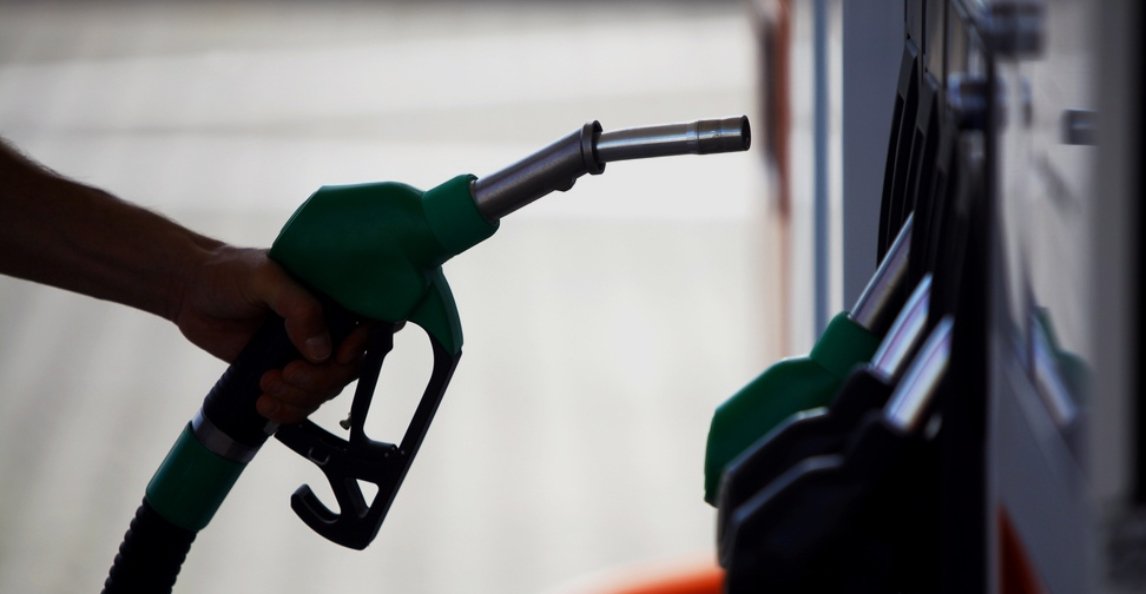
The renewed debate over fuel subsidy in Nigeria has drawn differing political positions but growing resistance from economists and key petroleum industry stakeholders, who argue that the country should focus on targeted interventions, domestic refining and fiscal sustainability rather than revive the former blanket subsidy regime.
The controversy was reignited by the presidential candidate of the African Democratic Congress (ADC) and former Vice President, Atiku Abubakar, who recently pledged to restore fuel subsidy if elected president in 2027.
Atiku said his proposal formed part of his economic recovery plan and would involve subsidising fuel from crude oil production rather than refined petroleum product imports.
His position marks a departure from his earlier advocacy for subsidy removal, which he had supported since 1999.
The proposal has since attracted reactions from President Bola Ahmed Tinubu’s administration and other opposition figures.
Tinubu’s first major policy announcement after assuming office on May 29, 2023, was the removal of fuel subsidy, which became widely associated with his declaration, “fuel subsidy is gone.”
The policy took effect immediately and triggered a sharp increase in petrol pump prices, with knock-on effects on inflation, transportation and household expenses.
Reports show that petrol prices, which stood at a national average of N545 per litre before the policy took effect, had risen to between N1,230 and N1,299 per litre in Abuja and its environs as of August 24, 2026.
Three years after the subsidy was removed, the Tinubu administration said the policy generated N15.8 trillion in savings between June 2023 and December 2025.
The Minister of Finance, Taiwo Oyedele, said the Federal Government, states and local governments received N5.43 trillion, N6.52 trillion and N3.88 trillion respectively from funds mobilised following the subsidy removal.
Oyedele, however, disclosed that the administration spent an additional N30.64 trillion during the same period on wage adjustments, debt, infrastructure and electricity subsidies.
Atiku has dismissed the government’s explanation of how the savings were utilised, arguing that the figures do not adequately account for the benefits Nigerians should have received from the policy.
He has consequently maintained his position that subsidy should be restored under his proposed economic programme.
Former Anambra State governor and presidential candidate of the Labour Party, Peter Obi, however, disagreed with Atiku on the proposed reversal.
Speaking at the Nigerian Bar Association conference in Rivers State on Monday, Obi said the proceeds from subsidy removal had been poorly managed by the Tinubu administration but maintained that this was not sufficient justification for restoring the subsidy.
“I subscribe and maintain that you need to remove subsidy. Mismanagement of the proceeds shouldn’t be the reason for not removing it,” he said.
As the political debate continues, economists and petroleum sector stakeholders who spoke in separate interviews with DAILY POST offered alternative approaches to addressing the cost of petrol and the wider economic consequences of subsidy removal.
Don’t return to blanket fuel subsidy – Oyedokun
Professor of accounting and economist, Godwin Oyedokun, urged the Federal Government to move away from blanket petrol subsidies and instead direct financial support towards vulnerable Nigerians and productive sectors.
Oyedokun said the issue should not be reduced to a campaign argument ahead of the 2027 elections, stressing that although restoring subsidy could provide immediate relief through lower petrol, transport and food prices, it could also revive the fiscal pressures that made the previous system difficult to sustain.
He identified smuggling, corruption, leakages and the heavy financial burden on government as some of the problems associated with the former subsidy arrangement.
“President Tinubu’s continuation of subsidy removal has the potential to improve government finances and create resources for infrastructure and social investment.
“The problem is that Nigerians who have borne the pain of higher fuel and transport costs are yet to see a sufficiently clear and measurable social dividend from the savings,” he said in an interview on Monday.
According to the economist, the more important question is how government can protect citizens most affected by the reforms rather than simply choosing between subsidy retention and removal.
“Therefore, the real issue is not simply subsidy or no subsidy. Government should subsidise vulnerable Nigerians and productive sectors rather than indiscriminately subsidising petrol.
“Savings from subsidy removal should be transparently channelled into mass transportation, electricity, healthcare, education and targeted social protection,” he added.
Oyedokun said economic stability and affordable living conditions should not be presented as mutually exclusive choices for Nigerians.
He maintained that the ultimate measure of the Tinubu administration’s reform would be whether the economic sacrifices being made by citizens eventually produce tangible improvements in their standard of living.
“Nigerians should not be forced to choose between economic stability and affordable living.
“The real test of the Tinubu reform is whether the sacrifices Nigerians are making today will translate into a better standard of living tomorrow,” he said.
He also called on political parties preparing for the 2027 elections to develop detailed energy policies that clearly explain how they intend to keep fuel affordable without undermining the country’s finances.
“Ahead of 2027, political parties should present Nigerians with clear, costed and transparent energy policies rather than use fuel subsidy merely as an electoral slogan,” he said.
Fix Nigerian refineries, not fuel subsidy return – IPMAN
The Independent Petroleum Marketers Association of Nigeria (IPMAN) said the focus should instead be on restoring Nigeria’s refineries and petroleum distribution infrastructure.
IPMAN spokesperson, Chinedu Ukadike, specifically identified the Port Harcourt, Warri and Kaduna refineries, as well as the country’s pipelines and 21 petroleum depots, as critical infrastructure requiring attention.
He argued that restoring domestic refining and distribution capacity would strengthen competition in the downstream sector and help moderate fluctuations in petrol prices.
According to him:
“All these things are negative. The issue before this President is the restoration of all the refineries that are working in Nigeria. The restoration and revival of all the pipelines.
“The restoration and revival of the 21 depots in Nigeria.
“Whether we remove subsidy or not does not arise because competition will calm down the price volatility and reduce price drastically.
“Not only will it drive competition, it will also reduce the dependency of exports on dollar exchange.”
Ukadike also urged Atiku to reconsider the proposal to revive subsidy and instead prioritise the restoration of Nigeria’s domestic refining capacity.
“I also believe that Atiku Abubakar should also do some homework and understand that it is not bringing back subsidy that is our problem. Get the refinery to work again,” he said in an interview.
Subsidy return means lack of love for Nigeria – PETROAN president
The National President of the Petroleum Products Retail Outlets Owners Association of Nigeria (PETROAN), Billy Gillis-Harry, equally opposed calls for a return to fuel subsidy, describing the former arrangement as a “loss of opportunity” for the country.
Gillis-Harry said previous administrations borrowed nearly N2 trillion to finance fuel subsidies, resources he argued could have been invested in human capital and national development.
He maintained that the subsidy regime prevented Nigeria from directing substantial public resources towards long-term development.
“The subsidy that we were operating under all the administrations was a stark loss of opportunity for the future of Nigeria.
“How? So, we were borrowing nearly N2 trillion to pay subsidy, not to develop Nigeria, not to develop human capacity, not to do anything, prior to the President’s arrival on the 29th of May, 2023.
“And for a man who was ready for the job, he declared subsidy is gone. And it is gone to today,” he said.
The PETROAN president recalled that subsidy removal was a major issue discussed by presidential candidates during the 2023 election campaign.
He argued that reversing the policy would run against Nigeria’s long-term interests.
“Now, subsidy removal was a subject of discussion by all the presidential candidates. So, if there is a reason why any one of them is thinking to say subsidy will be brought in the back, it shows that they don’t love Nigeria. They don’t love Nigeria,” Gillis-Harry said.
He further questioned the source of funding for any proposed reduction of petrol prices to N500 per litre.
“Where is he going to get the money to reduce it to N500 per litre? So, he’s going to go back and go to China and get a loan of a billion dollars,” he said.
Leave feedback about this