

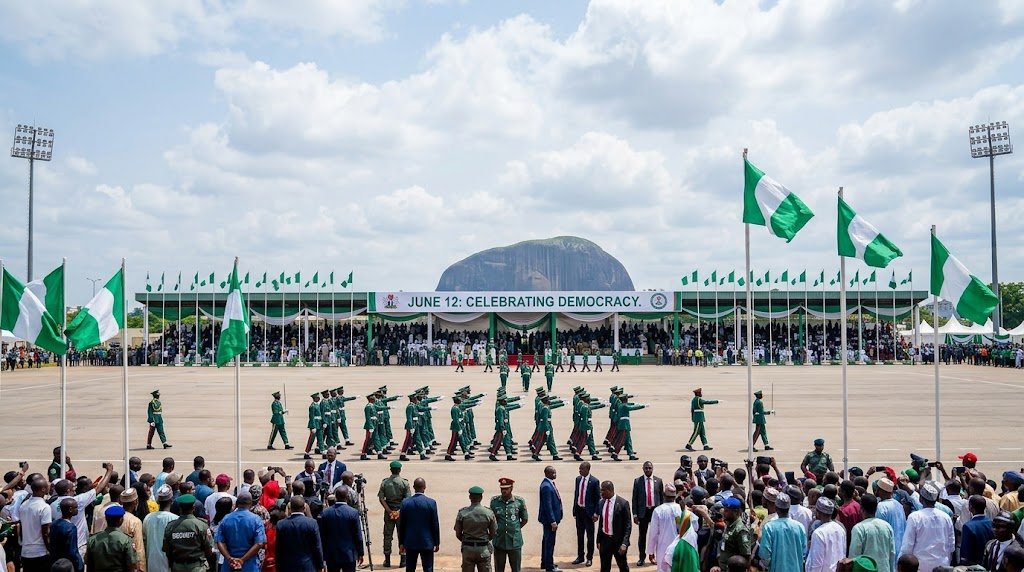
Nigeria marked its 27th Democracy Day on June 12 amid speeches, ceremonies and reflections on the nation’s democratic journey. The occasion was more than a commemoration of a historic date; it was an opportunity to assess how far the country has travelled since the restoration of democratic rule in 1999 and how much farther it must go to fulfil the aspirations that inspired the June 12 struggle.
Speaking during the Democracy Day celebrations in Abuja, President Bola Ahmed Tinubu reaffirmed his commitment to democratic governance, political pluralism and national development, while emphasizing that democracy remains the best framework for addressing Nigeria’s challenges through dialogue, participation and institutional accountability.
Democracy Day remains a fitting occasion to honour the memory of Chief Moshood Kashimawo Olawale (MKO) Abiola, whose victory in the June 12, 1993 presidential election symbolized the collective will of Nigerians across ethnic, religious and regional divides. The annulment of that election represented a dark chapter in the nation’s history, but the courage, sacrifice and resilience demonstrated by Abiola and countless pro-democracy activists ultimately paved the way for the return of civilian rule in 1999.
More than two decades later, the significance of June 12 extends beyond remembrance. It challenges today’s leaders to draw lessons from the democratic struggle and apply them to contemporary governance. The ideals that inspired the June 12 movement—justice, accountability, inclusion, national unity and respect for the will of the people—remain as relevant today as they were three decades ago.
The first lesson is that democracy flourishes only when there is trust between the governed and those who govern. The 1993 election demonstrated Nigerians’ willingness to participate actively in the political process when they believe their votes will count. That confidence must never be taken for granted.
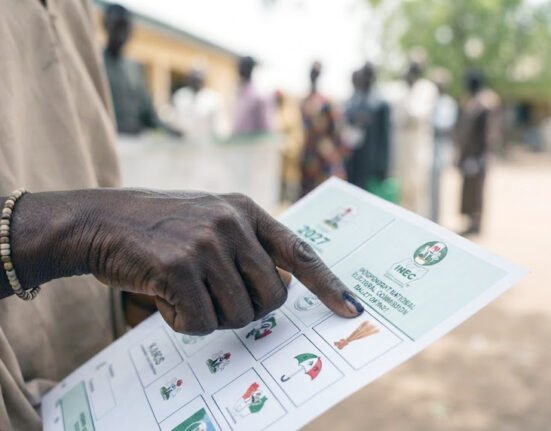
While Nigeria has maintained an uninterrupted democratic order since 1999, concerns persist regarding electoral malpractice, vote-buying, political violence and declining voter participation. These challenges threaten public confidence in democratic institutions. Leaders must understand that political legitimacy cannot rest solely on electoral victory; it must be sustained through transparent governance, responsiveness to citizens’ needs and consistent adherence to the rule of law.
President Tinubu, in his Democracy Day address, rightly emphasized the importance of protecting democratic institutions and preserving political freedoms. Democracy is strengthened when opposition voices are respected, when citizens are free to criticize government policies, and when institutions function independently and effectively. A vibrant democracy requires not only periodic elections but also continuous engagement between leaders and citizens.
Another enduring lesson of June 12 is the triumph of national unity over narrow interests. The election remains remarkable because Nigerians voted beyond ethnic, regional and religious considerations. It represented a moment when citizens embraced a shared national vision rather than sectional loyalties.
Unfortunately, contemporary politics often appears trapped by divisive rhetoric and identity-based mobilization. Political actors frequently exploit ethnic and religious sentiments for short-term electoral gains, often at the expense of national cohesion. Such tendencies undermine the very spirit that made June 12 a defining moment in Nigeria’s democratic history.
Nigeria’s diversity remains one of its greatest strengths. The challenge for political leaders is to transform that diversity into a source of national progress rather than political fragmentation. As the country confronts economic, security and developmental challenges, unity of purpose has become more essential than ever.
Democracy also demands accountability. The rule of law must apply equally to all citizens regardless of social status, political affiliation or economic influence. Strong institutions, rather than powerful individuals, are the foundation of enduring democracies.
The President’s call for institutional strengthening deserves attention. Democratic governance cannot thrive where public institutions are weak, compromised or subjected to partisan interests. Whether in the judiciary, legislature, electoral bodies or anti-corruption agencies, credibility remains the cornerstone of public trust. Citizens must be assured that justice is impartial, elections are credible and public resources are managed responsibly.
Perhaps the most urgent challenge confronting Nigeria today is the economy. Democracy ultimately derives its legitimacy not merely from political freedoms but also from its capacity to improve the quality of life of citizens. Across the country, many Nigerians continue to grapple with rising living costs, unemployment, poverty and insecurity.
While the administration argues that ongoing economic reforms are designed to lay the foundation for long-term growth and stability, many households continue to experience immediate hardship. Democracy Day therefore provides an opportunity to evaluate whether governance is translating into tangible improvements in the lives of ordinary citizens.
Government at all levels must intensify efforts to stimulate job creation, support entrepreneurship, strengthen agricultural productivity and expand social protection programmes. Economic growth that does not translate into improved living standards risks widening the gap between democratic promises and public expectations.
Security remains equally critical. The safety and welfare of citizens constitute the primary responsibility of government. Persistent threats from banditry, kidnapping, terrorism and other criminal activities continue to test the resilience of communities across the country. A democracy cannot fully flourish when citizens live in fear. Sustained investment in security, intelligence gathering and community engagement remains indispensable.
Citizens themselves also have responsibilities within a democratic system. Democracy is not a spectator sport. Active citizenship requires vigilance, participation and accountability. Nigerians must continue to engage constructively in public affairs, ask difficult questions, scrutinize government actions and demand transparency from elected officials.
The future of democracy depends not only on those who hold public office but also on the willingness of citizens to defend democratic values and participate meaningfully in governance. Silence in the face of poor leadership weakens democracy; active engagement strengthens it.
As Nigeria reflects on 27 years of uninterrupted democratic rule, there is also a need for introspection within the political class. The increasing monetization of politics, evident in many party primaries and electoral contests, continues to undermine merit, competence and public service. When political positions become accessible primarily to the highest bidder, democracy risks becoming detached from the aspirations of ordinary citizens.
The nation’s political leaders would do well to revisit the examples set by statesmen such as Ahmadu Bello, Nnamdi Azikiwe and Obafemi Awolowo, whose political engagements were rooted in service, vision and nation-building. Their legacies remind us that leadership is not merely about occupying office but about advancing the collective good.
Ultimately, the relevance of Democracy Day will not be measured by the grandeur of official ceremonies or the eloquence of speeches. Its true significance lies in whether democratic governance delivers justice, opportunity, security and prosperity to the people.
Twenty-seven years after the restoration of democratic rule, the promise of June 12 remains unfinished. The challenge before today’s leaders is to move beyond political survival and embrace transformational leadership. The challenge before citizens is to remain active custodians of democratic values.
Only then can the sacrifices of MKO Abiola and countless pro-democracy heroes find their fullest expression in a Nigeria where every vote counts, every citizen matters and democratic governance genuinely serves the people.
Feature
June 12: Beyond Celebration, The Unfinished Task Of Democratic Leadership
Related Post




Leave feedback about this