
By Umar Farouk Bala
When the 2026 FIFA World Cup kicked off on Thursday, June 11 with Mexico defeating South Africa, the tournament opened under a cloud that no host nation has ever been forced to navigate before.
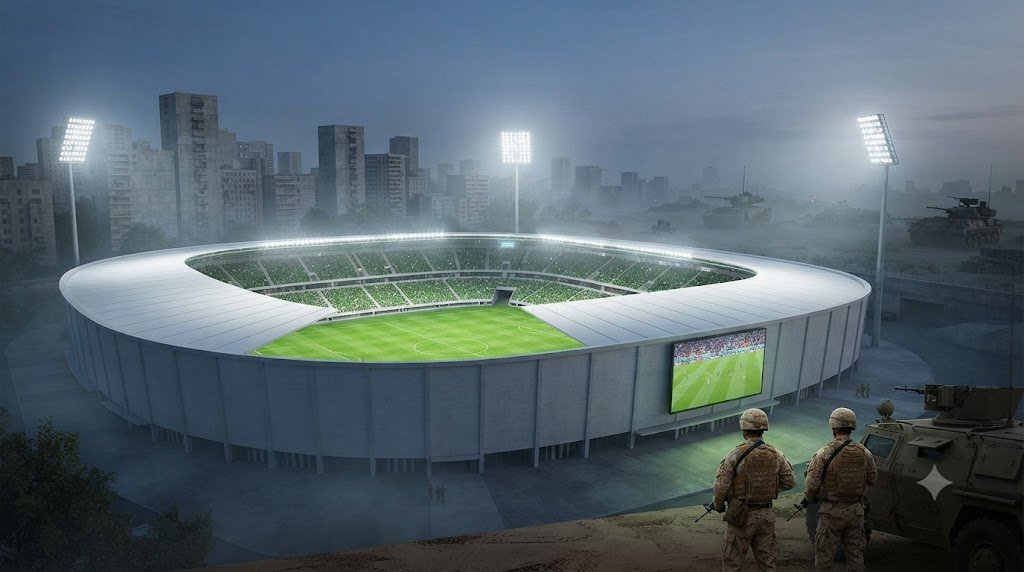
For the first time in the history of the global game, a World Cup host country is engaged in active military hostilities with one of the participating nations. The United States is at war with Iran, and the consequences — diplomatic, logistical, and symbolic are already reshaping the tournament before a single ball has been kicked in anger.
FIFA’s Bias Under Scrutiny
FIFA (International Federation of Association Football), has long operated under a self-declared principle of political neutrality, enshrined in its own statutes. The principles guiding international soccer’s governing body has rarely faced a more direct test than in the months leading into the 2026 edition.
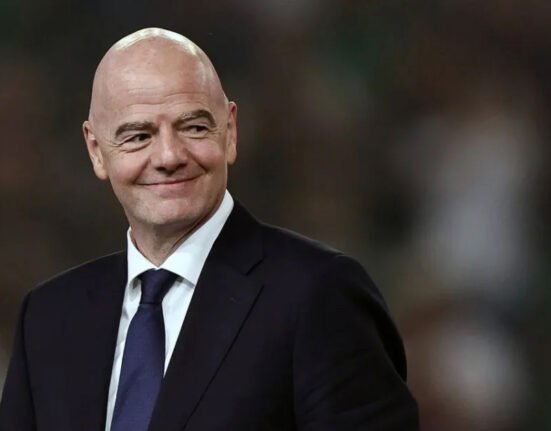
FIFA President Gianni Infantino drew widespread criticism for the optics of his relationship with US President Donald Trump — appearing on stage wearing a red USA baseball cap during Trump’s so-called Board of Peace meeting, and presenting the president with a newly created “FIFA Peace Prize” at the World Cup draw.
These gestures, however choreographed they may have been, sent a troubling signal: that the world’s foremost football authority is not merely hosting a tournament in the United States but is, to some degree, politically aligned with its host government at a moment of active conflict.
The concern is not merely symbolic. When the body responsible for governing global football appears to stand in visible solidarity with one widely viewed as the aggressor in an ongoing war, it undermines the tournament’s credibility as a space that belongs equally to all nations.
Football’s universal appeal has always rested on the idea that the pitch is neutral ground — a premise that looks increasingly strained in 2026.
Visa Bans and the Weaponisation of Entry Rules
The more concrete manifestation of the conflict’s intrusion into the tournament lies in the area of access. US entry regulations have been significantly tightened, and for Iran, the restrictions go further than any other participating nation.
Iranian fans face a complete entry ban — only the national team and essential support staff have been permitted to travel to the United States. This means that Iranian supporters, who in previous tournaments travelled in large, colourful numbers, will be entirely absent from the stands when their team plays.
The situation surrounding the Iranian squad itself has been fraught. The team relocated their training base from Tucson, Arizona, to Tijuana, Mexico, citing concerns over travel arrangements and entry permissions.
Iranian officials reported that 15 members of the delegation — including senior football federation officials and media personnel — had been denied visas. US Secretary of State Marco Rubio drew a hard line, stating that individuals with alleged links to Iran’s Islamic Revolutionary Guard Corps (IRGC)would not be permitted entry under any circumstances.
Washington ultimately confirmed that visas had been issued to all players and what officials described as “necessary support staff,” though American authorities made clear that entry procedures would remain subject to national security requirements.
Crucially, all three of Iran’s group stage matches are scheduled to be played on American soil.
The team and their permitted staff have been told they must enter and leave the country on match days only — a logistical arrangement that strips away the continuity of preparation that every other competing nation takes for granted. Iranian officials have condemned the restrictions as political interference in sport, arguing, with considerable justification, that football should remain insulated from geopolitical tensions.
An Unprecedented Sporting Moment
History offers no precedent for what the 2026 tournament represents. Never before has a World Cup host nation been engaged in active hostilities with a participating team.
The 1978 tournament in Argentina was held under a military dictatorship, and the 2022 edition in Qatar attracted intense political scrutiny, but in neither case was the host country at war with a team it was required to host. The 2026 edition breaks entirely new ground, and the questions it raises extend well beyond football.
Despite the off-field turbulence, Iran qualified impressively for the tournament, finishing top of their qualifying group in March 2025. They had their opening match against New Zealand in Los Angeles on June 15. The players, to their credit, have signalled a desire to keep their focus on the sport — but the political circumstances they are navigating are without parallel in the history of the competition.
The Broader Stakes for Football
What the US-Iran dynamic in 2026 ultimately reveals is a tension at the heart of modern international sport: the growing difficulty of maintaining football as a politically neutral space when geopolitical forces press so heavily against it.
FIFA’s credibility as a genuinely global governing body depends on its ability to protect that neutrality, even — especially — when its most powerful host nations are engaged in conflicts that spill beyond their borders.
The 2026 World Cup will produce moments of beauty, drama, and sporting excellence. It always does. But the war between the United States and Iran has already ensured that this tournament will also be remembered as the edition in which football’s pretension to stand above politics was most visibly and most seriously tested.
The outcome of that test for FIFA, for the host nation, and for the ideal of sport as common ground will outlast whatever happens on the pitch.

Leave feedback about this