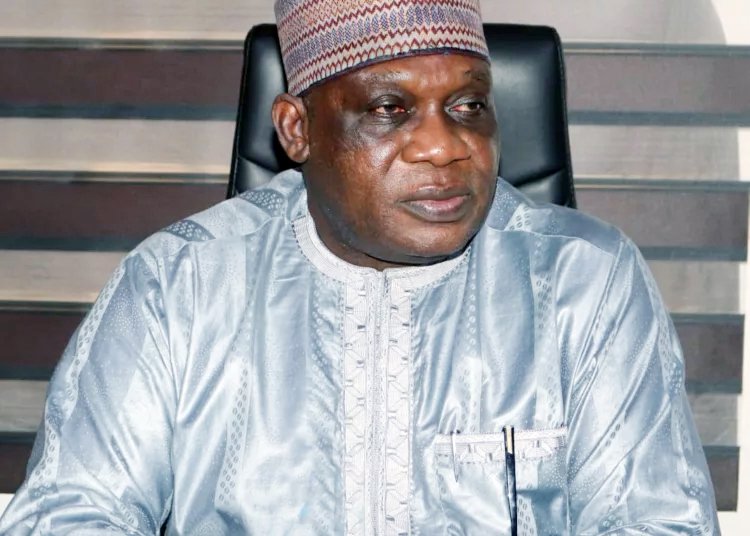
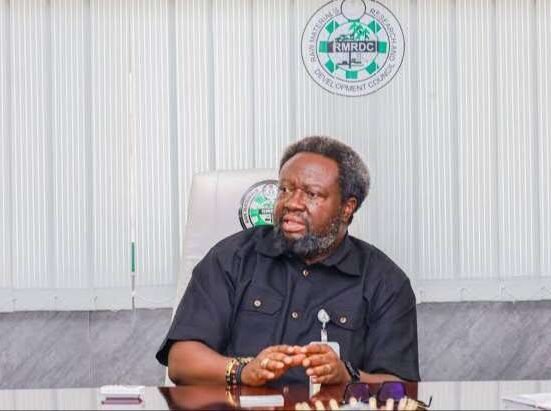
In the often underreported but strategically vital solid minerals sector, a quiet transformation has been unfolding, one that is redefining governance, strengthening transparency, and significantly boosting government revenue. At the center of this shift is the Nigeria Mining Cadastre Office (NMCO), led by its Director-General, Engineer Obadiah Simon Nkom, whose tenure since January 2019 has been marked by deliberate reforms and measurable outcomes.
Before his appointment, Nigeria’s mining cadastre system faced persistent challenges including manual processes, regulatory inefficiencies, and limited accountability mechanisms that constrained both investor confidence and revenue potential. Nkom’s emergence as Director-General came with the weight of expectation, but also with the advantage of deep institutional knowledge.
Having joined the Federal Civil Service in 1983, he built a career spanning over four decades, rising through the ranks to become a Director within the NMCO. Along the way, he played a pioneering role in establishing Mines Offices in Borno, Yobe, Nasarawa, and the Federal Capital Territory between 1985 and 2005, laying a foundation for decentralized mining administration in Nigeria.
His technical and academic background reflects a blend of engineering expertise and administrative competence. He holds a Postgraduate Diploma in Mining Engineering from the Federal University of Technology Akure, an MBA and Postgraduate Diploma in Management from the University of Maiduguri, and a Higher National Diploma in Mining Engineering from Kaduna Polytechnic.
His professional development also includes international certifications in geo-database systems and Geographic Information Systems in Houston, spatial data handling in the Netherlands, mining and metallurgy training in Japan, and studies in public administration in Maiduguri, in addition to a certificate in Japanese language. This extensive training has informed a leadership style grounded in technical precision and administrative discipline.
When Nkom assumed office in 2019, the NMCO generated N2.38 billion in revenue. By October 2024, that figure had climbed to a record N8.2 billion, representing more than a threefold increase within five years. The progression of N2.56 billion in 2020, N4.30 billion in 2021, N3.79 billion in 2022, and N6.07 billion in 2023 demonstrates a pattern of sustained growth underpinned by structural reforms rather than temporary gains. Cumulatively, the agency generated N26.23 billion between 2019 and October 2024, accounting for a significant proportion of its lifetime revenue and underscoring the impact of improved governance systems.
Central to this performance has been the digitisation of mineral title administration through the electronic Mining Cadastre Plus (eMC+) platform. By automating application and licensing processes, the NMCO has reduced human discretion, enforced the “first come, first served” principle, and created a transparent audit trail accessible to stakeholders.
This system has not only curtailed opportunities for malpractice but has also accelerated processing timelines, making Nigeria’s mining sector more attractive to investors. The reopening of the eMC+ portal for the regularisation of mining activities in areas such as Zamfara State further illustrates the agency’s effort to formalise previously informal operations and integrate them into the regulated economy.
Equally significant has been the emphasis on accountability. Under Nkom’s leadership, all revenues generated by the NMCO are remitted directly to the Federal Government through the Treasury Single Account, ensuring transparency in financial management and eliminating leakages. The enforcement of the “Use It or Lose It” policy has also addressed the long-standing issue of dormant licenses by revoking inactive titles and reallocating them to serious operators, thereby increasing productivity and expanding the revenue base.
These reforms have not gone unnoticed. The National Assembly has publicly commended the NMCO for its performance, particularly its revenue growth and adherence to due process, while pledging legislative support for further development of the mining sector. This institutional endorsement reflects growing confidence in the agency’s capacity to function as a credible regulator within Nigeria’s extractive industries.
Nkom’s leadership has also aligned closely with broader national priorities aimed at economic diversification. Through collaboration with the Federal Ministry of Solid Minerals Development and policy alignment with the administration of Bola Ahmed Tinubu, the NMCO has contributed to efforts to reposition solid minerals as a viable alternative revenue source to oil. His reappointment for a second term in 2023 by former President Muhammadu Buhari further reinforces the confidence placed in his leadership and the continuity of reforms initiated during his first tenure.
Despite operational constraints, including infrastructure and capacity challenges, the NMCO’s performance under Nkom has demonstrated that institutional efficiency can be achieved through strategic leadership and system-driven reforms. The agency has transitioned from a largely administrative body into a critical driver of transparency, investment facilitation, and revenue generation within the mining sector.
What emerges from this trajectory is not merely a story of improved figures, but of institutional renewal. In a sector historically defined by opacity and underperformance, the Nigeria Mining Cadastre Office is gradually setting new standards—anchored in digital innovation, regulatory discipline, and accountability.
Evidently, at the center of this transformation is Obadiah Simon Nkom, whose tenure illustrates how sustained reform, backed by technical expertise and administrative experience, can reposition a public institution to meet the demands of a modern economy.
Icon of the Month
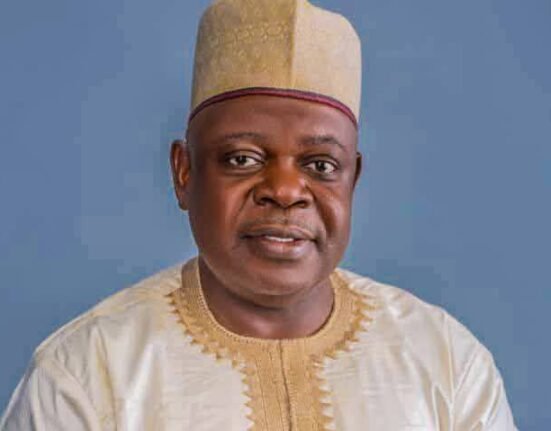
Engr. ObadiahSimon Nkom:Transforming Nigeria’s Mining Cadastre System Through Effective Leadership And Revenue Generation



Leave feedback about this