
By Rahama Nasir Kana
Nigeria’s education crisis cannot be attributed to one administration. It is the accumulated consequence of inadequate investment, weak implementation, policy discontinuity and the failure to sustain reforms long enough for their impact to be properly measured.
From Goodluck Jonathan to Muhammadu Buhari and now Bola Ahmed Tinubu, successive governments have launched programmes, established institutions and introduced reforms. Yet the fundamental questions remain: Are more Nigerian children learning? Are teachers adequately prepared? Are schools safe and properly equipped? And can an education reform survive the government that introduced it?
These questions matter because education does not deliver its most important results within a four- or eight-year political cycle.
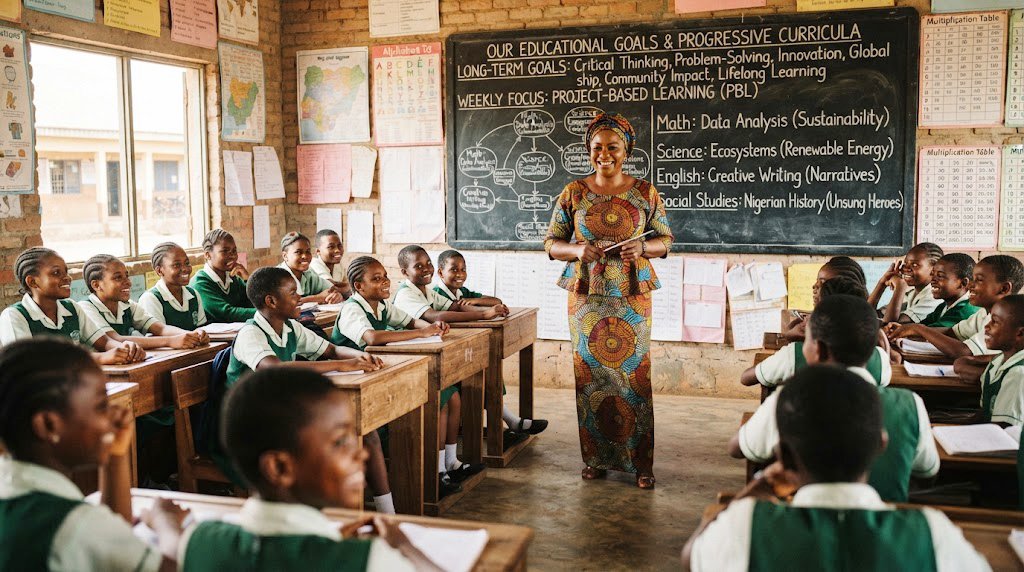
A child entering primary school does not care which administration approved the classroom or launched the programme. What matters is whether a qualified teacher is present, whether learning materials are available, whether the school is safe and whether the child can read, write, calculate and acquire the skills needed for productive adulthood.
By those measures, Nigeria still has a considerable distance to travel.
A September 2026 UNICEF assessment of public financing for basic education found that government expenditure on education as a share of total government spending declined from 9.3 per cent in 2015 to 3.6 per cent in 2023. The report also highlighted persistent weaknesses in access and foundational learning.
The significance of the decline extends beyond any single administration. It points to a structural problem in the way Nigeria has financed education over time.
The Jonathan administration made important efforts to expand access, including the Almajiri Education Programme and the establishment of nine federal universities in 2011. These initiatives created additional opportunities, particularly in communities that had historically faced limited access to federal tertiary institutions.
But expanding access did not resolve the deeper weaknesses of the system.
Universities continued to grapple with inadequate infrastructure, funding pressures, staff welfare and disputes over agreements between government and academic unions. The eight-month ASUU strike in 2022 was a particularly stark reminder of the consequences of unresolved problems in university financing and governance.
The issue was not simply disagreement between government and unions. Repeated disruptions to academic calendars demonstrated the difficulty of building a competitive higher-education system without predictable funding, institutional stability and sustained policy attention.

Tinubu inherited much of that unfinished business.
His administration has introduced interventions aimed at addressing some of these pressures, particularly in tertiary education. The Nigerian Education Loan Fund, for example, has created a mechanism for reducing financial barriers to higher education, with demand for the scheme reflecting the financial pressures confronting many students and families.
But student financing cannot substitute for institutional investment.
A loan can help a student gain access to university. It cannot build a laboratory, equip a library, recruit and retain lecturers, finance research or guarantee a stable academic calendar.
That distinction between access and quality is at the centre of Nigeria’s education dilemma.
The country continues to face a huge out-of-school population. UNICEF estimates that about 10.5 million children aged five to 14 are out of school, while primary-school attendance remains particularly low in northern Nigeria.
The problem does not end when children enter school. Many enrolled pupils are still failing to acquire basic skills.
UNICEF’s September 2026 public-finance assessment reported that, based on 2022 learning assessments, 49 per cent of Primary 3 learners, 67 per cent of Primary 5 learners and 86 per cent of Junior Secondary 2 learners did not attain minimum proficiency in mathematics.
Those figures should change the way Nigeria measures educational progress.
For years, public debate has focused heavily on the number of classrooms constructed, schools renovated, students admitted, programmes launched and certificates awarded. These indicators are relevant, but they do not answer the central question: what are Nigerian children actually learning?
A classroom is an input. Literacy is an outcome.
A university is an institution. Research, innovation and employable graduates are outcomes.

A student loan is an intervention. Successful completion and meaningful opportunities afterwards are outcomes.
Nigeria therefore needs to become much more rigorous about measuring results.
There are signs of progress in this direction. The Federal Ministry of Education has placed greater emphasis on data and digitisation, while its Federal Tertiary Institutions Governance Transparency Portal provides information on institutional budgets, enrolment, research grants and interventions.
Such platforms can strengthen accountability, provided the information is regularly updated, independently scrutinised and actually used to guide policy.
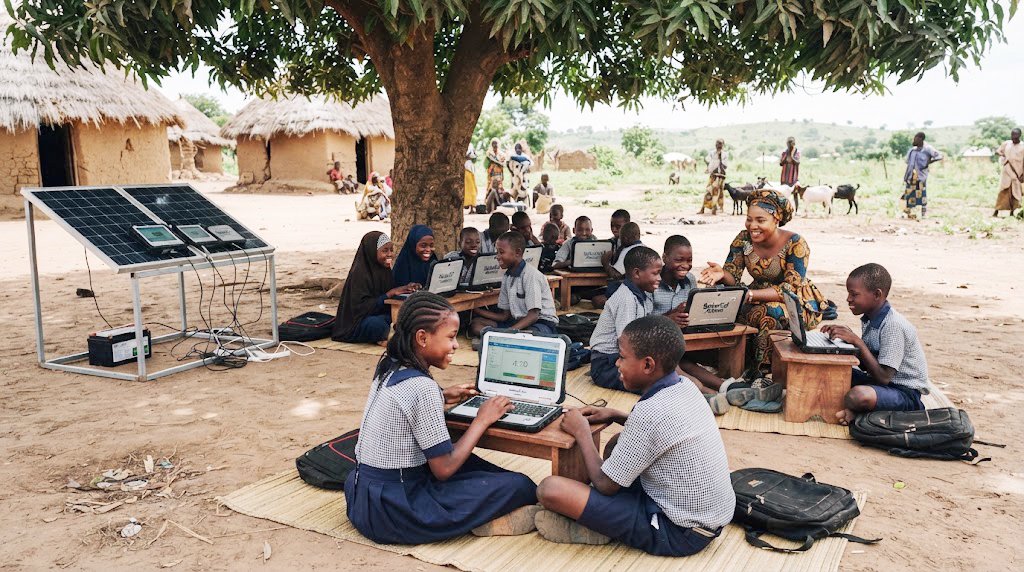
The Nigeria Learning Passport also demonstrates the value of sustaining programmes beyond the administration that introduced them. Launched in 2022 in partnership with UNICEF and other stakeholders, the platform has expanded access to digital learning for millions of children and young people, including learners in communities where conventional education is difficult to access.
But technology cannot replace the basics.
Nigeria still needs adequately trained and motivated teachers, functional classrooms, relevant curricula, learning materials, reliable electricity and connectivity, stronger school leadership and credible assessment systems.
It must also confront a problem increasingly inseparable from education policy: insecurity.
In parts of the North-East and North-West, insecurity has disrupted academic calendars, displaced families, kept children away from school and made teaching more difficult. Where schools are unsafe, regular attendance becomes difficult even for families that understand the value of education.
The North-West deserves particular attention because of its large young population, high levels of poverty and significant educational exclusion. The region’s education crisis has implications far beyond the classroom.
Children who miss basic education face greater exposure to poverty, unemployment and exploitation. Weak foundational learning also undermines the quality of Nigeria’s future workforce.
Education policy is therefore not merely a social-sector concern. It is economic policy, human-capital policy and, increasingly, national-security policy.
The financing question remains unavoidable.
Nigeria needs greater and more predictable investment in education, but increasing allocations alone will not solve the problem. Resources must reach schools and produce measurable improvements.
The National Assembly’s move to increase the statutory allocation to the Universal Basic Education Commission from two per cent to five per cent of the Consolidated Revenue Fund could provide additional fiscal space for basic education if the legislative process is completed and the measure is effectively implemented. But additional funding must be matched by stronger monitoring, timely releases, state-level counterpart funding and transparent reporting.
Nigeria has demonstrated that it can mobilise substantial resources for individual projects. The harder task is sustaining the recurrent investment required to make an entire education system work year after year.
This is why the country needs an Education Continuity Compact that survives changes in government.
Such a framework should establish measurable national targets for foundational literacy and numeracy, teacher development, school infrastructure, technical and vocational education, tertiary institutions, research, digital learning, school security and student welfare.
It should also require governments to account for major interventions. What was budgeted? What was released? What was spent? What was achieved? What remains unfinished?
A succeeding administration should be able to retain an effective programme, modify one that requires improvement and discontinue one that has demonstrably failed. What it should not have to do is start the national conversation from scratch.
Nigeria does not need an endless succession of education programmes carrying different names. It needs institutional memory, policy consistency and accountability.
The unfinished education agenda belongs neither exclusively to Jonathan, Buhari nor Tinubu. It belongs to the Nigerian state.
Each administration has inherited problems from its predecessors and introduced policies of its own. The responsibility now is to turn those separate chapters into a coherent national strategy that can survive political transitions.
The real measure of progress should not be the number of programmes announced or projects commissioned. It should be whether more children are learning, whether teachers are better equipped, whether institutions are producing relevant knowledge and skills, and whether families can trust the education system to give their children a genuine opportunity.
When the next government takes office, it should inherit an education system that needs improvement, not reinvention.
And when a Nigerian child walks into a classroom, the most important question should no longer be which administration built the school.
It should be whether the Nigerian state has finally built an education system capable of preparing that child for the country Nigeria hopes to become.
That is the unfinished agenda. And it begins in the classroom.