
By Audu Makama
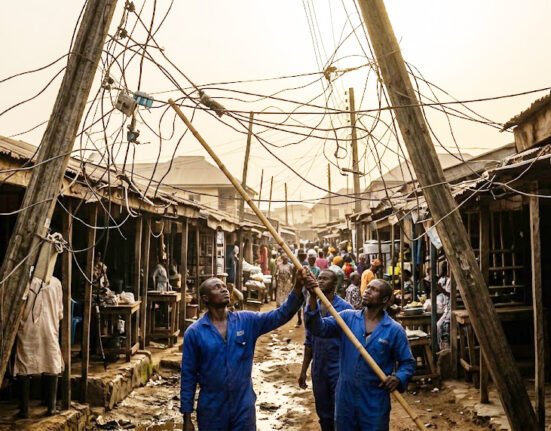
For more than three decades, electricity has remained one of Nigeria’s greatest development failures. Successive governments have promised reforms, billions of dollars have been invested, and several policy overhauls have been introduced. Yet for millions of Nigerians, reliable electricity remains elusive.
The contradiction is difficult to ignore. Nigeria possesses one of Africa’s largest natural gas reserves, substantial hydropower resources and an installed generation capacity exceeding 14,000 megawatts. In reality, however, the national grid often delivers only about 4,000 to 5,000 megawatts to consumers. The gap between installed capacity and available power continues to define the country’s electricity crisis.
The effects extend far beyond the inconvenience of blackouts.
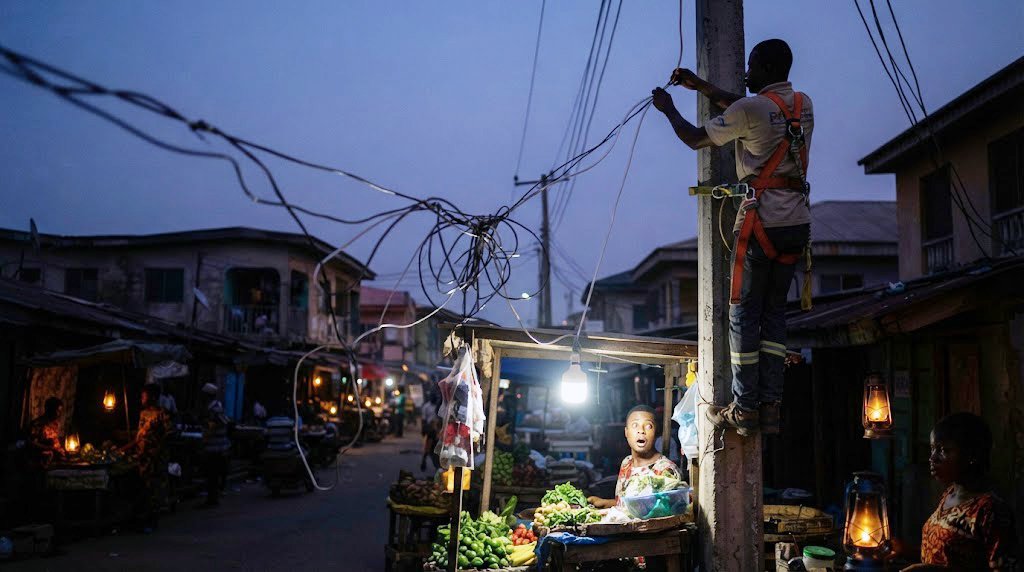
Manufacturers spend enormous sums generating their own electricity, making locally produced goods less competitive than imports. Small businesses—from welders and barbers to cold-room operators and digital entrepreneurs—lose productive hours every day because they cannot depend on public power supply. Hospitals maintain expensive backup generators to protect critical medical equipment, while universities, schools and households routinely plan their activities around uncertain electricity schedules.
The World Bank has consistently identified unreliable electricity as one of the biggest constraints to private sector growth in Nigeria, estimating that inadequate power supply costs the economy billions of dollars annually through lost productivity and reduced investment. Simply put, electricity is no longer just a utility service; it has become a defining factor in Nigeria’s economic competitiveness.
Against this backdrop, the country’s electricity sector is undergoing its most significant restructuring since the privatisation of the Power Holding Company of Nigeria (PHCN) in 2013. The Electricity Act 2023, growing state participation, expanding renewable energy investments and renewed infrastructure spending have combined to create a fundamentally different operating environment.
Whether these reforms succeed will depend less on legislation than on execution. The real test lies in how effectively the Federal Government, state governments, regulators, electricity distribution companies (DisCos), the Niger Delta Power Holding Company (NDPHC), private investors and renewable energy developers coordinate their efforts to deliver measurable improvements in power supply.
A New Era of Decentralised Electricity
The Electricity Act 2023 represents perhaps the most consequential reform in Nigeria’s power sector in nearly two decades.
For the first time since the Electric Power Sector Reform Act of 2005, states have clear constitutional and legal authority to establish and regulate their own electricity markets. They can license operators, establish State Electricity Regulatory Commissions, develop embedded generation projects, promote mini-grids and encourage private investment without relying entirely on the federal electricity architecture.
This represents a significant departure from Nigeria’s long-standing centralised model.
Electricity demand in Lagos differs markedly from that of Kano, Rivers, Benue or Ekiti. Industrial clusters require uninterrupted power to sustain manufacturing, while rural communities often need affordable decentralised systems capable of supporting agriculture, healthcare and education.
Allowing states to design electricity solutions around their unique economic realities offers greater flexibility than the previous one-size-fits-all approach.
Already, states including Lagos, Enugu, Kaduna, Edo, Oyo, Ekiti and Akwa Ibom have enacted electricity laws and established regulatory institutions to oversee their emerging power markets. More states are expected to follow as confidence in the new framework grows.
The objective is not to dismantle the national grid but to reduce excessive dependence on it by encouraging multiple sources of electricity generation closer to consumers.
Renewable Energy Steps into the Mainstream
One of the most ambitious developments within the new electricity framework is the Federal Government’s plan to establish Renewable Energy Service Companies (RESCOs).
According to Rural Electrification Agency (REA) Managing Director Abba Aliyu, these companies are expected to evolve into credible alternatives to conventional electricity distribution companies over the next decade.
The proposal marks an important shift in government thinking.
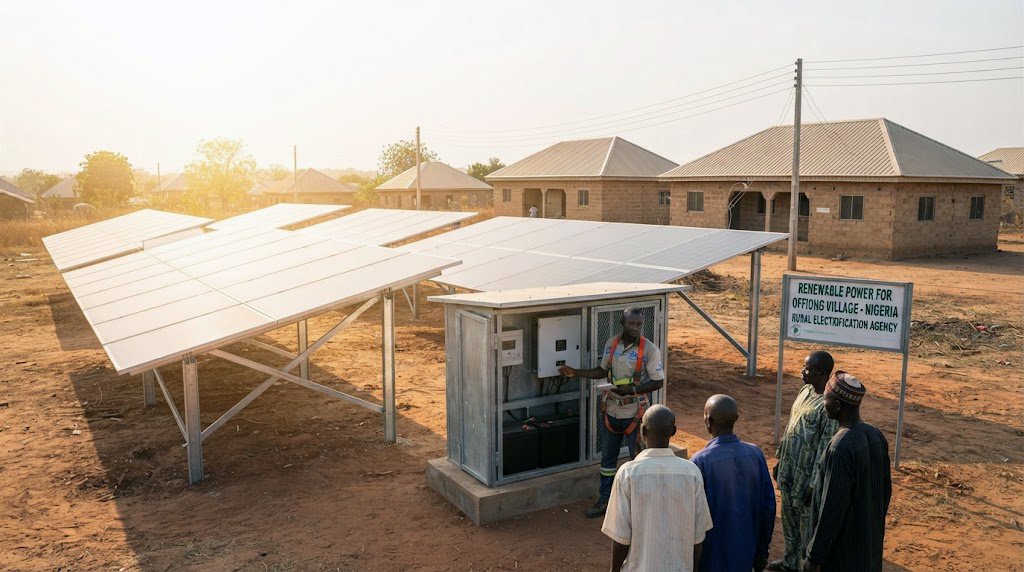
For years, renewable energy in Nigeria was viewed largely as a rural intervention—small solar installations serving isolated communities beyond the reach of the national grid. The new strategy envisions something much bigger: interconnected utility-scale renewable energy systems capable of powering entire towns and commercial districts using solar generation supported by battery storage.
Rather than installing a single mini-grid for one community, developers are being encouraged to build networks of interconnected mini-grids that can serve larger populations while maintaining reliability.
The approach directly addresses one of the sector’s biggest structural weaknesses.
Many rural and semi-urban communities remain underserved because extending conventional distribution infrastructure into those areas offers little commercial incentive for existing DisCos. Renewable energy developers, operating under an appropriate regulatory framework, can fill that gap more efficiently.
The model is no longer theoretical.
Through the Nigeria Electrification Project and the Distributed Access through Renewable Energy Scale-Up (DARES) programme, REA-supported mini-grids already provide electricity to markets, universities, primary healthcare centres and rural communities across states including Niger, Plateau, Sokoto and Cross River. In many of these communities, reliable electricity has enabled businesses to extend operating hours, reduced dependence on diesel generators and improved access to essential public services.
The emergence of RESCOs therefore should not be viewed as a challenge to the existing electricity market but as an expansion of consumer choice, particularly in areas where conventional grid infrastructure has consistently failed to meet demand.

Why DisCos Remain Central to Reform
Despite growing enthusiasm for renewable energy, the role of Distribution Companies remains indispensable.
DisCos remain the critical commercial link between electricity generation and consumers. They operate extensive networks of feeders, transformers, substations and distribution lines while managing customer metering, billing and revenue collection.
Without financially stable distribution companies, the entire electricity value chain begins to weaken. Generation companies struggle to recover their costs, transmission investments become more difficult to finance and investor confidence declines.
There is little dispute that DisCos face serious operational challenges.
Millions of consumers remain unmetered and continue to receive estimated bills. Electricity theft and illegal connections continue to erode revenues. Ageing infrastructure contributes to technical losses, while vandalism of distribution assets imposes additional financial burdens.
Many consumers also express frustration over prolonged outages, slow fault response and inconsistent customer service. Yet replacing DisCos is neither practical nor desirable.
The more realistic path lies in strengthening them through targeted investment, improved regulation, smarter metering technologies, stronger enforcement against energy theft and closer collaboration with state governments and independent power developers.
The future electricity market is likely to be defined not by competition between DisCos and renewable operators but by partnerships that allow both systems to complement one another.
NDPHC: The Quiet Backbone of Power Infrastructure
Public attention often focuses on electricity generation and tariffs, but far less attention is given to the infrastructure that connects power plants to consumers. This is where the Niger Delta Power Holding Company has played a significant role.
Established under the National Integrated Power Projects (NIPP), NDPHC was created to address critical infrastructure deficits across generation, transmission and distribution.
Over the years, the company has delivered power plants, transmission lines, injection substations, transformers and distribution assets across the federation. Many of these investments have strengthened the capacity of the national grid even when electricity generation has remained constrained by gas shortages or transmission bottlenecks.
In recent years, NDPHC has increasingly focused on completing abandoned projects, rehabilitating ageing infrastructure and working with DisCos to evacuate stranded generation capacity.
Its interventions have included financing distribution infrastructure that enables electricity already generated to reach homes and businesses more efficiently.
As states begin developing their own electricity markets, NDPHC’s experience in power infrastructure development places it in a strong position to support embedded generation projects, regional transmission expansion and public-private partnerships that strengthen local electricity networks.
The Tariff Debate Cannot Be Avoided
Perhaps no issue generates stronger public reaction than electricity pricing.
For years, governments maintained tariffs below the actual cost of producing and delivering electricity, absorbing the difference through subsidies worth trillions of naira.
While this policy offered short-term political relief, it created long-term financial instability across the electricity value chain.
Generation companies accumulated unpaid invoices, DisCos struggled to maintain infrastructure and investors became increasingly reluctant to finance expansion projects.
The introduction of cost-reflective tariffs for Band A customers demonstrated that improved revenue can support better service where infrastructure is capable of delivering longer hours of supply.
However, tariffs alone cannot solve Nigeria’s electricity challenges.
Consumers are more willing to accept higher prices when service quality improves consistently. What they reject is paying more without seeing corresponding improvements in electricity availability.
Building public trust therefore requires transparency, effective regulation and measurable service standards that hold operators accountable.
Affordability must remain an important consideration, particularly for low-income households, but long-term sustainability also demands a financially viable electricity market capable of attracting new investment.
Evidence That Reform Can Work
Nigeria already has practical examples demonstrating what targeted electricity investments can achieve.
The Aba Integrated Power Project has significantly improved electricity reliability within the Aba Ring-fenced Area, enabling manufacturers to reduce dependence on diesel generators and improve production efficiency.
Lagos State continues expanding embedded generation initiatives to strengthen electricity supply in commercial districts and industrial estates.
Across rural Nigeria, solar-powered mini-grids have transformed communities previously excluded from the national grid. Farmers now preserve produce using cold storage powered by solar energy. Primary healthcare centres refrigerate vaccines more reliably, while schools conduct evening classes supported by uninterrupted electricity.
These are not isolated success stories. They demonstrate that when investment, regulation and local implementation align, reliable electricity becomes achievable.
International experience supports the same conclusion.
Countries including India, Kenya and South Africa have expanded electricity access by combining strong national utilities with decentralised generation, state participation and private investment. Nigeria’s reforms follow a similar direction but will require consistent policy implementation and regulatory certainty to achieve comparable results.
From Reform to Results
Nigeria’s electricity future will not be determined by whether renewable energy overtakes conventional distribution companies or whether state governments outperform federal institutions.
The real measure of success will be how effectively every part of the electricity ecosystem works together.
The Federal Government must continue strengthening national transmission infrastructure and providing clear policy direction. State governments must build credible electricity markets that attract private investment. Regulators at both federal and state levels must enforce transparent rules that protect consumers while giving investors confidence.
DisCos must modernise their operations, accelerate metering programmes and improve customer service. NDPHC must continue expanding critical infrastructure that strengthens generation, transmission and distribution networks. REA and emerging Renewable Energy Service Companies should extend reliable electricity to communities that have remained outside the reach of conventional distribution systems.
Electricity has become far more than an engineering challenge. It underpins industrial growth, food production, healthcare delivery, digital innovation, education and national security.
No country aspiring to become a competitive economy can afford an unreliable power sector.
Nigeria now possesses something it lacked for many years: a legal framework that encourages innovation, greater participation by state governments and growing private investment across multiple segments of the electricity market.
The challenge is no longer identifying what needs to be done. It is ensuring that policies translate into visible improvements in homes, factories, hospitals, schools and businesses.
For ordinary Nigerians, success will not be measured by new legislation, regulatory announcements or investment figures. It will be measured in simpler, more practical terms: fewer hours of darkness, lower operating costs for businesses, more reliable public services and the confidence that electricity will be available whenever it is needed.
That is the promise of Nigeria’s new electricity order. Whether it becomes reality will depend on sustained political commitment, disciplined implementation and the willingness of every stakeholder to place national development above institutional rivalry.