

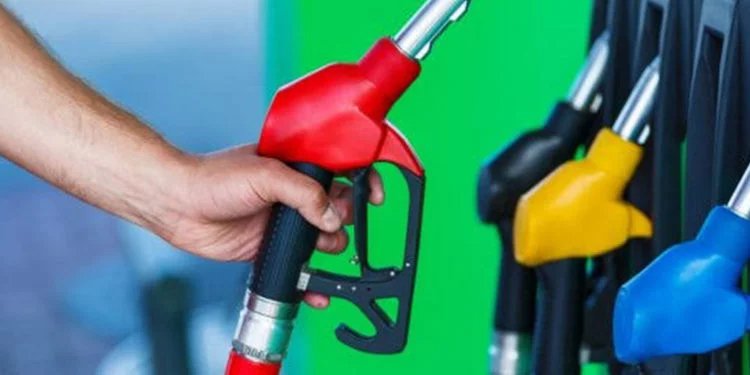
Three years after President Bola Ahmed Tinubu declared that “subsidy is gone,” the contentious debate over fuel subsidy removal has returned to the forefront of national discourse as a fresh wave of petrol price hikes intensifies the cost-of-living crisis, pitting the federal government’s defence of its reforms against a chorus of opposition figures, labour unions, traditional rulers and civil society organisations demanding relief for struggling Nigerians.
Fresh Price Hikes
Dangote Refinery, now a major player in Nigeria’s downstream fuel market, has raised its ex-depot petrol price to ₦1,350 per litre, up from ₦1,275, marking another adjustment amid volatile global crude markets and foreign exchange pressures. This latest increase follows a previous hike just a week earlier and is expected to push retail pump prices higher across major consumption centres.
The National Bureau of Statistics (NBS) reported that the average retail price of Premium Motor Spirit (petrol) surged to N1,532.93 per litre nationwide in April 2026. According to the NBS Premium Motor Spirit Price Watch report, the average price rose significantly on both a monthly and yearly basis, reflecting sustained pressure in the downstream petroleum sector following deregulation reforms. The data shows broad-based increases across states and geopolitical zones, with regional disparities reflecting differences in supply chain efficiency and infrastructure constraints.
Several factors are driving the price increases. The NBS data reveals the impact of market-driven pricing following the removal of subsidies, compounded by infrastructure constraints and uneven distribution networks nationwide. A recent survey of major retailers and independent marketers across Nigeria showed that both petrol and cooking gas prices remained elevated between April and May 2026.
Government’s Defence
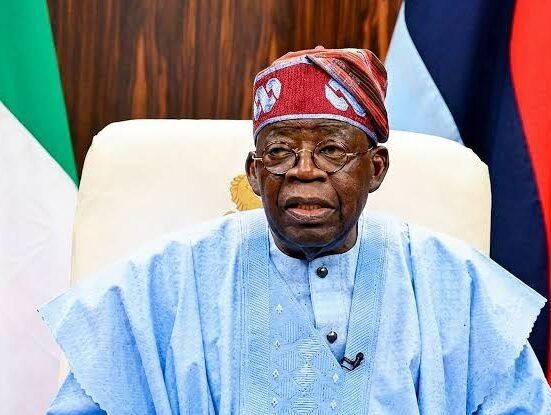
President Tinubu, marking his third anniversary in office on May 29, 2026, issued a nationwide address defending the removal of fuel subsidy and other economic reforms as painful but necessary decisions that have stabilised the economy and prevented a deeper national crisis.
“At the height of the subsidy regime, Nigeria was spending as much as ₦18.4 billion daily to sustain petrol subsidies—over ₦4 trillion in 2022 alone—resources that could have been invested in roads, healthcare, education, housing, and critical infrastructure,” Tinubu said.
The President acknowledged the hardship his measures have caused, stating, “These decisions came with sacrifice. The rising cost of living triggered by our measures placed enormous pressure on families, workers, and businesses. Young people searching for jobs felt discouraged. Many questioned whether these difficult decisions would lead to a better future. I remain deeply conscious of those sacrifices, and I assure you: your sacrifice has not been in vain”.
He argued that Nigeria’s economy is now more competitive, with the All-Share Index rising from 53,000 in 2023 to 250,000, while market capitalisation increased from N30 trillion to N160 trillion. He also highlighted infrastructure development, claiming that over 2,700 kilometres of highways and major roads are under construction nationwide, including the Lagos-Calabar Coastal Highway and the Sokoto-Badagry Super Highway.
The Finance Minister and Coordinating Minister of the Economy, Taiwo Oyedele, has insisted that the Presidency will not bring back fuel subsidy despite widespread clamour over the effect of its removal on the cost of living.
Opposition Criticism
Opposition figures have seized on the renewed fuel price hikes to launch blistering attacks on the Tinubu administration.
Former Vice-President Atiku Abubakar has been among the most vocal critics. In a statement issued on May 25, 2026, Atiku said the situation had moved beyond economic hardship to a humanitarian crisis, citing a UN warning that about 35 million Nigerians could face acute hunger between June and August 2026.
He blamed the hardship on “poor economic policies, including the removal of fuel subsidy and the handling of foreign exchange reforms,” describing the subsidy removal as “abrupt and poorly sequenced without credible social buffers,” which he said “triggered the worst cost-of-living crisis in recent memory”.
Atiku also revisited the subsidy removal in his Workers’ Day message on May 1, 2026, describing it as a necessary step but executed in an “irresponsible and callous” manner. He questioned the management of savings from the subsidy removal, arguing that Nigerians have not felt the benefits of the funds generated, alleging that a significant portion was directed toward controversial infrastructure projects.
Labour Unions Mobilise
The Nigeria Labour Congress (NLC) has painted a grim picture of the state of the nation, warning that rising insecurity, deepening poverty and worsening economic conditions are pushing citizens to the brink.
NLC President Joe Ajaero stated that the situation has reached a critical point where survival, rather than productivity, has become the priority for many Nigerians, especially workers. He pointed to the impact of global events on local hardship, noting that “the moment there was tension between Iran and America, fuel prices jumped to about N1,300–N1,400,” while questioning why increased government revenue had not translated into improved wages.
“Did you add N50,000 or N100,000 to workers’ earnings to cushion the effect? The worker is buying fuel at N1,400, while salary remains the same. Government is benefiting, but the worker is running at a deficit,” Ajaero said.
The NLC has signalled that workers and ordinary Nigerians would hold political leaders accountable in the 2027 general elections, stating that “every vote must be a weapon against hunger, insecurity, and exploitation”.
The Trade Union Congress (TUC) has also raised alarms, warning that petrol prices could rise to ₦2,000 per litre soon and proposing that the government use 60 per cent of excess revenue generated from crude oil sales to subsidise local production.
Civil Society Voices
Former Senator Shehu Sani has warned that the government’s economic reforms will fail if Nigerians continue to bear hardship without visible relief. While acknowledging that fuel subsidy removal was economically inevitable, Sani argued that it was poorly managed in terms of human impact.
“You don’t remove subsidy first and start looking for palliatives later. You cushion the people before you introduce the shock,” Sani said.
He also questioned how states were utilising their increased allocations, noting that while states now receive significantly higher funds, “the people are not feeling it”.
Traditional Ruler’s Challenge
The Emir of Kano, Muhammadu Sanusi II, has thrown a direct challenge at President Tinubu’s government, asking: If the fuel subsidy is truly gone, where are the savings and why is Nigeria still borrowing heavily?
Sanusi noted that the federal government recently increased its 2026 borrowing plan by N11.31 trillion, pushing total projected borrowing to N29.20 trillion, while President Tinubu has asked the Senate to approve a fresh $516 million loan for the Sokoto-Badagry Superhighway project.
“You cannot remove wastages and continue borrowing,” Sanusi said. “If you are not paying the subsidy and you have got the money, why are we still borrowing and borrowing? What are we borrowing for?”
The Emir welcomed recent progress in domestic refining but questioned the timing of the reforms, arguing that removing the subsidy and liberalising the exchange rate in a loose monetary environment before tightening money supply caused the naira to drop into a bottomless pit.
Inflation and External Shocks
The National Bureau of Statistics reported that Nigeria’s headline inflation rose to 15.69 per cent in April 2026, up by 0.31 per cent from 15.38 per cent recorded in March, reversing a downward trend after 12 consecutive months.
Economists have linked the recent rise in inflation to a combination of external shocks, particularly geopolitical tensions in the Middle East, and domestic structural challenges, including the removal of fuel subsidy and persistent insecurity.
Economist Chidi Nwanze said that since the removal of fuel subsidy, Nigeria has experienced a broad-based inflationary shock, with petrol prices surging almost immediately, triggering higher transportation costs, increased electricity tariffs and rising production expenses for businesses.
What Next?
As the subsidy debate reignites, the fault lines are clearly drawn. On one side, the government argues that the removal was a painful but necessary step to prevent fiscal collapse and that the economy is now stabilising. On the other, critics—ranging from opposition politicians and labour unions to traditional rulers and civil society—insist that the promised benefits have not materialised and that ordinary Nigerians are bearing an unbearable burden.
With the NLC threatening to mobilise workers for the 2027 elections as a “weapon against hunger” and the TUC warning of possible further price increases, the subsidy debate is unlikely to fade from the national conversation anytime soon. For millions of Nigerians, the immediate concern remains how to survive another day as transport fares soar, food prices climb, and wages remain stagnant in the face of relentless economic pressure.
Leave feedback about this