
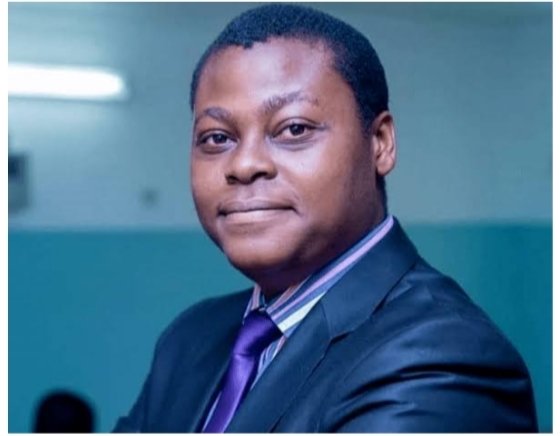
Arise News presenter, Rufai Oseni, has criticised Nigeria’s state electricity framework, arguing that most state governments lack the financial resources, infrastructure and technical capacity required to generate and distribute electricity independently.
Oseni made the remarks on Monday during Arise Television’s Morning Show, where he questioned the feasibility of allowing states to operate their own electricity markets, despite acknowledging that the policy appears attractive in principle.
He maintained that establishing independent electricity systems requires substantial investment in power generation facilities, gas supply, transmission networks and distribution infrastructure, resources he said remain beyond the reach of many state governments.
“This law making various states own their electricity is not going to be possible. It will never work. Let’s be sincere to ourselves.
“How many states can generate power? Where is the gas? Where is the grid? Where is the money?” Rufai said.
The broadcaster further questioned how state governments would manage electricity generation when the Federal Government, despite decades of involvement in the sector, has struggled to sustain power generation between 4,000 and 5,000 megawatts for a population exceeding 200 million people.
He also referenced the recurring collapse of the national grid as evidence of the country’s unresolved electricity challenges, arguing that decentralising the sector without addressing its existing structural weaknesses could worsen the situation.
Oseni pointed to the financial difficulties facing several states, including their struggles to meet workers’ salary obligations and continued dependence on allocations from the Federation Account Allocation Committee (FAAC).
He questioned the ability of such governments to mobilise billions of dollars for power generation plants and transmission infrastructure, noting that the existing electricity distribution system is already experiencing significant operational challenges.
According to him, many electricity Distribution Companies (DisCos) have failed to adequately deliver the power supplied to them, raising concerns about whether creating separate state electricity markets would address the country’s underlying distribution problems.
He warned that transferring greater responsibility to state governments without first resolving these challenges could simply multiply the sector’s existing difficulties across the federation.
Oseni urged the Federal Government to prioritise strengthening the national electricity infrastructure rather than relying on legislative reforms that, in his assessment, may not produce the promised results.
He specifically called for improvements to the national grid, reliable gas supply to Generation Companies (GenCos) and the country’s transmission network.
“If we cannot give Nigerians 24-hour electricity from one centre, how do you want to break it into 36 centres? It will never work,” he concluded.


Leave feedback about this