


Deepfakes, Disinformation: CCC Pushes Inter-Agency Communication Reforms Ahead of 2027
The Centre for Crisis Communication (CCC) has called for an integrated national crisis communication framework to address inter-agency rivalry, strengthen emergency response and counter the growing threats of misinformation, disinformation and artificial intelligence (AI)-generated deepfakes ahead of the 2027 general elections.
The Centre also called for the revival of the Forum of Spokespersons of Security and Response Agencies (FOSSRA) to promote information-sharing, harmonise public communication and improve coordination among security and emergency response institutions.
The recommendations were contained in a communiqué issued at the end of CCC’s Second National Symposium on Crisis Communication, held from October 27 to 28, 2026, at the Nigerian Air Force Club, Kaduna, under the theme, “Inter-Agency Collaboration, Public Trust and Cyber Threat Management in Crisis Communication.”
The two-day event attracted more than 150 participants drawn from the military, security and intelligence agencies, emergency response institutions, government establishments, academia, media organisations, regulatory bodies and other stakeholders.
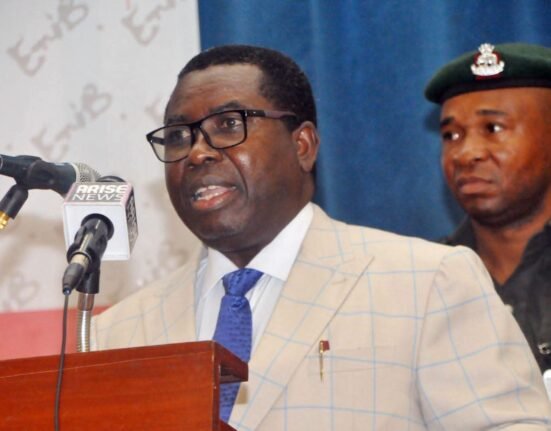
In his welcome address, the Chairman of CCC, Major General Chris Olukolade (rtd.), highlighted the strategic importance of effective communication to national security and public safety, particularly as Nigeria approaches the 2027 elections amid growing concerns over information manipulation and AI-generated deepfakes.
Declaring the symposium open on behalf of Kaduna State Governor, Senator Uba Sani, the Commissioner for Information, Ahmed Maiyaki, described misinformation and disinformation as emerging national security threats and advocated sensitisation programmes to educate political actors on responsible communication.
The keynote speaker, Dr Kabiru Adamu, Managing Director of Beacon Security and Innovation Limited, represented by Mr Samuel Aruwan, examined the diverse security challenges confronting Nigeria’s six geopolitical zones and emphasised the need for coordinated communication and stronger collaboration among security agencies.
INTER-AGENCY RIVALRY UNDERMINING PUBLIC TRUST
The communiqué identified weak inter-agency coordination, institutional rivalry, delayed information-sharing and conflicting public statements as major obstacles to effective crisis management and public confidence.
Participants observed that contradictory statements by security agencies concerning the same incident often create public confusion, undermine institutional credibility and complicate emergency response efforts.
To address these challenges, the symposium recommended clearly defined institutional responsibilities, designated lead agencies for emergencies, secure information-sharing mechanisms and coordinated public communication that is timely, accurate, consistent and empathetic, without compromising operational security.
It further urged security institutions to overcome institutional superiority and inferiority complexes and embrace mutual respect, professionalism and operational synergy, stressing that Nigeria’s complex security challenges require a whole-of-government and whole-of-society approach.
PROPOSES NATIONAL CRISIS INFORMATION ARCHITECTURE
A major recommendation was the establishment of an Integrated National Crisis Information Architecture (INCIA), backed by standard operating procedures and protocols to harmonise institutional responsibilities, information-sharing and emergency response.
The symposium also urged relevant authorities to consider establishing a Homeland Security Academy or inter-agency training centre to strengthen joint training, operational coordination and institutional preparedness.
Other recommendations included strengthening early-warning systems, joint threat monitoring, secure information-sharing arrangements and regular inter-agency exercises.
Participants also advocated the integration of strategic communication into security planning and crisis management, with designated spokespersons granted timely access to verified information, subject to operational security requirements.
The communiqué further highlighted the need to improve telecommunications infrastructure, expand access to reliable information during emergencies and regularly evaluate crisis response strategies to identify institutional gaps and incorporate lessons from previous incidents.
WARNS AGAINST AI DEEPFAKES, DISINFORMATION
Expressing concern over the growing exploitation of social media and emerging technologies to manipulate public opinion and undermine national stability, the symposium warned that misinformation during emergencies could trigger panic, endanger lives, divert critical resources and erode public confidence.
It called for functional technological frameworks to detect and counter coordinated disinformation campaigns, AI-generated deepfakes and other cyber threats.
The participants also recommended stronger digital literacy initiatives and responsible use of social media and artificial intelligence, alongside appropriate regulatory frameworks to address legitimate national security concerns while safeguarding freedom of expression, fundamental rights and due process.
Ahead of the 2027 elections, the symposium urged the CCC and relevant stakeholders to organise sensitisation programmes for political actors, journalists and media editors to discourage information manipulation and promote responsible public communication.
CCC SEEKS REVIVAL OF FOSSRA
In a related recommendation, the symposium called for the revival of the Forum of Spokespersons of Security and Response Agencies (FOSSRA) as a platform for harmonising information-sharing, coordinating public messaging and facilitating joint communication responses to emerging security threats.
It also advocated stronger partnerships between security agencies and media organisations, recognising the media’s critical role in crisis communication.
Participants stressed the need for journalists and media institutions to balance public interest and transparency with professional ethics and legitimate national security considerations.
ADVOCATES DIALOGUE, COMMUNITY ENGAGEMENT
The communiqué emphasised that military operations alone cannot guarantee sustainable peace, noting that dialogue, reconciliation and community engagement should complement security interventions where appropriate.
It cited the Kaduna Peace Model as an example of how dialogue and reconciliation could support security efforts and promote peaceful coexistence.
The symposium maintained that public trust, credible communication, transparency, accountability and professional conduct remain essential to securing community cooperation and achieving sustainable security outcomes.
It consequently called on government institutions, security agencies, media organisations, technology providers, civil society groups and communities to embrace a coordinated approach to crisis prevention, management and recovery.
CCC PLEDGES TO ADVANCE RECOMMENDATIONS
Reaffirming its commitment to strengthening professional capacity, promoting institutional cooperation and advancing strategic communication, the Centre urged stakeholders to translate the symposium’s recommendations into practical and measurable outcomes.
It stressed that crisis communication must be recognised as an integral component of national security planning and emergency management rather than treated merely as a public relations function.
The symposium concluded that Nigeria’s evolving security environment requires a coordinated, technology-driven and people-centred approach built on effective inter-agency collaboration, reliable information, institutional preparedness and public trust, while safeguarding fundamental rights.
The communiqué was signed by Commodore Kabir Aliyu (rtd.) on behalf of the Centre for Crisis Communication.




Leave feedback about this