

Nigeria’s push to diversify its economy away from hydrocarbons has brought renewed focus to the solid minerals sector, an industry long recognized for its vast potential but historically constrained by weak governance, opacity, and underinvestment. However, the success of this aspiration rests heavily on the effectiveness of its regulatory institutions.
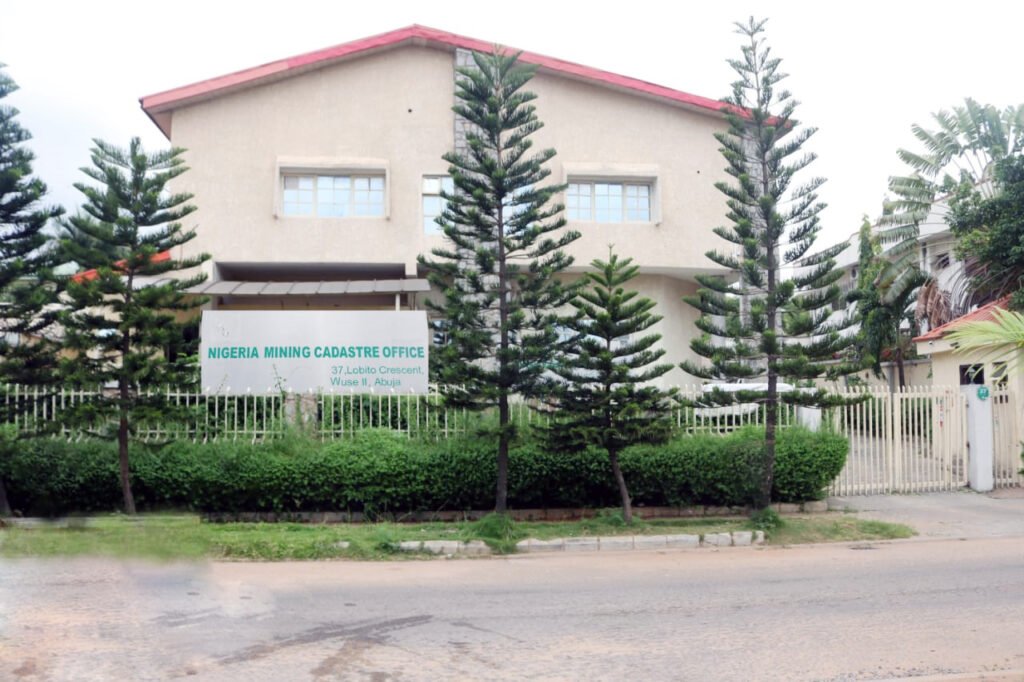
At the center of the country’s ongoing reform efforts is the Nigeria Mining Cadastre Office (NMCO), the statutory body charged with the administration of mineral titles and the maintenance of a transparent, orderly system for mining rights across the country. Over the years, this institution has increasingly positioned itself as a cornerstone of transparency, regulatory certainty, and investor confidence.
As Nigeria seeks to unlock the economic value embedded in its mineral resources—ranging from gold and limestone to lithium, cobalt and rare earth elements, the NMCO’s transition toward a digitized, rules-based system of mineral title administration is redefining how the sector is governed.
The NMCO was established under the Nigerian Minerals and Mining Act of 2007, a landmark legislation that restructured the sector and aligned it with international best practices. Operating under the Federal Ministry of Solid Minerals Development, the Office was designed as an autonomous and specialized registry responsible for the administration of mineral titles across the federation. It serves as the legal and administrative gateway for all mineral-related concessions in Nigeria.
Its statutory mandate is both technical and regulatory. It includes the issuance, renewal, processing, transfer, suspension, and revocation of mining titles, such as exploration licences, mining leases, small-scale mining permits, and quarry leases, alongside the maintenance of a comprehensive cadastral registry of mineral rights. Central to its operations is the application of a “first come, first served” principle, which ensures that mineral titles are allocated based on objective criteria rather than discretionary decision-making.
Through this centralized cadastre system, the Office ensures that mineral rights are properly documented, geographically defined, and publicly traceable. This reduce disputes, overlapping claims, and administrative opacity that have historically undermined investor confidence in the sector.
No doubt, this framework marked a decisive departure from earlier practices characterized by bureaucratic opacity and inconsistent allocation processes. By codifying transparency into law, the NMCO has become a critical instrument for restoring credibility to Nigeria’s mining governance architecture.
Beyond administrative functions, the Mining Cadastre Office plays a critical governance role in strengthening regulatory discipline within the mining industry. A transparent and predictable licensing framework is essential for attracting both domestic and foreign investment, particularly at a time when global competition for critical minerals is intensifying. By enforcing due process in the allocation of mining titles, the agency contributes directly to reducing arbitrariness, curbing illegal mining activities, and ensuring that resource extraction aligns with national development priorities.

From Fragmentation to Institutional Coherence
Prior to the 2007 reforms, Nigeria’s mining sector suffered from fragmented oversight and limited coordination. The dominance of the oil sector further relegated solid minerals to the margins of economic planning. Regulatory inefficiencies, overlapping mandates, and weak enforcement mechanisms created an environment that discouraged both domestic and foreign investment.
The creation of the NMCO introduced a cadastre-based system, widely regarded as the global standard for mineral resource management. In this system, mineral titles are treated as geo-referenced assets with clearly defined boundaries, ownership records, and legal protections.
This shift brought Nigeria into alignment with mining jurisdictions such as Ghana and Botswana, where transparent licensing regimes have played a decisive role in attracting sustained investment. In Botswana, for example, a robust mineral licensing system has underpinned decades of stable diamond sector growth, while Ghana’s cadastral reforms have enhanced investor confidence and regulatory compliance.
Digitization as a Governance Strategy
Meanwhile, the evolving complexity of Nigeria’s mining landscape demands deeper institutional modernization. One of the most pressing needs is full-scale digitalization of cadastre operations.
In recent years, the NMCO has accelerated its reform agenda through the deployment of digital infrastructure, most notably the Electronic Mining Cadastre Plus (eMC+) system. This platform represents a comprehensive shift from manual processes to an integrated, technology-driven licensing regime.
The eMC+ system enables:
End-to-end online processing of mineral title applications
Real-time tracking of application status
Geo-spatial mapping of mining concessions
Centralized data storage and retrieval
By automating workflows, the system minimizes human interference, reduces processing time, and enhances auditability. Each application is time-stamped and recorded in sequence, reinforcing the integrity of the “first come, first served” principle.
The digitization effort also aligns with broader federal initiatives aimed at modernizing public service delivery. Integration with national digital platforms has improved inter-agency coordination and expanded access for stakeholders across the country.
Globally, similar systems have transformed mining governance. In Chile, digital cadastre systems have streamlined concession management, while Canada has leveraged geospatial technologies to provide open access to mineral tenure data, fostering transparency and public trust.
Leadership Driving Institutional Transformation
Leadership remains a decisive variable in the pace and depth of institutional reform, particularly within extractive sector governance where regulatory credibility directly shapes investor confidence and fiscal outcomes. In this regard, the leadership of NMCO under its current Director-General, Engineer Obadiah Simon Nkom, has been closely associated with a structured modernization drive aimed at repositioning the agency as a transparent, technology-enabled, and investor-responsive institution.
A defining feature of this leadership approach has been the shift from manual, discretion-prone administrative processes toward a rules-based digital architecture. Central to this transition is the full operationalization and consolidation of the Electronic Mining Cadastre Plus (eMC+) platform, which now functions as the core infrastructure for mineral title administration.
Beyond system digitization, institutional decentralization has also emerged as a strategic priority. The expansion of zonal offices across Nigeria’s geopolitical zones represents an effort to bring regulatory services closer to stakeholders, particularly operators in remote or under-served mining corridors. This structural adjustment reduces dependency on centralized processing hubs, improves response time for applicants, and enhances regulatory visibility in regions where informal mining activities have historically been prevalent. It also strengthens compliance monitoring, as field-level presence enables quicker identification of unauthorized operations and improved data collection on mining activities.
Equally significant is the recalibration of stakeholder engagement strategy. Under the current leadership framework, investor outreach has evolved from episodic interaction to a more continuous and structured engagement model. This includes targeted participation in investment forums, sustained dialogue with domestic and foreign mining operators, and improved communication around licensing procedures and regulatory expectations. The objective is to reduce informational asymmetry, a persistent barrier to investment in frontier mining jurisdictions while projecting Nigeria’s mining sector as a more predictable and rules-governed environment.
In parallel, industry partnerships have been strengthened to support institutional capacity and technical efficiency. Collaboration with private sector actors and development partners has contributed to improved system architecture, geospatial data integration, and administrative modernization. These partnerships are particularly relevant in a sector where cadastral accuracy and data integrity are foundational to dispute reduction and investment security.
Taken together, these reforms reflect a governance model that prioritizes institutional credibility as a development asset. The cumulative effect has been a measurable improvement in service delivery efficiency, reduced administrative opacity, and enhanced stakeholder trust in the licensing regime. More importantly, they signal a broader institutional transition: from a traditionally bureaucratic registry function toward a digitally governed regulatory platform.
In essence, the leadership trajectory within the NMCO illustrates how administrative reform, when anchored in technology adoption, decentralization, and stakeholder alignment, can reshape institutional performance. While structural constraints within the wider extractive ecosystem remain, the ongoing reforms have strengthened the Office’s reputation as a technically disciplined and reform-oriented regulator, increasingly aligned with global standards of mineral cadastre governance.
Measurable Gains and Sectoral Impact
Recent developments indicate that the NMCO’s reforms are beginning to yield tangible results. Increased transparency in licensing has contributed to higher levels of investor interest, while improved regulatory oversight has enhanced revenue generation.
The sector has recorded significant growth in government earnings, reflecting better compliance and more efficient administration of mineral titles. Additionally, the availability of accurate cadastral data has enabled more informed decision-making by both policymakers and private investors.
The Office has also intensified its engagement with international stakeholders, positioning Nigeria as a competitive destination for mining investment. Participation in global mining forums and bilateral partnerships has helped showcase the country’s reform trajectory and resource potential.
Persistent Challenges in a Complex Ecosystem
Despite these gains, the NMCO operates within a broader environment that continues to present structural challenges.
While progress has been made in introducing electronic systems, there remains a critical gap in end-to-end automation, real-time data integration, and geospatial accuracy. A fully digitized mining cadastre system, supported by Geographic Information Systems (GIS), satellite mapping, and blockchain-enabled title verification—would significantly enhance transparency, eliminate duplication of licenses, and improve public access to mining data.
Illegal mining remains a major concern, particularly in gold-rich regions. These activities not only undermine regulatory authority but also pose environmental and security risks. Addressing this issue requires coordinated action involving law enforcement, community engagement, and formalization strategies.
Infrastructure deficits—including limited access to power, transportation, and processing facilities—also constrain the sector’s growth. Without adequate infrastructure, the commercial viability of many mining projects remains uncertain.
Data limitations present another hurdle. Comprehensive geological data is essential for attracting investment, yet large portions of Nigeria’s mineral resources remain under-explored. Finally, institutional coordination across multiple regulatory bodies can sometimes lead to delays and inefficiencies, underscoring the need for continued policy harmonization.
Opportunities and Future Trajectories
Looking ahead, the prospects for Nigeria’s mining sector remain substantial, with the NMCO positioned as a key enabler of growth.
The global transition toward clean energy technologies has increased demand for minerals such as lithium, cobalt, and nickel—resources that Nigeria possesses in commercially viable quantities. By maintaining a transparent and efficient licensing regime, the NMCO can help attract the investment needed to develop these resources.
There is also significant potential for the formalization of artisanal and small-scale mining (ASM). By integrating informal miners into the regulatory framework, the government can enhance revenue collection, improve environmental standards, and reduce conflict.
Technology integration also offers a powerful tool for regulatory enforcement. Remote sensing and drone surveillance can support monitoring of active mining sites, helping to detect illegal operations and environmental violations in real time. Similarly, interoperable databases linking the Mining Cadastre Office with environmental agencies, tax authorities, and security institutions would strengthen compliance tracking and revenue assurance.
Equally important is the need to strengthen cybersecurity within the cadastre system. As mining records become increasingly digitized, protecting sensitive geospatial and ownership data from manipulation or unauthorized access becomes a national security concern. Investment in secure cloud infrastructure, encryption protocols, and digital audit trails is therefore essential.
Institutionally, capacity building must accompany technological reforms. Staff of the Mining Cadastre Office require continuous training in digital land administration systems, data analytics, and regulatory intelligence. Without human capacity development, even the most advanced technological systems risk underperformance.
A Model for Institutional Reform
The evolution of Nigerian Mining Cadastre System illustrates how sustained institutional reform can reshape governance outcomes in the extractive sector. Historically constrained by discretion-driven processes and fragmented oversight, the Office has progressively institutionalized a governance framework anchored on transparency, accountability, and operational efficiency. This shift has been reinforced by a transition from manual administrative procedures to a rules-based and technology-enabled licensing system, reducing ambiguity in mineral title allocation while improving investor confidence.
At the operational level, digitization has been central to this transformation. The deployment of automated workflows, geo-referenced cadastral data, and real-time application tracking has strengthened both efficiency and traceability in mineral rights administration. These systems have improved auditability, allowing regulators and stakeholders to verify licensing status and spatial boundaries with greater precision. In parallel, standardized procedures and clearer timelines have reduced administrative discretion, thereby limiting opportunities for arbitrary decision-making.
Importantly, the reform process has also strengthened institutional accountability and transparency. Improved access to cadastral information and more predictable licensing procedures have reduced informational asymmetry between government and investors. This has enhanced compliance while also lowering the risk of disputes over mineral tenure. The integration of digital infrastructure with a codified legal framework has therefore produced a more stable and credible regulatory environment.
As Nigeria intensifies efforts to diversify its economy, the solid minerals sector is poised to play an increasingly prominent role. The Nigeria Mining Cadastre Office, through its commitment to digitization and transparency, has laid the foundation for a more structured and investor-friendly mining environment.
While challenges persist, the progress achieved thus far demonstrates that institutional reform, when driven by clear mandates and supported by technology can yield meaningful results.
In redefining how mineral resources are governed, the NMCO is not only enhancing operational efficiency but also rebuilding confidence in Nigeria’s mining sector. For a country seeking to unlock the full value of its natural endowments, that confidence may prove to be its most valuable resource.




Leave feedback about this