
“ Defeated at the polls, vindicated in court, and redeemed by the people.”
In the early hours of Monday, February 27, 2023, a defining political moment unfolded in Cross River State. As dawn broke over the South-South, Dr. Emmanuel Emanghe, the Returning Officer of the Independent National Electoral Commission (INEC), announced a result that would rever-berate far beyond the state’s borders.
Senator Jarigbe Agom Jarigbe had won.
Polling 76,145 votes, he defeated former Governor Ben Ayade, who secured 56,595 votes, in one of the most keenly contested senatorial races in the region. The outcome stunned political ob-servers nationwide, many of whom had assumed that a sitting governor’s political machinery would be insurmountable.
Yet, for those who had followed Jarigbe’s trajectory, the result was less a political upset than the logical outcome of years of grassroots cultivation, organizational discipline, and personal resilience in the face of electoral and legal adversity.
His 2023 victory was not an isolated event; it was the culmination of a long arc that began with tragedy, detoured through the courts, and eventually crystallized into a formidable grassroots platform known as the Jarified Movement.

A TRAGIC VACANCY, A TEST OF RESILIENCE
First Encounter with the
Senate — 2018
“Politics tested him. The courts defined him. The people stood by him.”
Jarigbe’s first entry into the Senate was forged in an environment of grief, contestation, and judicial precedent.
In December 2017, Cross River North lost its sitting Senator, Chief (Mrs.) Rose Oko, whose death created a vacancy that necessitated a by-election in 2018. At the time, Jarigbe was serving his second term in the House of Representatives, representing Ogoja/Yala Federal Constituency, where he had already established himself as a meticulous legislator with deep grassroots roots.
Encouraged by traditional rulers, youth groups, market women, students, and community leaders across Ogoja, Obudu, Yala, Obanliku, and Bekwarra, Jarigbe contested the senatorial seat on the platform of the Peoples Democratic Party (PDP). The campaign was intense, polarizing, and heavily influenced by state level power dynamics.
On election day, INEC’s field results declared Dr. Stephen Odey as the winner. Many of Jarigbe’s supporters rejected the outcome, arguing that the declared figures did not reflect the actual will of the electorate.
Rather than accept defeat, Jarigbe initiated a rigorous legal challenge, contending that the integrity of the process had been compromised. The case moved through the Election Petition Tribunal and the Court of Appeal before ultimately reaching the Supreme Court.
After exhaustive judicial review, the apex court ruled in Jarigbe’s favour, affirming that he was the legitimate winner of the by-election and restoring his mandate. However, the protracted litigation delayed his full assumption of the seat and reshaped his political strategy.
This episode became a defining inflection point in his career: defeated at the polling units, vindicated in the courtroom.
THE MAKING OF A MOVEMENT
The Jarified Movement — From Slogan to Structure
“Jarified was never just a campaign. It was a covenant with the people.”
In the aftermath of the 2018 by-election and legal battle, Jarigbe’s supporters began organizing in a more structured and ideologically coherent manner — giving birth to the Jarified Movement.
Unlike traditional political machines built around patronage, elite bargaining, and godfatherism, the movement rested on three pillars: constituency ownership, participatory politics, and measurable development impact.
The term “Jarified,” originally a colloquial expression among supporters, evolved into a political identity — signifying loyalty, accountability, and collective progress. To be “Jarified” meant embracing politics as service rather than transaction.
The movement drew its base from youths, students, women’s cooperatives, farmers, artisans, and community-based organizations that had historically felt marginalized from mainstream politics. It operated through ward coordinators, volunteer clusters, and issue-based committees focused on education, youth empowerment, rural infrastructure, and electoral mobilization.
By 2023, the Jarified Movement had matured into a sophisticated grassroots engine capable of counterbalancing the political machinery of a sitting governor.
IN THE RED CHAMBER
Inauguration and Legislative Leadership
“National relevance. Local resonance.”
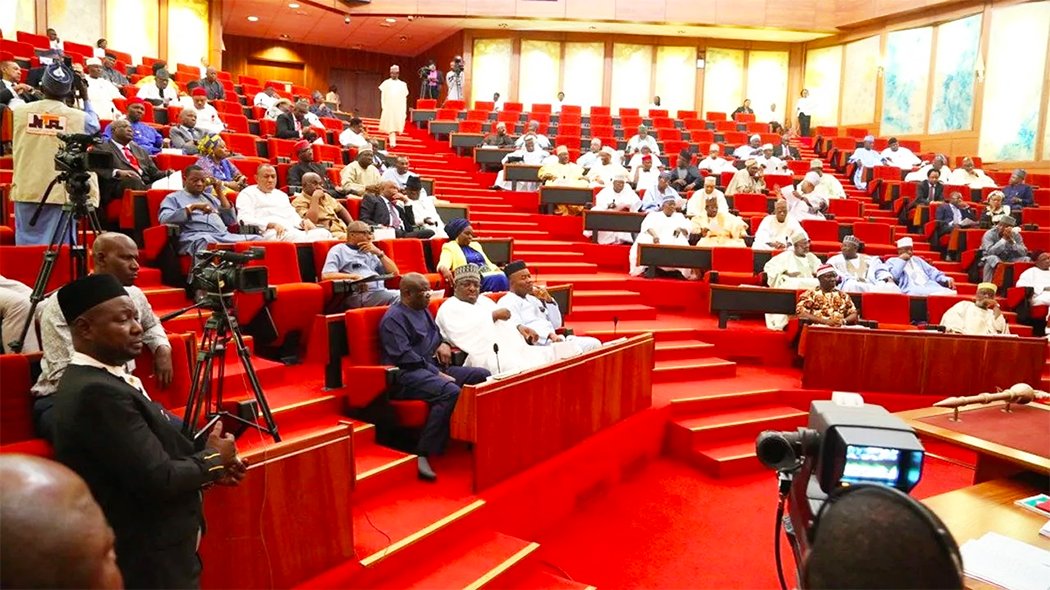
On June 13, 2023, Jarigbe was inaugurated into the 10th Senate of the Federal Republic of Nige-ria. He was subsequently appointed Chairman of the Senate Committee on Petroleum Resources (Gas), placing him at the center of Nigeria’s energy governance and economic transition.
From the outset, his legislative posture reflected a dual commitment: advancing national policy while remaining firmly anchored in the lived realities of Cross River North.
In a Senate often defined by partisan maneuvering and shifting alliances, he has maintained a reputation for diligence, procedural competence, and constituency-centered representation.
POLICY WITH A HUMAN FACE
Bridging Policy and People
“If policy doesn’t reach the village, it hasn’t worked.”
Jarigbe’s legislative portfolio demonstrates a deliberate alignment between national policymaking and grassroots needs.
He sponsored the Federal Medical Centre, Ogoja (Establishment) Bill, 2023 (SB 142), aimed at strengthening healthcare access and infrastructure in Cross River North.
He supported the Nigerian Institute of Public Health Bill, reinforcing national capacity for disease surveillance, research, and emergency preparedness.
In the security sector, he backed the Police Act (Amendment) Bill, 2023 (SB 54), designed to enhance the welfare and operational efficiency of law enforcement personnel.
His sponsorship of the Federal University of Agriculture, Ogoja (Establishment) Bill, 2023 (SB 809) reflects a strategic investment in agricultural innovation, rural livelihoods, and food security.
BUILDING PEOPLE, BUILDING COMMUNITIES
Education, Empowerment, and Human Capital
“Classrooms today. Leaders tomorrow.”
Education remains central to Jarigbe’s constituency interventions.
He has facilitated the construction and renovation of classroom blocks, donated learning materials, and awarded scholarships and bursaries to indigent students nationwide.
He has also supported students with WAEC and JAMB registration fees, easing financial barriers to education.
Through his influence, constituents have secured employment opportunities in federal agencies such as N-HYPPADEC, the Federal Civil Service, and the National Assembly Service Commission.
ROADS, WATER, AND RURAL LIFE
Infrastructure that Connects and Empowers
“Development is felt most where roads were once absent.”
Jarigbe’s infrastructure interventions have focused on connectivity, mobility, and basic services.
He completed the 1.5-kilometre Ibil–Abakpa Road (Alladim Section), rehabilitated the Abakpa–Ndok Road, and facilitated upgrades to several critical routes across the district.
On water access, at least 21 rural communities benefited from solar-powered boreholes, addressing long standing challenges of water scarcity.
He also installed solar-powered streetlights across multiple wards, improving security and extending economic activity into evening hours.
EMPOWERMENT BEYOND POLITICS
Youth, Humanitarianism, and Livelihoods
“Opportunity is the most sustainable form of charity.”
Jarigbe’s empowerment initiatives have targeted youths, women, traditional institutions, and small enterprises.
Key interventions include:
Distribution of laptops and printers to secondary schools
Empowerment of over 110 youths with motorcycles
Donation of roofing materials and cash grants to storm-affected communities
Provision of tricycles across five LGAs
Mobility support for traditional rulers in all 54 wards
He donated an MF-375 tractor to the Jarified Brothers Cooperative, supported medical outreaches, and trained 500 youths in aquaculture data management.
During COVID-19, he was among the first leaders in Cross River North to distribute PPEs, sanitizers, and palliatives to hospitals and vulnerable communities.
POWER, POLICY, AND POSITIONING
Political Realignment — From PDP to APC
“Strategy, not sentiment.”
In November 2025, Jarigbe formally defected from the PDP to the All Progressives Congress (APC), a move that sparked national debate.
After meeting President Bola Ahmed Tinubu, he cited the federal government’s infrastructure agenda, economic reforms, and policy direction as reasons for his decision.
He framed the defection as a strategic repositioning to secure greater federal investment and development opportunities for Cross River North.
THE MAN BEHIND THE MANDATE
Recognition and Personal Journey
Jarigbe has received several honours, including:
Cross River’s Most Outstanding Senator of the Year (2024)
ICON of Humanitarian Service Award
Legislator of the Year
ICON of Nation Building Award
Global Peace and Humanitarian Award
Born on September 12, 1970, in Ibil, Ogoja LGA, he earned a degree in Chemistry from the University of Calabar in 2004 and later obtained a Law degree from Baze University in 2022.
Before joining the Senate, he served two terms in the House of Representatives (8th and 9th As-semblies).
FINAL SPREAD: LEGACY IN THE MAKING
Representation with Impact
“Not just a senator — a steward.”
In a Senate defined by political bargaining and institutional complexity, Senator Jarigbe Agom Jarigbe has distinguished himself through consistency, service, and measurable outcomes.
For the people of Ogoja, Obudu, Yala, Obanliku, and Bekwarra, representation is measured not in rhetoric, but in roads rehabilitated, classrooms built, water provided, and opportunities created.
As Nigeria confronts evolving governance and development challenges, Jarigbe’s career embodies a clear ethos: representation with impact.




Leave feedback about this