

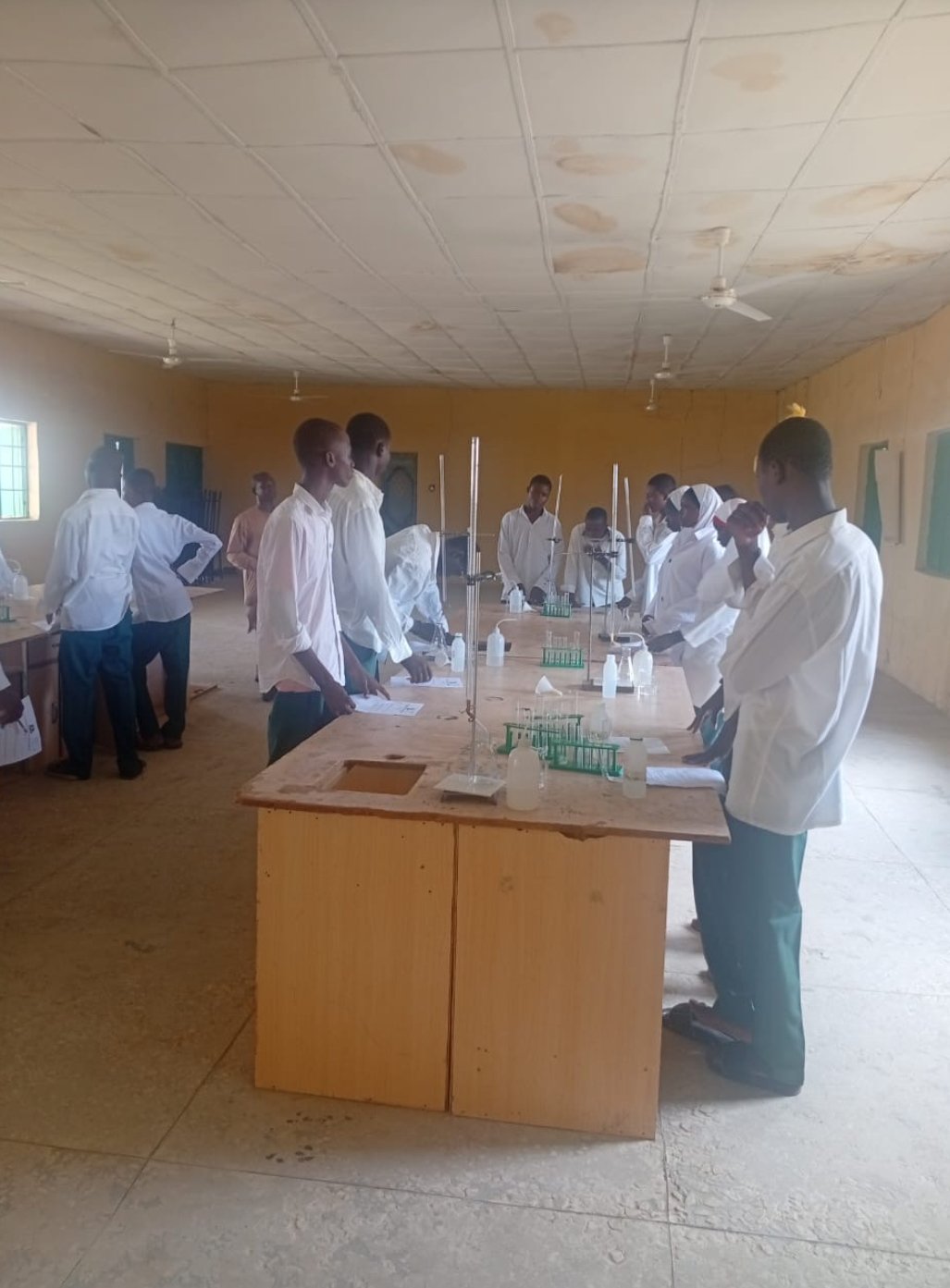
At exactly 9:00 a.m., the workshops at the Federal Government Technical School, Orozo, were already buzzing with activity.
The sharp clang of metal rang through the welding section as bright sparks flew across workstations. In nearby classrooms, students concentrated on assembling electrical circuits while instructors moved from bench to bench, correcting errors, offering guidance and reinforcing practical skills.
It was more than an examination day.
It was a reflection of a new generation of skilled Nigerians being prepared to drive the country’s industrial future.
As part of its independent monitoring mandate, CSO Media Integrated Ltd assessed and reported on the National Business and Technical Examinations Board (NABTEB) Common Entrance Examination and the 2026 In-School Final Year Certificate Examinations conducted at the Federal Government Technical School, Orozo, alongside several technical schools across Kebbi State.
The exercise provided first-hand insight into Nigeria’s evolving technical and vocational education system.
Across the examination centres visited, assessment processes were orderly, transparent and professionally managed. Students displayed confidence in their practical abilities, while supervisors and invigilators maintained high standards of discipline and integrity throughout the examinations.
Beyond the smooth conduct of the examinations, the visits revealed a growing confidence in technical and vocational education as a viable pathway to employment, entrepreneurship and national development.
Established in 1993, NABTEB is responsible for conducting technical, vocational and business examinations leading to the award of the National Technical Certificate (NTC), National Business Certificate (NBC) and other specialised qualifications. The Board also plays a critical role in curriculum development, quality assurance, research and assessment aimed at producing industry-ready graduates.
Under the leadership of Registrar and Chief Executive Officer, Dr. Mohammed Aminu, the Board has intensified efforts to strengthen Technical and Vocational Education and Training (TVET) nationwide.
NABTEB has recorded enrolment of over 100,000 candidates, expanded accredited examination and assessment centres by more than 10 per cent, strengthened measures against examination malpractice and updated curricula across multiple trade areas to reflect current industry demands.
Dr. Aminu has consistently advocated greater investment in technical education, stressing that Nigeria’s economic growth depends not only on university graduates but also on skilled technicians, craftsmen, engineers and entrepreneurs capable of driving industrialisation and job creation.
Observations during the monitoring exercise reinforced that vision.
Students across the centres demonstrated competence in practical disciplines ranging from electrical installation and construction to automotive technology, ICT and business studies. For many, technical education offers a pathway to sustainable careers through practical skills rather than reliance on white-collar employment.
The findings come at a time when youth unemployment remains a major national challenge. Experts continue to identify Technical and Vocational Education and Training as one of the most effective tools for equipping young Nigerians with employable and entrepreneurial skills, despite challenges such as inadequate funding, ageing equipment, shortages of qualified instructors and lingering misconceptions about vocational education.
The workshops visited painted a different picture.
Each practical session reflected the development of future artisans, engineers, technicians and innovators whose skills will contribute directly to national productivity and economic growth.
As Nigeria seeks to diversify its economy and strengthen local manufacturing, stakeholders say greater attention must be given to technical education alongside conventional academic learning.
The independent monitoring exercise concluded that NABTEB is playing a significant role beyond administering examinations. Through credible assessments, curriculum reforms and sustained institutional leadership, the Board is helping to build a skilled workforce equipped to meet the country’s future industrial and economic needs.
In the classrooms and workshops of Nigeria’s technical schools, the foundations of that future are already taking shape.
Technical schools are increasingly taking centre stage in Nigeria’s drive for economic .
.





Leave feedback about this