


By Comrade Dominic Ogakwu
For 50 years, the Federal Cooperative College, Oji River (FCCO), Enugu State, has occupied a distinctive place in Nigeria’s technical and cooperative education system. Established in 1976 under the Federal Government, the college was created to develop manpower for the cooperative sector and has evolved into a specialised tertiary institution serving the South-East and South-South regions.
The Agricultural Research Council of Nigeria (ARCN) describes FCCO as a premier cooperative college established in 1976, while records of the National Board for Technical Education (NBTE) also list Oji River among Nigeria’s federal specialised institutions established that year.
Its golden jubilee in 2026 therefore represents more than an anniversary. It provides an opportunity to examine how an institution founded to meet the manpower needs of the cooperative movement is responding to a very different economy—one shaped by food security, technology, entrepreneurship, agricultural value chains and the growing demand for practical, employable skills.
That transition is central to the agenda of the current Provost and Chief Executive Officer, Dr Jude Ejikeme Obidiegwu, who assumed office in 2024. His administration has placed academic expansion, agricultural innovation, strategic partnerships, infrastructure, research and skills development at the centre of its repositioning programme.






From Cooperative Education To A Broader Skills Agenda
Nigeria’s cooperative education system has a long history. The Federal Cooperative College, Oji River, was among the specialised federal cooperative institutions established in 1976, alongside the colleges in Kaduna and Ibadan.
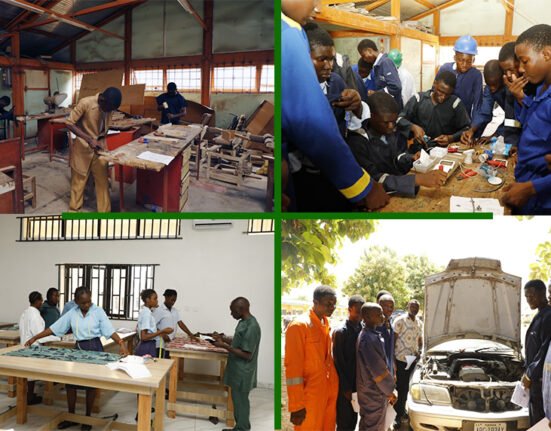
FCCO has since evolved beyond its original training function. Its academic portfolio has expanded into areas including Cooperative Economics and Management, Accountancy, Marketing, Banking and Finance, Public Administration, Business Administration and Computer Science, according to reports on the institution’s programmes.
The next phase is even more ambitious.
The college has initiated the process of establishing five additional departments: Mass Communication, Agricultural Technology, Home and Resource Economics, Hospitality and Tourism Management, and Science Laboratory Technology. The proposed programmes are intended to complement existing courses and provide students with technical and vocational competencies relevant to employment and enterprise development.
The college said it was targeting September 2026 for first admissions into the proposed departments, subject to regulatory approvals, with NBTE and ARCN expected to participate in the process.
This expansion is significant because it represents a deliberate attempt to broaden the institution’s relevance without abandoning its cooperative identity. A modern cooperative institution can no longer be confined to conventional cooperative administration; it must understand agriculture, finance, communication, technology, hospitality, enterprise and the changing requirements of the labour market.
Putting Agriculture At The Centre
Perhaps the most important development in FCCO’s emerging agenda is the institution’s growing emphasis on agriculture and aquaculture.
The rationale is compelling. Cooperative organisations have historically provided mechanisms for collective production, access to markets, financing and value-chain participation. Linking that tradition with agricultural technology and entrepreneurship gives FCCO an opportunity to connect its historical mandate with one of Nigeria’s most pressing economic challenges.
That ambition has attracted an international partner.
In August 2026, Thailand’s International Cooperation Agency (TICA), Kasetsart University and FCCO signed a Record of Discussion on the Thai-Nigeria Sustainable Agricultural Technology Learning Centre project. Kasetsart University and FCCO also signed a Memorandum of Understanding. The agreements were witnessed by Thailand’s Deputy Prime Minister and Foreign Minister, Sihasak Phuangketkeow, and Nigeria’s Minister of State for Agriculture and Food Security, Senator Aliyu Sabi Abdullahi.
According to Thailand’s Ministry of Foreign Affairs, the project is one of the flagship initiatives under the Thailand-Africa Development Forum and is designed to strengthen skills and knowledge in aquaculture and the use of small-scale agricultural machinery, alongside the establishment of the learning centre and a Thai Corner.
For FCCO, this partnership has implications far beyond international visibility. Properly implemented, it could provide a platform for practical training, research, technology transfer, agricultural demonstration, youth development and enterprise creation.
Obidiegwu has described the ambition as transforming the college into an agricultural innovation hub and world-class learning centre, with food security, sustainable crop production and aquaculture among the key areas of focus.
The test, however, will be what happens after the agreements are signed. The value of the partnership will ultimately be measured in functioning facilities, trained beneficiaries, research outputs, technology adoption and viable enterprises.
Building An Institution, Not Just A Campus
The transformation being pursued at Oji River is not limited to academic programmes.
The college has previously invested in lecture halls, hostels, administrative facilities, ICT infrastructure and other campus facilities. The current management inherited that institutional foundation and is pursuing additional capital and intervention projects.
A 2026 procurement notice shows FCCO preparing to implement capital and zonal intervention projects in compliance with the Public Procurement Act. The procurement process covers various goods and services associated with the institution’s activities and development plans.
The broader public discussion around FCCO’s budget, however, has generated questions because some projects appearing under the college’s budget code concern interventions far beyond its conventional academic mandate. Independent reports have highlighted such entries and called for greater clarity over the role of the college in their implementation.
That scrutiny is important. Public expenditure should always be transparent, traceable and subject to verification. But budget entries, procurement records and allegations should not automatically be treated as proof of wrongdoing; neither should institutional achievements be presented as proof that every public allegation is unfounded. The appropriate standard remains evidence.
Beyond The Controversies
It is against this backdrop that the intervention by two civil society organisations assumes particular significance.
The Movement for Better Nation (MBN) and the Good Governance Campaigners Network (GGCN) undertook a fact-finding exercise after allegations linked FCCO and its Provost to alleged project duplication. According to the organisations, their inquiry included a visit to the college and inspection of project sites associated with the allegations.
Their conclusion was unequivocal.
The CSOs investigation found that the projects at the centre of the controversy were constituency projects in Akwa Ibom State and were not projects located at FCCO, Oji River. They therefore rejected the association of the college and Obidiegwu with the alleged project duplication and announced a vote of confidence in the Provost.
The groups went further, commending what they described as visible institutional development under Obidiegwu’s leadership and arguing that the college had recorded a significant improvement in its learning and capacity-building environment.
Their intervention is important because it brought physical verification into a debate that had largely been conducted through documents and public claims. It does not replace the authority of formal government audits or investigations where such processes are required, but it offers a documented civil-society perspective that challenges the portrayal of the college leadership contained in the allegations they investigated.
For FCCO, the result has helped redirect attention to the institution’s substantive development agenda: academic expansion, agricultural innovation, international partnerships, infrastructure and skills development.
The lesson is straightforward. Public institutions should be scrutinised, but allegations should be tested against evidence; equally, institutional progress should be assessed through what can be seen, verified and measured.
Research With A Development Purpose
Another dimension of the emerging FCCO story is the relationship between leadership and research.
Obidiegwu has an academic and research background with interests touching agriculture and food safety. His research record includes work relating to mycotoxins and agricultural production, areas that are increasingly relevant to Nigeria’s food-security challenges.
That orientation complements FCCO’s agricultural agenda. The college’s proposed expansion into Agricultural Technology, combined with its partnership with Kasetsart University, creates an opportunity to connect teaching with research, practical demonstration and enterprise.
For students, the ultimate value of such an approach is not simply acquiring certificates. It is acquiring knowledge that can be applied—to farms, cooperative societies, businesses, public institutions and community development.
50 Years On, A New Chapter
FCCO marked its golden jubilee in 2026 with its 28th matriculation and induction ceremony. The occasion provided an opportunity to reflect on five decades of institutional service and the direction of the next generation.
The timing could hardly be more appropriate.
The institution is now attempting to move from a specialised cooperative college towards a broader centre for skills, agricultural technology, entrepreneurship, research and cooperative innovation.
The Obidiegwu administration has set out an ambitious direction. The proposed new departments could expand the academic base. The Thailand partnership could internationalise agricultural training and technology transfer. Research could strengthen the knowledge foundation. Infrastructure and ICT investments could improve the learning environment.
But ambition must eventually produce outcomes.
The questions that matter now are practical: Will the new programmes secure the necessary approvals and resources? Will the agricultural technology centre become fully operational? How many students, farmers and young entrepreneurs will benefit? What research will emerge from the new partnerships? How many graduates will create jobs or productive enterprises? And how effectively will the college maintain transparency in the management of public resources?
Those are the measures that will define the durability of the current transformation.
For Dr Jude Ejikeme Obidiegwu and his management team, the opportunity is substantial. So is the responsibility.
For FCCO, its golden jubilee is more than a celebration of the past. It is a platform for redefining the institution’s contribution to Nigeria’s future.
After five decades, the college is seeking to connect its cooperative heritage with the realities of a modern economy—where skills, agriculture, technology, enterprise and innovation increasingly determine whether institutions remain relevant.
That is the story beyond the headlines: an established federal institution undergoing an ambitious repositioning, attracting international partnerships, expanding its academic horizon and facing legitimate scrutiny as it manages a new phase of growth.
Its lasting legacy will ultimately depend on whether today’s plans become tomorrow’s measurable results—and whether those results translate into better education, stronger cooperatives, productive enterprises and opportunities for the people FCCO was established to serve.
Last Line
As the Federal Cooperative College, Oji River, enters its sixth decade, its transformation reflects an institution seeking to align its cooperative education heritage with the demands of a changing economy. From expanding academic programmes and strengthening infrastructure to pursuing strategic partnerships in agriculture, technology and skills development, FCCO is positioning itself for a broader role in Nigeria’s human-capital development.
The emerging partnership with Thai institutions, alongside the college’s renewed focus on agricultural innovation and market-driven training, provides a significant platform for the next phase of its development. The confidence expressed by civil society groups following their fact-finding exercise also adds another dimension to the ongoing public conversation about the institution and its leadership.
Ultimately, FCCO’s enduring legacy will be measured not only by projects and partnerships, but by their tangible impact on students, staff, communities and the wider cooperative sector. The task ahead is to consolidate these gains through transparency, accountability, innovation and measurable results.



Leave feedback about this