

By Mukhtar Ya’u Madobi
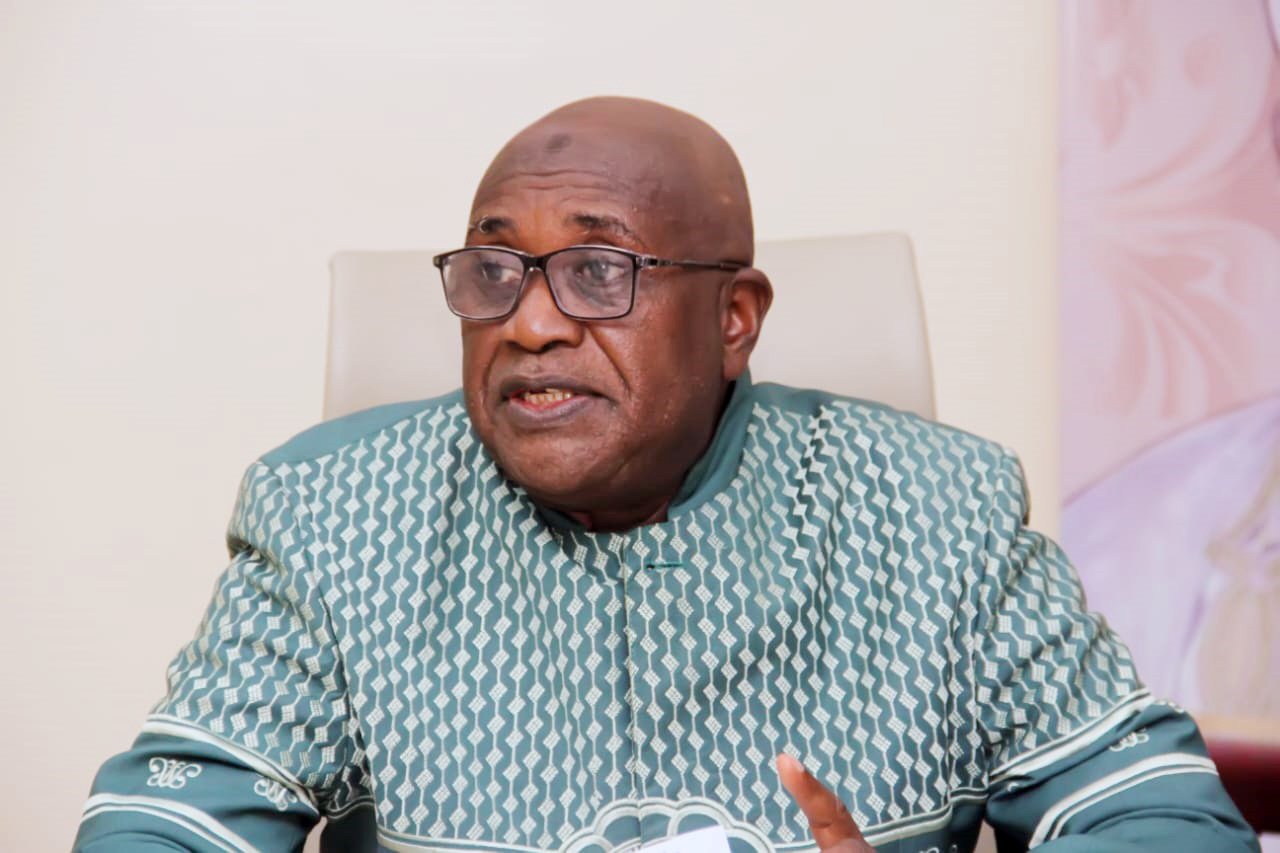
When public institutions are assessed by the difference they make in the lives of citizens, the record of Alhaji Abubakar Sadiq Yelwa at the National Hydroelectric Power Producing Areas Development Commission (N-HYPPADEC) is worth examining.
Since taking over as Managing Director and Chief Executive Officer in 2021, Yelwa has overseen the expansion of N-HYPPADEC’s operations and a broad range of interventions in communities affected by the environmental and socio-economic consequences of hydroelectric power generation.
His reappointment by President Bola Ahmed Tinubu in August 2025 for a second and final four-year term was a significant vote of confidence in that direction. The renewal, made in accordance with Section 93 of the Electricity Act, 2023, also placed on Yelwa the responsibility of consolidating the gains of his first tenure and addressing the challenges that remain.
N-HYPPADEC was established to tackle the ecological and developmental problems associated with hydroelectric dams. Its mandate covers communities that have often had to contend with flooding, displacement, environmental degradation and inadequate social infrastructure despite hosting facilities critical to Nigeria’s power sector.
Yelwa’s approach has been to tackle those problems through a combination of physical infrastructure, flood control, water supply, education, healthcare, livelihoods, community engagement and institutional development.
N-HYPPADEC initially covered six states: Benue, Kwara, Kebbi, Kogi, Niger and Plateau. Following the 2023 amendment to its establishing framework, Kaduna, Nasarawa, Gombe and Taraba were added, bringing the number of member states to 10.
The expansion has significantly increased the Commission’s responsibilities, with its interventions now extending across more than 100 local government areas and thousands of host communities.
Under Yelwa, the Commission has responded with projects covering potable water, flood and erosion control, education, healthcare, agriculture, youth development and community infrastructure.
One of the most visible interventions has been the provision of more than 800 solar-powered boreholes in rural and riverine communities. N-HYPPADEC has also rehabilitated major water facilities, including the New Bussa and Yauri water schemes, while supporting the restoration of the Mana Water Works in Niger State.
The emphasis on rehabilitating existing infrastructure is significant. Rather than concentrating only on new projects, the Commission has sought to restore facilities capable of delivering services to large populations.
Flooding remains one of the most persistent challenges in many N-HYPPADEC communities. It has therefore become a major focus of the Commission’s intervention strategy.
The Koton Karfe flood-control project in Kogi State and the 1,200-metre drainage system around the Idye Basin in Makurdi, Benue State, are among the projects designed to reduce recurrent flooding. The Commission has also constructed drainage systems and culverts and undertaken the desilting of waterways in several locations.
The focus has expanded in 2026 from flood control to broader climate resilience. N-HYPPADEC has intensified awareness campaigns in vulnerable communities while promoting preparedness and waterway safety through the distribution of life jackets and other materials.
At a consultative meeting in Ilorin in July 2026, Yelwa called for increased funding for flood mitigation, noting that the scale of the threat required resources commensurate with the vulnerability of affected communities.
The funding question is particularly important because effective flood management requires sustained investment, not just emergency intervention after disasters occur.
Another feature of the Yelwa administration has been its emphasis on engagement with communities and other stakeholders.
The Commission’s “One Community, One Project” approach is intended to make interventions more responsive to local needs. Consultations with traditional rulers, community leaders, state governments and other stakeholders have become an important part of project planning and implementation.
At the July 2026 consultative meeting in Ilorin, N-HYPPADEC management reviewed ongoing projects, assessed implementation challenges and considered measures to improve field operations. Some field officers and state coordinators were subsequently redeployed as part of efforts to strengthen service delivery.
Yelwa has also maintained engagement with the National Assembly. His July 2026 familiarisation visit to the new Chairman of the House of Representatives Committee on N-HYPPADEC, Hon. Kelechi Unwogu, underscored the importance of legislative cooperation to the Commission’s work.
N-HYPPADEC’s interventions under Yelwa have not been limited to physical infrastructure.
Education has received considerable attention through the construction and rehabilitation of classrooms, examination support and scholarships. The Commission has supported thousands of indigent students, including sponsorship for 4,000 students to resit senior secondary examinations through NECO.
Youth development has also featured prominently through vocational training, skills acquisition and start-up support. In agriculture, farmers have benefited from power tillers, fertilisers, knapsack sprayers and other inputs aimed at improving productivity and strengthening rural livelihoods.
Recent interventions in Gombe State, for example, have included solar-powered boreholes, solar streetlights, drainage desilting, classroom construction, farm equipment and examination support.
Healthcare remains another component of the Commission’s development programme, with medical outreaches and support for health facilities in underserved communities.
For many communities located around Nigeria’s major rivers, waterways remain essential for transportation, trade and access to neighbouring settlements. N-HYPPADEC has consequently invested in waterway safety through the distribution of boats and life jackets and the removal of dangerous obstructions along sections of the River Niger and River Kaduna.
In Kaduna State, the Commission has distributed 1,250 life jackets and provided a flying boat to support waterway operations and emergency response.
Resettlement has also become necessary in communities repeatedly affected by flooding and dam-related hazards. In Niger State, N-HYPPADEC commenced the construction of more than 150 two-bedroom houses as part of a resettlement scheme for affected residents.
These interventions reflect the Commission’s broader responsibility to address not only immediate environmental problems but also their consequences for livelihoods and community stability.
The progress recorded under Yelwa has not eliminated the structural challenges facing N-HYPPADEC. Chief among them is funding.
At the July 2026 consultative meeting, Yelwa raised concerns over the non-remittance of the statutory 10 per cent contribution expected from electricity-generating companies. For a Commission with an expanding mandate across 10 states and thousands of communities, any shortfall in statutory revenue inevitably affects the pace and scale of project delivery.
The issue places a premium on stronger institutional partnerships, legislative support, improved revenue mobilisation and access to climate finance.
N-HYPPADEC’s engagement with international climate platforms, including COP-related activities, is therefore potentially important in opening avenues for funding climate adaptation, ecosystem restoration and resilient livelihoods in hydroelectric host communities.
Internally, the Commission has also continued to focus on staff development, productivity and welfare, recognising that institutional performance depends substantially on the capacity and motivation of its workforce.
Five years into Yelwa’s stewardship, N-HYPPADEC has a wider footprint and a more visible presence in the communities it was created to serve.
His recognition at the 2026 Nigeria Public Service Lectures Series and Awards, organised by the Bureau of Public Service Reforms, further reflects the attention his administration has attracted for public service delivery and institutional development.
But recognition alone is not the measure of success. The more important test is whether projects are completed to standard, maintained and translated into lasting improvements in the lives of beneficiaries.
Yelwa’s second and final tenure therefore comes with greater expectations. The priorities are clear: consolidate completed projects, address funding constraints, strengthen climate resilience, improve community participation and ensure that interventions produce sustainable economic and social benefits.
For communities that have lived for decades with the costs of hydroelectric development, the ultimate measure of N-HYPPADEC’s success is simple: better water, safer communities, improved infrastructure, stronger livelihoods and greater opportunities for their children.
That is the standard against which the next chapter of Abubakar Sadiq Yelwa’s leadership will be judged.
Five years have established a record. The challenge of the second tenure is to make that record deeper, wider and more sustainable.




Leave feedback about this