
By Kabir Akintayo
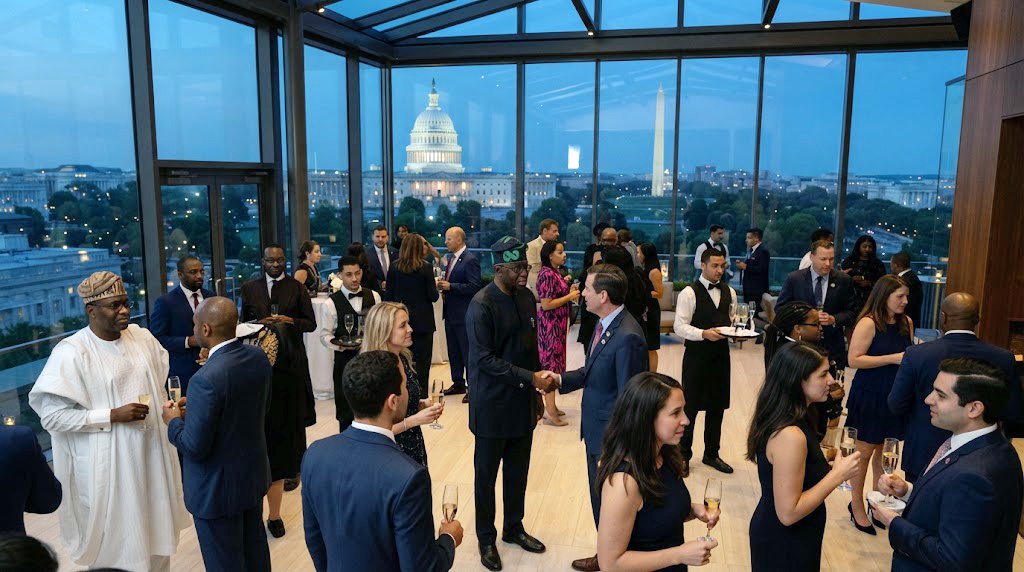
As Nigeria moves closer to the 2027 general elections, political competition is no longer confined to campaign rallies, party conventions or negotiations among traditional power brokers. Increasingly, the contest is playing out thousands of kilometres away in Washington, D.C., where government officials, opposition politicians and influential private actors are spending millions of dollars on lobbying and public relations firms to shape perceptions of Nigeria among policymakers in the United States.
For decades, political influence in Nigeria was built through regional alliances, endorsements by traditional rulers and grassroots mobilisation. Today, strategic communications and international diplomacy have become equally important instruments of political engagement. In that shift, Washington has emerged as an unlikely but increasingly significant arena.
An investigation by PRNigeria, based on filings under the United States’ Foreign Agents Registration Act (FARA), official records and media reports, shows that Nigerian government institutions, opposition figures and politically connected individuals have committed more than $11.2 million to American lobbying firms within a matter of months.
While the contracts vary in purpose—from national security advocacy to political image management—they collectively point to the growing internationalisation of Nigeria’s politics.
Security Lobbying Takes Centre Stage
The largest disclosed lobbying contract is tied not to electoral politics but to national security.
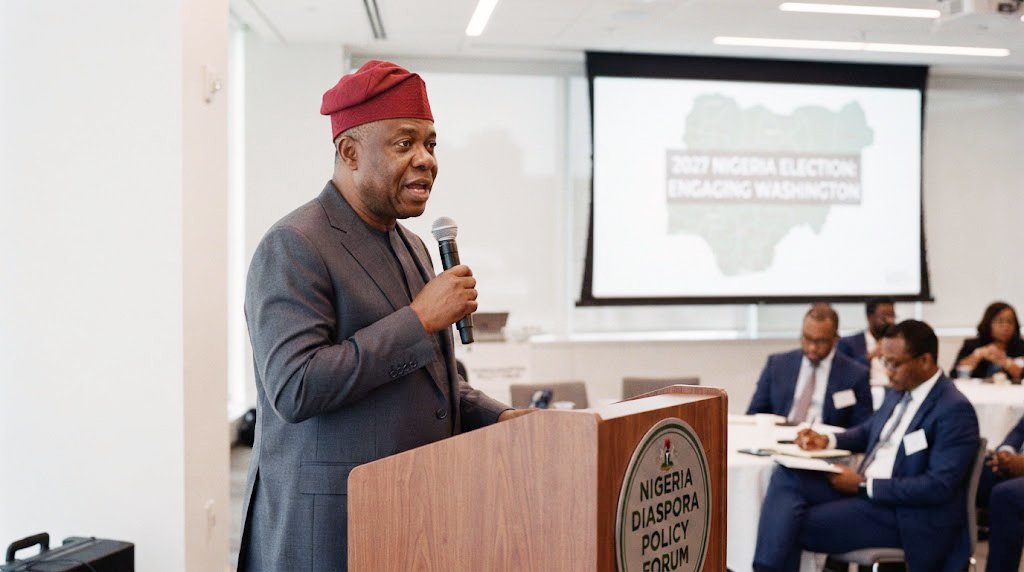
Documents filed with the U.S. Department of Justice show that Aster Legal, a Kaduna-based law firm, retained Washington lobbying firm DCI Group on behalf of the Office of the National Security Adviser (ONSA), led by Mallam Nuhu Ribadu.
Signed on December 17, 2025, the one-year agreement is valued at $9 million, making it one of the largest publicly disclosed lobbying contracts linked to the Nigerian government.
Records indicate that $4.5 million was paid upfront to cover the first six months, while subsequent payments are structured as monthly retainers of $750,000, with provisions for automatic renewal.
Unlike campaign-related lobbying, the contract centres on security and strategic communications. DCI Group was engaged to counter allegations circulating in parts of the U.S. political establishment that Christians face systematic persecution in Nigeria. The firm’s mandate is to communicate the Nigerian government’s position that the country’s violence is driven by terrorism, banditry, insurgency and communal conflict rather than religious persecution.
The engagement came amid heightened criticism from conservative American politicians and advocacy groups. In late 2025, U.S. President Donald Trump and several Republican lawmakers, including Senator Ted Cruz, voiced concerns over attacks on Christian communities, with some describing the situation as genocide.
The Nigerian government rejected that characterisation, maintaining that it oversimplified a complex security crisis.
Beyond managing perceptions, the lobbying effort also seeks to sustain U.S. support for Nigeria’s counter-terrorism campaign through continued security cooperation, intelligence sharing and diplomatic engagement.

Private Interests Join the Washington Push
The growing focus on Washington is not limited to government institutions.
FARA filings show that politically connected private individuals are also investing in lobbying to strengthen engagement with American policymakers.
Among them is Matthew Tonlagha, Vice President of Tantita Security Services Nigeria Limited, who signed a six-month $720,000 contract with Valcour Global Public Strategy.
Founded by former Trump administration official Matt Mowers, the firm was retained to facilitate engagement with officials in the Trump administration, members of Congress and influential U.S. media organisations.
Although Tonlagha signed the agreement in a private capacity, its stated objectives broadly complement wider efforts to strengthen Nigeria-U.S. relations. Available records do not indicate any Federal Government funding.
Separate disclosures also show that Nigeria retained BGR Government Affairs, another prominent Washington lobbying firm, under a contract reportedly worth $900,000.
Combined, the DCI Group and BGR Government Affairs agreements account for nearly $9.9 million in disclosed federal lobbying commitments.
Opposition Extends Its Campaign Abroad
The opposition has also embraced international lobbying as part of its political strategy.
Former Vice President Atiku Abubakar, widely regarded as a leading opposition figure ahead of the 2027 election, retained Washington-based Von Batten-Montague-York, L.C. under a $1.2 million contract.
The agreement, executed in March 2026, authorises the firm to engage members of Congress, congressional staff and officials within the U.S. executive branch over a 12-month period.
Its mandate includes promoting Atiku’s leadership profile and policy agenda while presenting alternative perspectives on developments in Nigeria. The contract also explicitly seeks to counter narratives advanced by the Nigerian government in Washington.
The firm’s activities have since moved beyond reputation management.
Public disclosures indicate that it has circulated historical U.S. Department of Justice records relating to a decades-old civil forfeiture matter involving President Bola Ahmed Tinubu to members of Congress and officials within the Trump administration. It has also indicated plans to advocate sanctions against individuals found to undermine Nigeria’s electoral process.
The development illustrates how international lobbying has become an extension of domestic political competition.
El-Rufai Supporters Enter the Fray
Supporters of former Kaduna State Governor Nasir El-Rufai have adopted a similar approach.
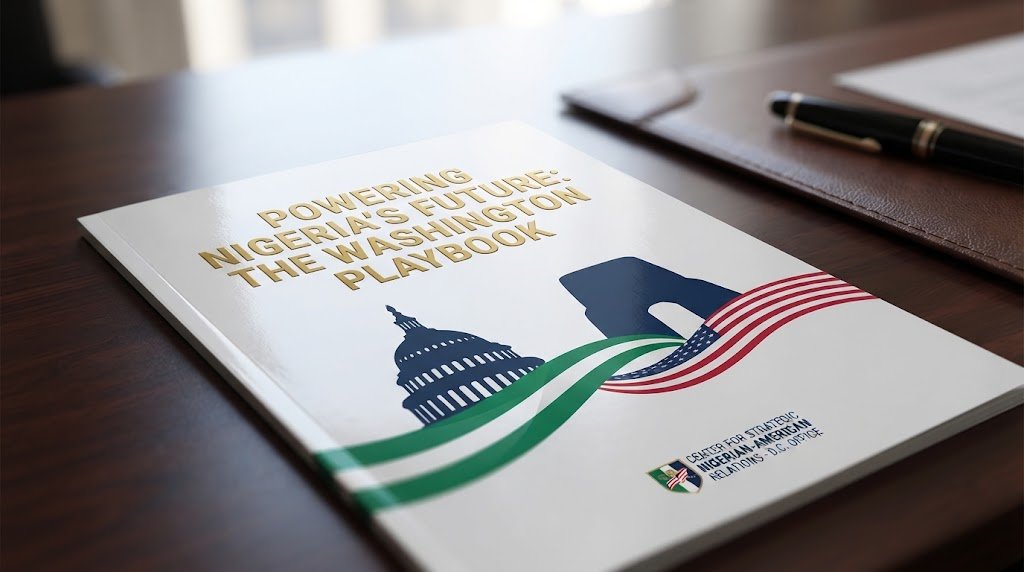
The El-Rufai Support Group Association (ERSGA) retained Vanguard Africa, a Washington-based democracy advocacy organisation, to engage U.S. policymakers on El-Rufai’s legal challenges and advocate for due process ahead of the 2027 elections.
Although the financial value of the engagement has not been disclosed, ERSGA said Vanguard Africa would interact with officials across the U.S. administration, Congress, democracy institutions and multilateral organisations.
The move further underscores the extent to which Nigerian political actors now regard Washington as an important platform for advancing political narratives.
The Internationalisation of Nigerian Politics
Nigeria’s political establishment has long sought recognition and support from Washington.
During President Goodluck Jonathan’s administration, U.S. attention intensified over corruption, governance and the Boko Haram insurgency. The 2015 general election attracted unprecedented international scrutiny, with then-President Barack Obama urging Nigerians to conduct peaceful, credible and transparent polls.
Since then, international perception has become an increasingly important dimension of Nigeria’s democratic process.
Although elections are decided by Nigerian voters, political actors increasingly recognise that foreign governments, investors, development partners and international media shape broader narratives about governance, democratic credibility and national stability.
Do Lobbyists Deliver Results?
Whether these multimillion-dollar lobbying contracts produce measurable political or diplomatic outcomes remains open to debate.
Since the Federal Government engaged American lobbyists, Nigeria and the United States have maintained security cooperation through intelligence sharing, counter-terrorism collaboration and diplomatic engagement. President Donald Trump has also publicly commended President Bola Tinubu’s counter-terrorism efforts.
Analysts, however, caution against attributing these developments solely to lobbying.
Nigeria’s strategic importance—as Africa’s most populous nation, one of its largest economies and a key security partner in West Africa—means bilateral relations are shaped by broader geopolitical considerations that extend well beyond lobbying campaigns.
Diplomacy or Misplaced Priorities?
The surge in spending on foreign lobbyists has sparked debate.
Supporters argue that lobbying is a legitimate instrument of modern diplomacy. Under FARA, foreign governments and political actors are permitted to engage lobbying firms, provided their activities are publicly disclosed. In that context, strategic communication is viewed as an essential tool for protecting national interests, correcting misinformation and strengthening diplomatic relationships.
Critics, however, question whether spending millions of dollars abroad is justifiable at a time when Nigeria faces persistent inflation, rising public debt, widespread unemployment, insecurity and mounting social challenges.
For many observers, the debate is less about the legitimacy of lobbying than about whether such expenditure reflects the country’s most pressing priorities.
Washington’s Growing Role in Nigeria’s Politics
The growing presence of Nigerian political actors in Washington reflects a broader evolution in political strategy. Electoral competition is no longer confined to local campaigns, party structures and domestic alliances. It increasingly includes efforts to shape international opinion, influence diplomatic discourse and manage Nigeria’s image abroad.
Yet one reality remains unchanged.
No lobbying campaign in Washington can replace political legitimacy earned at the ballot box.
As the 2027 elections draw nearer, the decisive contest will not be settled in the offices of K Street lobbying firms or the corridors of Capitol Hill. It will be decided by Nigerians casting their votes across the country’s polling units.
Whether Washington becomes a lasting theatre of Nigeria’s political competition or simply a venue for influencing international perception, the final verdict will remain firmly in the hands of the Nigerian electorate.