
OSOGBO — Osun State heads to the polls on Saturday, August 15, 2026, in a governorship election shaped by party defections, courtroom battles, local government disputes, allegations of political violence and intense competition among the Accord Party, All Progressives Congress (APC) and African Democratic Congress (ADC).
The election represents a major shift from the political configuration that produced the 2022 governorship result, when Ademola Adeleke of the Peoples Democratic Party (PDP) defeated then-incumbent Adegboyega Oyetola of the APC by 403,371 votes to 375,027, according to results declared by the Independent National Electoral Commission (INEC).
Four years later, Adeleke is seeking another term, but not on the platform that brought him to power.
The governor has moved to the Accord Party, while the APC is fielding Bola Oyebamiji, a former Osun Commissioner for Finance and former Managing Director of the National Inland Waterways Authority (NIWA).
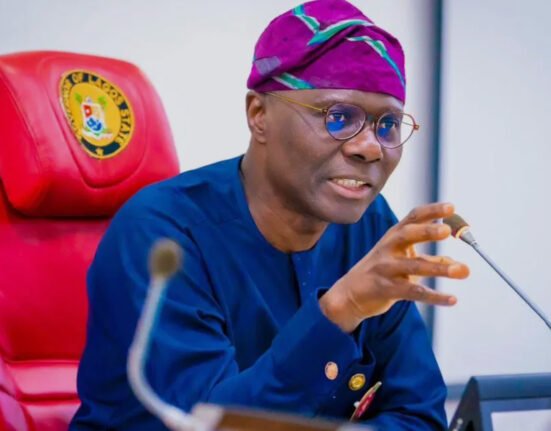
Former Speaker of the Osun State House of Assembly, Najeem Salaam, is contesting on the ADC platform.
The trio have emerged as the leading figures in a race taking place against the backdrop of years of political and legal confrontation.
From the 2022 poll to the Supreme Court
The dispute over Osun’s 2022 governorship election continued long after INEC declared Adeleke the winner.
Oyetola and the APC challenged the outcome, alleging over-voting and other irregularities.
In January 2023, the Osun State Governorship Election Petition Tribunal, in a split decision, annulled Adeleke’s victory and declared Oyetola the winner.
Adeleke immediately rejected the ruling and announced his intention to appeal.
“I call on our people to remain calm. We will appeal the judgment and we are sure justice will be done,” Adeleke said at the time, insisting that he remained the rightful winner of the election.
The Court of Appeal subsequently overturned the tribunal’s decision and restored Adeleke’s victory.
Oyetola took the matter to the Supreme Court, prolonging the contest over the result.
On May 9, 2023, the apex court affirmed Adeleke’s election, ending the legal battle. It held that Oyetola and the APC had not sufficiently established their allegation of over-voting to warrant overturning the result.
Although the judgment secured Adeleke’s position as governor, it did not end the political rivalry between the two camps.
Oyetola later joined President Bola Tinubu’s Federal Executive Council as Minister of Marine and Blue Economy, giving him a prominent federal role while his political structure remained influential in Osun.
His position also became relevant to the APC’s 2026 campaign.
In October 2023, Bola Oyebamiji, who had served as Osun Commissioner for Finance, was appointed Managing Director of NIWA. The Federal Government said the appointment was made on the recommendation of the Minister of Marine and Blue Economy.
Oyebamiji would eventually become the APC’s governorship candidate, linking his political rise to the federal influence of Oyetola.
Local government dispute deepens political divisions
The controversy surrounding the state’s local government administration added another dimension to the rivalry between the PDP and APC.
The disagreement was rooted in the local government election conducted in October 2022, which was later nullified by a Federal High Court.
Subsequent appeals produced competing interpretations from the APC and PDP over whether the previously elected council officials remained legally entitled to their positions.
By February 2025, the issue had become a major political confrontation.
The APC argued that a Court of Appeal decision had restored its previously elected council officials and that they should return to office.
The PDP-led government maintained the opposite position, insisting that the earlier election had been invalidated and that vacancies existed in the state’s 30 local government areas.
On February 21, 2025, an Osun State High Court ordered the Osun State Independent Electoral Commission (OSSIEC) to conduct the local government election scheduled for the following day and directed security agencies to ensure adequate protection.
The APC withdrew from the exercise, arguing that its officials had already resumed office following the Court of Appeal judgment and that conducting another election would be unlawful.
The poll nevertheless went ahead on February 22.
OSSIEC declared the PDP victorious across all chairmanship and councillorship positions.
Rather than resolving the matter, the result created competing claims of legitimacy, with PDP-backed officials and APC officials both asserting control over the councils.
Political tensions also spilled into the streets.
In Ilesa, PDP and APC supporters reportedly clashed during campaign activities, with weapons including machetes and axes allegedly displayed.
Adeleke subsequently swore in the newly elected PDP council officials on February 23 but directed them not to immediately take over the council secretariats.
“Please stay away from the council secretariats to prevent any clashes,” Adeleke told the newly inaugurated officials, urging them to allow the courts to determine the matter.
The dispute continued through legal proceedings, protests and competing claims over control of the local government structures.
By January 2026, Adeleke was still insisting that APC officials occupying council secretariats had been displaced by court decisions, while maintaining that the February 2025 election produced the legitimate council leadership.
The prolonged disagreement later became part of the wider political struggle ahead of the governorship election, with the APC and Accord camps accusing each other of exploiting the controversy for political advantage.
Defections redraw the political landscape
Party defections have been another defining feature of the 2026 contest.
In July 2025, two Osun senators, Francis Fadahunsi and Olubiyi Fadeyi, left the PDP for the APC.
An aide to Adeleke described their decision at the time as a political miscalculation.
But the biggest political realignment came several months later when Adeleke himself abandoned the PDP.
In December 2025, the governor joined Accord and declared his intention to seek re-election under the new platform.
The move was followed in February 2026 by the defection of 25 members of the Osun State House of Assembly who had been elected on the PDP platform.
The lawmakers moved to Accord after a parliamentary meeting, saying they wanted to align themselves with the governor.
The development transformed the political calculations in the state.
Adeleke was now defending his record as an incumbent while relying on a political structure that had moved from the PDP into Accord.
At the same time, the APC was working to consolidate its opposition to the governor around Oyebamiji.
How Oyebamiji emerged as APC candidate
The APC sought to avoid the internal divisions that had weakened its previous governorship campaign.
In December 2025, eight aspirants met President Bola Tinubu at the State House and agreed to support a consensus candidate.
The aspirants were Benedict Alabi, Dotun Babayemi, Akin Ogunbiyi, Babajide Omoworare, Kunle Adegoke, Babatunde Hareter Oralusi, Mulikat Abiola Jimoh and Bola Oyebamiji.
Oyebamiji eventually secured the party’s ticket at the APC primary in Osogbo.
The exercise involved 1,660 delegates representing the state’s 332 wards, who affirmed him as the party’s candidate.
In his campaign, Oyebamiji has placed emphasis on poverty reduction, education, healthcare and economic growth.
He described Osun as being at a crossroads and pledged to tackle what he identified as shortcomings in the state’s administration.
Oyetola’s decision to stay out of the primary also helped clear the way for Oyebamiji.
In July 2025, the former governor announced that he would not contest the 2026 governorship election, saying his priority was to help the APC regain control of the state.
Salaam gives ADC a third major platform
The ADC has introduced a third major force into what had largely been framed as an Accord-APC contest.
Najeem Salaam, former Speaker of the Osun State House of Assembly and political associate of former Governor Rauf Aregbesola, secured the ADC ticket.
He emerged unopposed at the party’s primary, where 528 delegates were accredited. Of the votes cast, 520 were validly recorded for Salaam, while eight were invalid.
His candidacy provides another experienced political figure for voters to consider, particularly those looking beyond the two dominant camps.
Salaam has campaigned on governance and development, including a promise to address the state’s electricity challenges.
In May 2026, he said his administration would prioritise electricity and work with investors and other stakeholders to improve power supply.
Motor parks become election flashpoint
The political tension has also reached the transport sector.
In July 2026, rival factions of the National Union of Road Transport Workers (NURTW) clashed in Osogbo following a protest by one faction over alleged restrictions on access to motor parks.
Gunshots were reportedly heard during the confrontation, disrupting commercial activities in parts of the state capital.
The police responded by deploying personnel to several motor parks and urged the rival groups to pursue dialogue.
“All stakeholders are urged to exercise restraint and avoid actions or statements capable of further escalating tensions,” the police said.
The dispute subsequently became part of the political argument, with the Accord campaign accusing opposition interests of seeking control of transport infrastructure.
The APC rejected the allegation.
INEC, however, said it was not aware of any crisis between the transport unions, explaining that it had entered into a Memorandum of Understanding (MOU) with the national bodies of the unions to provide for election logistics.
Controversy over police commissioner
Security has remained one of the most contentious issues surrounding the election.
In June 2026, civil society organisations, the National Association of Nigerian Students and other groups protested in Osogbo and demanded the removal of Osun Commissioner of Police, Ibrahim Gotan.
The protesters alleged rising political violence and questioned the neutrality of the police command. They appealed to the Inspector-General of Police to replace Gotan before the election.
The commissioner, however, received support from another group, which later staged a solidarity march in Osogbo and commended his handling of security.
The contrasting demonstrations highlighted the deep divisions surrounding the police command.
As the election drew closer, Gotan met political parties, INEC, military authorities and other stakeholders as part of efforts to strengthen security arrangements.
He also warned politicians against destroying opponents’ campaign billboards and other political materials.
The command investigated several incidents linked to the campaign, including alleged attacks and destruction of political materials.
25,000 security personnel from police and NSCDC
The Nigeria Police Force has deployed 15,000 personnel across Osun State for the election, with officers assigned to polling units, strategic locations and areas considered vulnerable.
Inspector-General of Police, IGP Disu, also deployed a Deputy Inspector-General of Police to coordinate the election security operation.
During the period of protests against Gotan, Disu visited Osun and met with Adeleke.
At the meeting, the IGP pointed to allegations that criminals were being harboured inside the Osun State Government House, while assuring that the police, as the lead election security agency, would remain neutral.
The Nigeria Security and Civil Defence Corps (NSCDC) has also deployed 10,210 personnel.
The deployment includes 10,000 operatives drawn from 10 neighbouring state commands, with about 1,000 personnel coming from each of Oyo, Ondo, Ekiti, Ogun, Lagos, Kwara, Edo, Kogi, Delta and the Federal Capital Territory.
Specialised tactical and operational teams have also been deployed.
NSCDC Commandant General, Ahmed Abubakar Audi, accompanied by the Osun State Commandant, Igbalawole Sotiyo, visited Adeleke on Wednesday, August 12, to assure the state government and residents of the corps’ preparedness to support a peaceful and violence-free election.
The personnel include uniformed and undercover operatives tasked with protecting voters, electoral officers, observers, journalists and critical infrastructure.
The Nigerian Army is equally part of the security arrangement through Operation SAFE CONDUCT.
Troops have been deployed to support the police and provide outer-cordon security, although the Army has not disclosed the exact number of personnel deployed to Osun.
Major General Auwalu Mahmuda, General Officer Commanding 2 Division, instructed the troops to remain politically neutral, stay away from polling units except where intervention becomes necessary and comply with the Code of Conduct for election duty.
The Economic and Financial Crimes Commission (EFCC) and Independent Corrupt Practices and Other Related Offences Commission (ICPC) have also deployed personnel to Osun as part of the preparations.
Billboard attacks fuel campaign accusations
Campaign activities have been accompanied by accusations and counter-accusations between the Imole Campaign Council backing Adeleke and the Osun APC Governorship Campaign Council.
One major dispute involved the alleged destruction of Accord campaign billboards.
The Imole Campaign Council accused APC-linked individuals of destroying its campaign materials in several local government areas and demanded investigation and prosecution.
The APC rejected the allegation, insisting that its own campaign materials had also been destroyed.
Oluremi Omowaiye, head of the APC campaign council’s media and publicity committee, described the accusation against the APC as false and politically motivated.
The police later announced an investigation.
Police spokesperson, Abiodun Ojelabi said the command condemned the destruction of billboards and other public symbols, warning that such actions could heighten tension.
“The police condemn the destruction of billboards and other government symbols within the state and have launched an investigation to identify, arrest and prosecute perpetrators,” he said.
The rival campaign organisations have also traded allegations involving political violence, attacks on supporters, alleged assassination attempts and the conduct of security personnel.
In July, the Accord camp challenged the police account of an alleged assassination attempt involving APC campaign Director-General, Oluwole Oke, following the circulation of a video involving one of the suspects arrested in connection with the incident.
The APC and police have maintained their respective accounts of what happened.
The allegations remain subject to investigation and political contestation and should not be treated as established findings against either campaign organisation.
INEC finalises preparations for August 15
While the political parties have battled for advantage, INEC has continued preparations for the poll.
The commission initially fixed August 8, 2026, for the election but subsequently moved the exercise to Saturday, August 15.
Former Osun Resident Electoral Commissioner, Dr Mutiu Agboke, oversaw a substantial part of the preparatory process before his transfer.
INEC moved Agboke from Osun to Ondo State in April 2026.
Before his departure, he held stakeholder meetings and engaged on voter-related and logistical issues.
Oluwatoyin Babalola subsequently took over as Osun REC.
An experienced INEC legal practitioner and administrator, Babalola joined the commission in 1990 and rose through the ranks to become Director of Legal Services and Director of Legal Drafting and Clearance. She was appointed Resident Electoral Commissioner in December 2023.
Her deployment to Osun generated controversy, with some residents protesting at the INEC headquarters in April and asking her to demonstrate neutrality.
The protesters also raised questions over speculation surrounding the reason for her deployment.
Babalola has repeatedly assured stakeholders that INEC will enforce electoral regulations impartially.
She said the Electoral Act and INEC guidelines would guide the commission’s decisions before, during and after the election.
On the technical side, INEC said 3,763 Bimodal Voter Accreditation System (BVAS) devices would be deployed across the state’s 3,763 polling units, with another 664 devices available as backups.
The devices are expected to facilitate voter accreditation and transmission of polling-unit results to the INEC Result Viewing Portal.
The commission has also accredited civil society organisations to observe the election.
Civil society organisations intensify election monitoring
Civil society groups have become increasingly visible in preparations for the Osun poll.
The International Press Centre (IPC) and Centre for Media and Society (CEMESO) have organised stakeholder engagements focused on cooperation among electoral actors, peaceful participation and the prevention of factors capable of undermining the election.
An election observers hub involving CEMESO, ElectHER, IPC, Nigerian Women Trust Fund, TAF Africa, Kukah Centre and Yiaga Africa also released a pre-election assessment.
The groups identified intense political competition, institutional tensions, security concerns, information disorder and the exclusion of marginalised groups as areas requiring close attention.
Kimpact Development Initiative (KDI) has also monitored election-related violence.
The organisation reported 44 election-related violent incidents between October 2025 and June 2026, with 13 fatalities, injuries and destruction of property.
It also documented 24 incidents unrelated to elections during the same period, resulting in 23 deaths.
KDI Executive Director, Bukola Idowu said the election should be associated with peaceful participation and informed citizen choice rather than bloodshed and intimidation.
“The 2026 Governorship Election should be remembered for peaceful participation, credible competition, informed citizen choice, and the collective maturity of stakeholders, not for bloodshed, intimidation, and fear,” Idowu said.
TAF Africa has focused particularly on inclusion.
Under its Able2Vote initiative, the organisation trained 150 Persons With Disabilities (PWDs) to serve as election observers.
It has also taken part in citizens’ town halls and conversations on inclusive reporting and political participation.
The Kukah Centre, Yiaga Africa and other organisations have similarly undertaken voter education, election observation, stakeholder engagement and election-integrity activities.
What is at stake on August 15?
The Osun governorship election is the product of a political journey that has seen old alliances fracture and new ones emerge.
Adeleke enters the race as the incumbent, having won the 2022 election, survived an initial tribunal defeat and ultimately secured confirmation of his victory at the Supreme Court.
Oyetola, although no longer on the ballot, remains an important figure in the APC campaign after choosing to support the party’s bid to return to government.
Oyebamiji carries the APC flag following a primary in which 1,660 delegates from 332 wards affirmed his candidacy.
Salaam represents the ADC after winning 520 valid votes at the party’s primary.
Adeleke’s decision to leave the PDP for Accord, followed by the movement of 25 PDP lawmakers into the new platform, has altered the traditional political calculations in the state.
With the campaign period ending and security agencies, election officials, observers and political parties preparing for polling day, Osun voters are now set to determine whether the incumbent will secure another term under Accord, whether the APC will reclaim the state, or whether the ADC can upset the established two-way political equation.
The outcome on Saturday will not only determine who governs Osun for the next four years but will also provide a verdict on the political realignments, alliances and strategies that have reshaped the state since the last governorship election.