
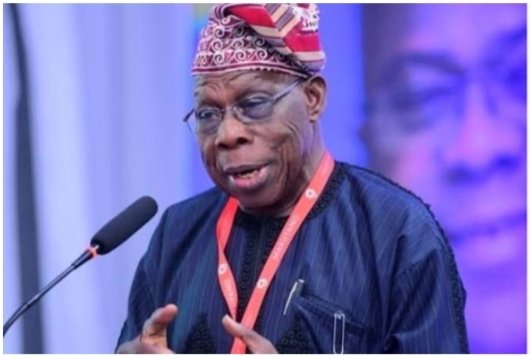
Former President Olusegun Obasanjo has said Nigeria has no justification to remain poor, arguing that the country possesses the natural and human resources required to produce enough for its population and generate wealth.
Obasanjo attributed part of Nigeria’s persistent poverty to policies that promote imports at the expense of local production, particularly in the agricultural sector.
The former president made the remarks during an interview on C-Suite Cafe, hosted by Ikem Okuhu.
“Give me one reason why Nigeria should be poor. Is it the land that we don’t have or the desert that we are in or the people that we don’t have or the water that we don’t have or the rain that we don’t have?” he asked.
Obasanjo said Nigeria had abundant land, water, rainfall and human resources, stressing that the country could leverage these advantages to meet its domestic needs while creating economic opportunities.
Recalling his experience as chairman of the African Union, Obasanjo said he once travelled to Guinea-Bissau with former Ghanaian President John Kufuor, who was then chairman of the Economic Community of West African States.
According to him, the two leaders observed that Guinea-Bissau had significant agricultural potential but still depended on imported food products.
He said they saw bananas and other fruits growing naturally as they approached the country, yet imported apples and grapes were served at their hotel.
“That’s part of the reason why we are poor,” Obasanjo said, arguing that African countries must harness their agricultural resources instead of relying heavily on imported food.
The former president also recalled Nigeria’s decision to restrict rice imports in 1979, saying the policy was designed to stimulate domestic production and move the country towards self-sufficiency.
He said agricultural officials had inspected rice farms shortly before the military government left office and reported that Nigeria was making progress towards producing enough rice for domestic consumption.
However, Obasanjo said subsequent administrations reversed the policy by lifting restrictions on rice imports, thereby undermining local farmers.
“When our successors came, one of the first things they did was to lift importation of rice, not to encourage production of rice but to encourage importation of rice, and the farmers couldn’t sell their own rice,” he said.
He maintained that sustainable economic development would require consistent policies that support domestic production, strengthen agriculture and reduce excessive dependence on imports.