
Lead Campaign Against Terrorism, Extremism – Tinubu Urges Clerics
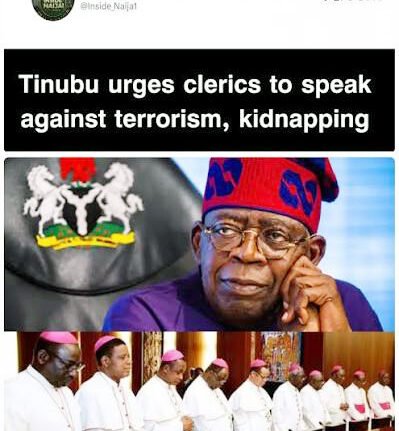
President Bola Tinubu has urged religious leaders across Nigeria to consistently speak out against terrorism, kidnapping, banditry and the misuse of religion to justify violence.
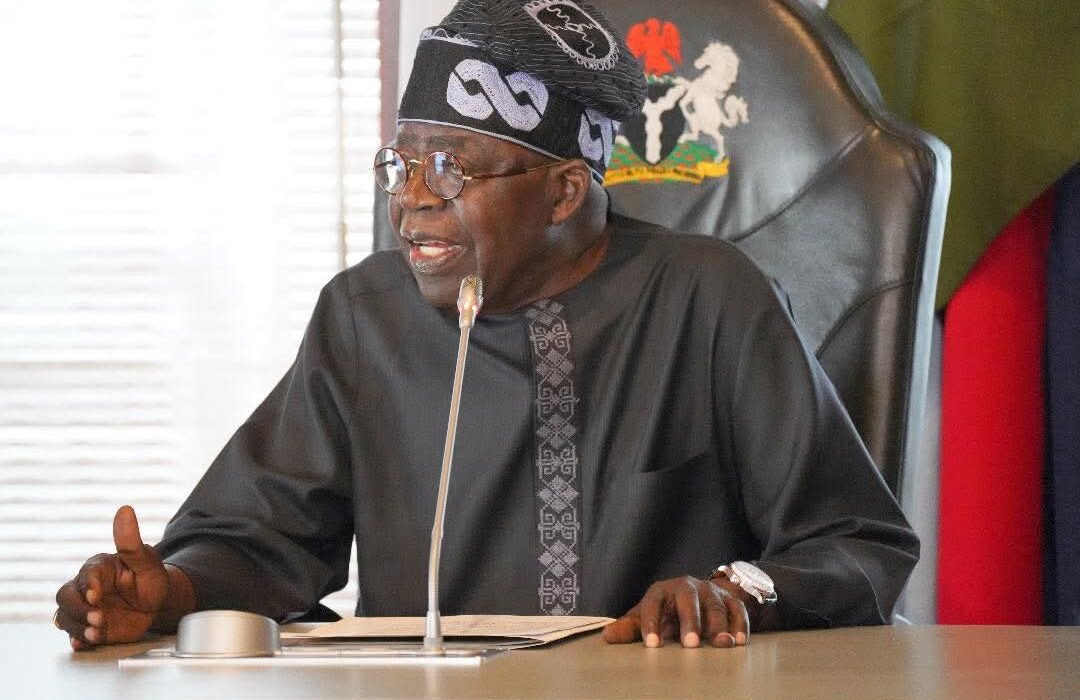
Tinubu made the call on Sunday in Kano in a goodwill message delivered on his behalf by the Secretary to the Government of the Federation, George Akume, at the Grand Maulud of Sheikh Ahmad Al-Tijani.
According to a statement by the President’s media aide, Yomi Odunuga, Tinubu said religious leaders had an important role to play in confronting violence, extremism and the manipulation of faith for destructive purposes.
He urged religious institutions and networks to strengthen peace education, religious literacy, scholarship and moral guidance for young people.
The President also called on clerics to use their influence to promote justice, responsibility, compassion and peaceful resolution of grievances.
“Your voices must be raised consistently against the murder of innocent people, against terrorism, kidnapping, banditry and the misuse of religion to justify cruelty,” Tinubu said.
He urged religious institutions to intensify efforts to promote peace and guide young people against extremism.
The President also appealed to religious leaders to remind political leaders of their responsibility to uphold justice and compassion, while urging citizens not to turn legitimate grievances into justification for violence.
“Above all, our spiritual fathers must continue to teach that no genuine service to Allah is advanced by destroying the innocent human life that Allah has made sacred,” he said.
Tinubu said the Maulud was taking place at a time when the world was grappling with armed conflicts, violent extremism, terrorism, transnational crime, climate and food shocks, as well as the manipulation of identity and religion.
Citing a report by the United Nations High Commissioner for Refugees, he said 117.8 million people were forcibly displaced globally at the end of 2025.
He said the scale of the global challenges underscored the importance of religious leaders in promoting peace, healing divisions and addressing hatred and bitterness.
According to the President, spiritual leaders “guard the frontiers of conscience” because of their ability to influence communities, resolve grievances and promote reconciliation.
Tinubu particularly highlighted the Tijjaniyya community’s extensive networks across West Africa, North Africa and other parts of the world, saying they could be used to support reconciliation, counter violent extremism, guide young people and provide humanitarian assistance.
He said the Federal Government recognised the contributions of religious and traditional leaders to grassroots peacebuilding, countering misinformation and identity-based divisions, and promoting peaceful coexistence.
Tinubu also reaffirmed Nigeria’s commitment to regional cooperation, counter-terrorism, maritime security, economic integration and dialogue.
He said Nigeria’s strategic position linking West Africa, the Sahel, the Lake Chad Basin, the Gulf of Guinea and the wider Atlantic region meant that instability in the country could have consequences beyond its borders.
“Our position means that peace in Nigeria has consequences far beyond Nigeria,” he said.
Tinubu said religious communities with transnational networks, including the Tijjaniyya, could complement government and regional efforts to build lasting peace.
He assured Nigerians that his administration would continue to protect freedom of worship while strengthening cooperation with religious and traditional institutions to promote peace, mutual respect and national cohesion.
The President welcomed the World Khalifa of the Tijjaniyya Order, scholars and spiritual leaders who attended the Maulud from Algeria, Morocco, Senegal, Egypt and other countries.
He also paid tribute to the late Sheikh Dahiru Usman Bauchi, who died in November 2025, describing him as “a teacher, a father and a voice of moderation and reason” as well as an advocate of peace and piety.
Tinubu said preserving Sheikh Dahiru’s legacy of Qur’anic scholarship, moral instruction, devotion, peaceful coexistence and concern for society would be an enduring tribute to the late scholar.
The President commended the Supreme Council of the Tijjaniyya, the Sheikh Dahiru Usman Bauchi Foundation, the Kano State Government, traditional rulers, security agencies, emergency services, organisers and volunteers for their roles in the event.
His call comes amid renewed debate over the role of religious leaders in Nigeria’s political and governance affairs.
On July 28, the Catholic Bishops’ Conference of Nigeria met with Tinubu and raised concerns about the country’s security and economic situation.
Speaking after the meeting, former Catholic Archbishop of Abuja, Cardinal John Onaiyekan, criticised what he described as attempts by some people around the President to present a “rosy picture” of the country.
His remarks triggered debate over the role of religious leaders in governance, with some Presidency and Federal Government officials accusing the cleric of partisanship.