
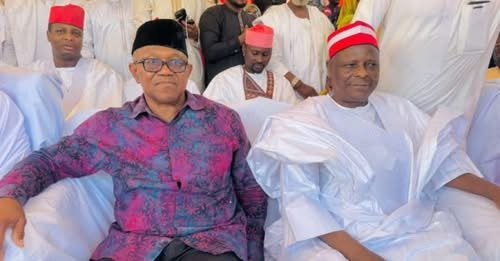
Former presidential candidates Peter Obi and Rabiu Musa Kwankwaso have formally revived talks of a political alliance ahead of the 2027 general election, this time under the platform of the Nigeria Democratic Congress (NDC), in a move aimed at uniting the opposition to challenge President Bola Ahmed Tinubu’s re-election bid.
The renewed push comes months after both men abruptly exited the African Democratic Congress (ADC), which had been positioned as the main coalition vehicle for opposition leaders seeking a broad anti-APC front. Within days of joining the NDC, senators, House of Representatives members and political blocs aligned with the former coalition began defecting to the NDC, instantly giving the relatively young party national visibility and legislative presence.
“We Have One Target”
Speaking on Trust TV, Kwankwaso confirmed that discussions were ongoing towards a possible joint ticket with Obi. “I believe so, and taking into the party, I think that is their mindset,” Kwankwaso said, noting that both camps share similar political goals. “In recent times, we actually tried to check what the Obidients were up to politically… when we compare the two movements, we realized that our goal is more or less the same.”
He explained that experts from both sides were already reviewing policy directions and development plans with the aim of identifying areas of alignment. “In fact, we have gone so far, but based on our discussions with them, I believe we have one target: to make Nigeria a better place”.
On May 12, 2026, Kwankwaso told Arise Television’s Prime Time programme that he is open to working with Obi, especially on tackling insecurity. “Both of us, my humble self and Peter Obi, have agreed to tackle the issue of insecurity head-on to ensure there is peace and stability in this country,” Kwankwaso said. When asked if he would accept a vice-presidential slot, he responded in the affirmative. “Personally, I cannot remember any better combination, no matter how much time is given to find those who can beat us in terms of doing the right thing for this country”.
Kwankwaso also disclosed that the collaboration between his Kwankwasiyya Movement and Obi’s Obidient bloc had taken shape before any public announcement, resulting in what they call the ‘OK’ alliance—a symbolic blend of both political movements. “Initially, before we were told of the zoning of the party, some from the Obidient will say OK, and some from Kwankwasiyya will say KO, but at the end of the day, we’re working not only in this country but all over the world”.
Strategic Calculations
Kwankwaso further explained why northern political leaders “settled” for Obi as their preferred figure in the new political alignment. “I met with our leadership in the North to look for someone who is capable, and at the end of the day, we realized that Peter Obi was at the forefront of it. That’s why we all accepted to work together,” he said.
He pointed to Obi’s popularity across the South and significant support in many parts of the North. “Peter Obi is a very popular politician in the entire South and many parts of Northern Nigeria and you cannot take that from him,” Kwankwaso said. He also highlighted the strength of the Kwankwasiyya movement, citing the electoral victories of Kano State Governor Abba Yusuf in 2019 and 2023 under the smaller NNPP platform as proof of his continued grassroots influence.
Political analysts believe the significance of the alliance lies in the possibility of combining Obi’s support base across southern Nigeria and among urban youths with Kwankwaso’s entrenched grassroots influence in Kano and sections of northern Nigeria through the Kwankwasiyya movement. The emerging Obi-Kwankwaso coalition is also being viewed as a possible Christian-Muslim ticket designed to broaden national appeal and counterbalance the APC’s previous electoral formula.
Grassroots Fundraising Push
Supporters of both politicians have already launched a ₦60 million fundraising initiative to purchase a joint presidential nomination form, in what organisers describe as a symbolic grassroots mobilisation for opposition unity. The agreement was reached during a one-day aspirants’ summit held in Abuja by members of the Obidient and Kwankwasiyya movements.
The leader of the Obidient Movement, Dr. Yunusa Tanko, said the fundraising initiative was aimed at demonstrating popular support for a coalition project many Nigerians believe could reshape the country’s political direction. Former Chairman of the Inter-Party Advisory Council, Chief Peter Ameh, who represented Obi at the summit, urged aspirants seeking elective offices in 2027 to embrace integrity, sacrifice, and people-oriented leadership, describing the emerging alliance as “an act of courage and patriotism” at a critical moment in Nigeria’s democratic journey.
Coordinator of the Kwankwaso National Network, Moshood Shittu, blamed Nigeria’s challenges largely on leadership failure rather than lack of resources, insisting that the country requires honest and competent leadership to overcome its present difficulties.
Internal Challenges and Power Struggles
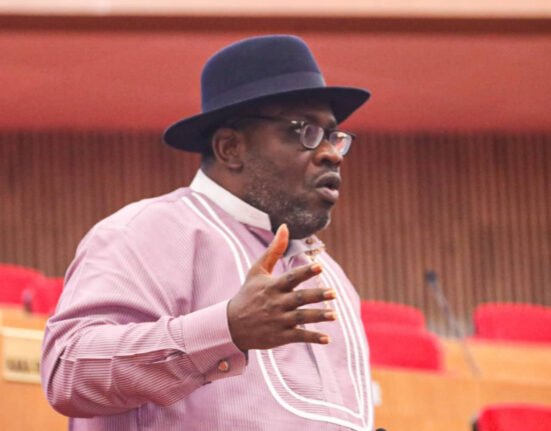
However, the alliance has already shown signs of internal friction. On May 27, 2026, NDC National Leader Senator Seriake Dickson moved to contain looming power struggles, declaring that the opposition platform would not be turned into a “special-purpose vehicle” for the presidential ambition of any individual politician. “We are not building a special-purpose vehicle for any individual. We are building together a political party that will stand the test of time,” Dickson declared.
Though Dickson did not mention names directly, political observers interpreted the statement as an early attempt to define the ideological soul and ownership structure of the party, aimed at both Obi and Kwankwaso as the most prominent opposition figures gravitating toward the platform.
Electoral Arithmetic
The shadow of the 2023 election looms large over the discussions. In 2023, Obi secured about 6.1 million votes while Kwankwaso polled roughly 1.5 million. Combined, both candidates attracted more than 7.6 million votes against Tinubu’s approximately 8.8 million. Although both men ran on separate platforms, they built some of the strongest grassroots movements seen in recent political cycles.
The significance of the emerging alliance lies not only in the combined vote strength of both men, but also in the possibility of merging their organisational structures, volunteer networks and legislative influence under one political platform. Unlike 2023, when Obi and Kwankwaso ran on separate platforms, the emerging alliance is now attracting sitting lawmakers. Several senators and House members have already moved toward the NDC following the alliance, strengthening perceptions that the party could evolve from a fringe platform into a serious national force before 2027.
APC Reacts
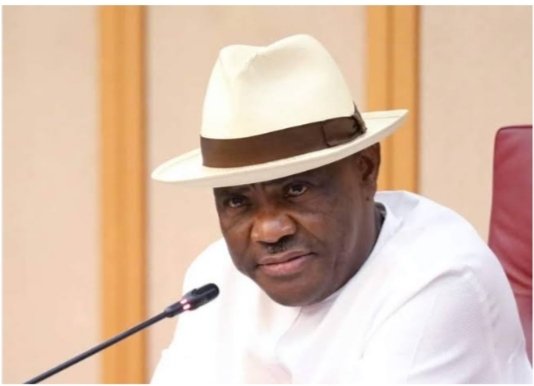
The ruling All Progressives Congress (APC) has moved quickly to downplay the emerging alignment. Presidential spokesman Bayo Onanuga reportedly described Obi as a “political nomad,” accusing opposition leaders of pursuing personal ambition rather than ideological unity. Senate President Godswill Akpabio also reportedly mocked the ADC following the developments, while Minister of the Federal Capital Territory Nyesom Wike accused Obi of frequently moving across political platforms in search of political opportunity.
Concerns Over Fragmentation
Despite the growing enthusiasm among supporters, fears persist that the opposition may repeat the mistakes of 2023. Barely two weeks after opposition leaders gathered in Ibadan promising a united front ahead of 2027, the coalition began showing serious cracks following Obi and Kwankwaso’s departure from the ADC.
The fear among many opposition supporters is that competing ambitions, distrust, regional calculations, and internal rivalry could once again clear the path for Tinubu’s victory. The Ibadan summit held on April 25, 2026, produced what became known as the Ibadan Declaration—a broad commitment to work together against the APC. That optimism began fading almost immediately after Obi and Kwankwaso formally joined the NDC, effectively walking away from the ADC coalition project that had led to the Ibadan talks.
What Next?
Kwankwaso has expressed optimism about securing the vice-presidential ticket of the NDC, describing the move as a major political milestone for Kano State. “Since the First Republic, despite our struggles and political wisdom, Kano has never produced a vice president. This is both disappointing and deeply saddening, but by God’s grace, it will be corrected,” he said.
Meanwhile, Obi has stated that his primary focus will be on uniting the nation if elected. “We want mothers to feel secure when their children go to school or work. We envision a Nigeria where travel across the country can occur without fear,” he said after being cleared by the NDC presidential screening committee.
Political observers say the coming months will determine whether the emerging Obi-Kwankwaso alliance can overcome internal power struggles, manage competing ambitions, and present a united front capable of challenging the ruling APC in 2027. For now, the ‘OK’ alliance—named after the fusion of the Obidient and Kwankwasiyya movements—remains the most talked-about opposition merger in Nigeria’s political landscape.