

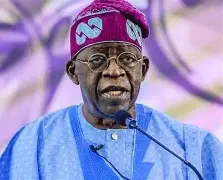
2027: Nigerians may regret rejecting Tinubu, APC chieftain warns
An All Progressives Congress (APC) chieftain, Hon. Obidike Chukwuebuka, has urged Nigerians to re-elect President Bola Ahmed Tinubu in the 2027 presidential election, arguing that continuity is essential to consolidate the economic and institutional reforms initiated by his administration.
Obidike, who is Chairman and Chief Executive Officer of Clarivo Holdings Limited, made the call in an interview with our correspondent, saying the Tinubu administration inherited a difficult economic situation in May 2023 but had taken what he described as “bold and painful decisions” to address longstanding structural challenges.
He listed the removal of petrol subsidy, foreign exchange reforms, improved revenue mobilisation, student loans, infrastructure development, local government financial autonomy, healthcare reforms and interventions in the oil and gas sector among the major initiatives of the administration.
According to him, the government should not be judged solely by the immediate economic hardship associated with some of its policies, but also by the structural reforms being implemented to reposition the economy.
Obidike identified the economy as one of the strongest arguments for continuity, particularly the removal of petrol subsidy in May 2023, which he said brought an end to a subsidy regime that had consumed trillions of naira in public resources.
He added that the subsidy reform, alongside foreign exchange reforms implemented by the Central Bank of Nigeria (CBN), had helped strengthen the country’s fiscal position.
The APC chieftain also pointed to the increase in revenue shared among the federal, state and local governments through the Federation Account Allocation Committee (FAAC), saying the development had expanded the fiscal space available to the subnational governments.
He said the additional revenue had enabled many states and local governments to meet obligations relating to salaries, pensions, infrastructure and other public services.
Obidike, who is also Chairman of Bidiks Nigeria Limited, identified the Nigeria Education Loan Fund (NELFUND) as another significant intervention of the administration.
He said the scheme had provided Nigerian students from financially constrained families with access to government-backed education financing, describing it as an important step towards widening access to tertiary education.
He also noted that the university system had not witnessed the prolonged nationwide disruptions associated with previous strikes by the Academic Staff Union of Universities (ASUU) during the current administration.
On infrastructure, Obidike cited the Lagos-Calabar Coastal Highway, Abuja-Kaduna-Kano Road, Enugu-Onitsha Expressway and the 9th Mile-Oturkpo-Makurdi Road among major federal road projects he said were being implemented.
He also mentioned the Kano-Daura-Kongolam Road, which links parts of Kano, Jigawa and Katsina towards the Niger Republic border, as well as the proposed Calabar-Abuja Trans-Sahara Superhighway, which is expected to traverse Cross River, Ebonyi, Benue, Nasarawa and the Federal Capital Territory.
On institutional reforms, Obidike, who is also Chief Executive Officer of Clarivo Oil and Gas, described local government autonomy as another major development under the Tinubu administration.
He referred to the Supreme Court’s July 2024 judgment affirming the constitutional right of local governments to receive their allocations directly from the Federation Account.
He argued that the combination of fiscal reforms, local government autonomy and other institutional changes provided sufficient grounds for Nigerians to support the president’s re-election bid in 2027.
Obidike said the central question before Nigerians in the 2027 election should be whether they preferred continuity and consolidation of the ongoing reforms or a change in direction.
He acknowledged that some of the benefits of the reforms might take years to become fully apparent because they involve institutional restructuring, changes to fiscal arrangements and efforts to attract long-term investment.
While urging Nigerians to support Tinubu for another term, Obidike said the country could not afford to discontinue the reform process at this stage.
“Nigeria needs continuity, stability and consolidation,” he said, warning that failure to re-elect Tinubu in 2027 would, in his view, amount to a “fatal mistake.”



Leave feedback about this