
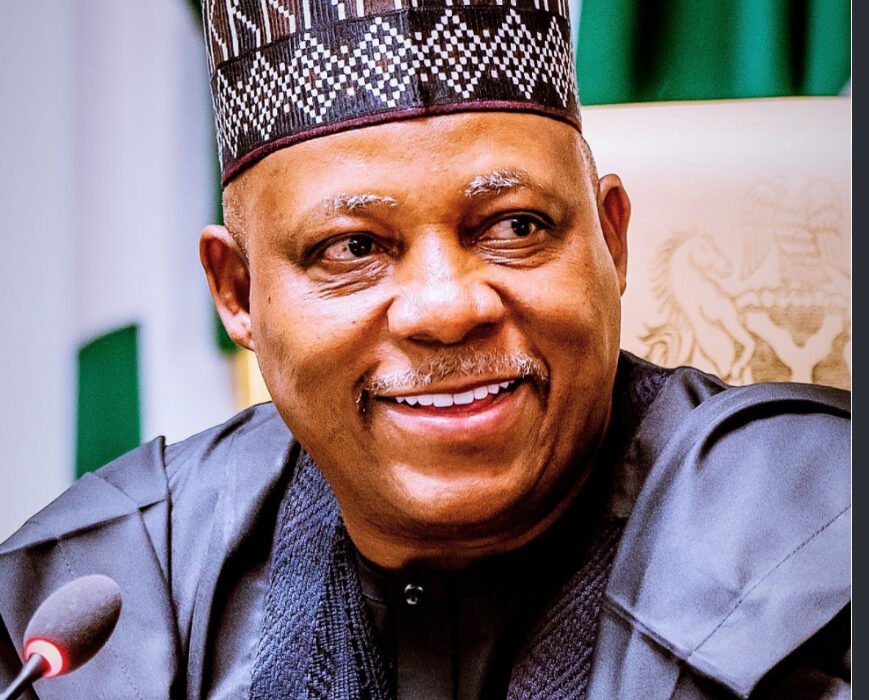
Vice President Kashim Shettima has called on South Africa to reconsider the treatment of Nigerians and other African nationals amid concerns over xenophobic and Afrophobic attacks, reaffirming Nigeria’s opposition to any form of discrimination or abuse against its citizens.
Shettima spoke in Luanda shortly before departing for Nigeria after representing President Bola Ahmed Tinubu at the 21st Extraordinary Session of the Assembly of Heads of State and Government of the African Union (AU).
The Vice President stressed that Nigeria remains willing to address its concerns with South Africa through dialogue and diplomatic engagement, but maintained that the government would speak firmly whenever the safety and dignity of Nigerians are threatened.
“Those whose palm kernels were cracked by benevolent spirits should learn to be humble. We were part of the struggle for the liberation of our brothers and sisters in Southern Africa, and we feel personally pained that our people have been picked up for humiliation,” the Vice President said.
He added that, “The government and people of Nigeria will no longer countenance a situation whereby our people are dehumanised and put into very, very unacceptable situations.
“But we believe in having very robust conversations with our South African brothers. We don’t want to overheat the polity, but once in a while, you have to make it very clear, vehemently clear, that certain situations are unacceptable, and we’ll work things out.”
Shettima maintained that Nigeria’s position was not aimed at escalating diplomatic tensions with South Africa, but at ensuring that Nigerians living or doing business in the country are treated with respect and protected from hostility.
He urged South African authorities to ensure that immigration enforcement complies with the principles of human dignity and the protection of lives, while addressing concerns surrounding irregular migration through lawful and humane measures.
The Vice President’s remarks come against the backdrop of Nigeria’s longstanding historical role in supporting the liberation struggle in Southern Africa and its continued diplomatic relations with South Africa.