
The All Progressives Congress (APC) Presidential Campaign Council (PCC) has urged President Bola Ahmed Tinubu to intervene in the growing disagreement between Federal Capital Territory (FCT) Minister Nyesom Wike and APC governors over the proposed Rainbow Coalition ahead of the 2027 general elections.
The PCC said the dispute, if allowed to escalate, could create tensions within the ruling party, particularly at the state and local government levels, although both sides have publicly expressed support for Tinubu’s re-election bid.
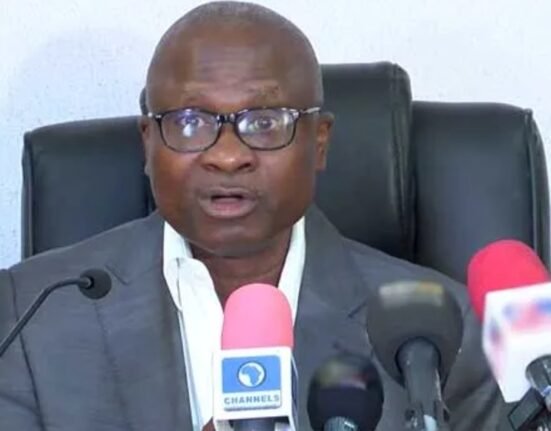
PCC spokesperson, Ima Niboro, described the disagreement as an internal dispute among political allies, saying it could be resolved through dialogue and intervention by the President.
Niboro made the remarks on Wednesday against the backdrop of renewed exchanges between Wike and APC governors over the minister’s proposed cross-party political coalition.
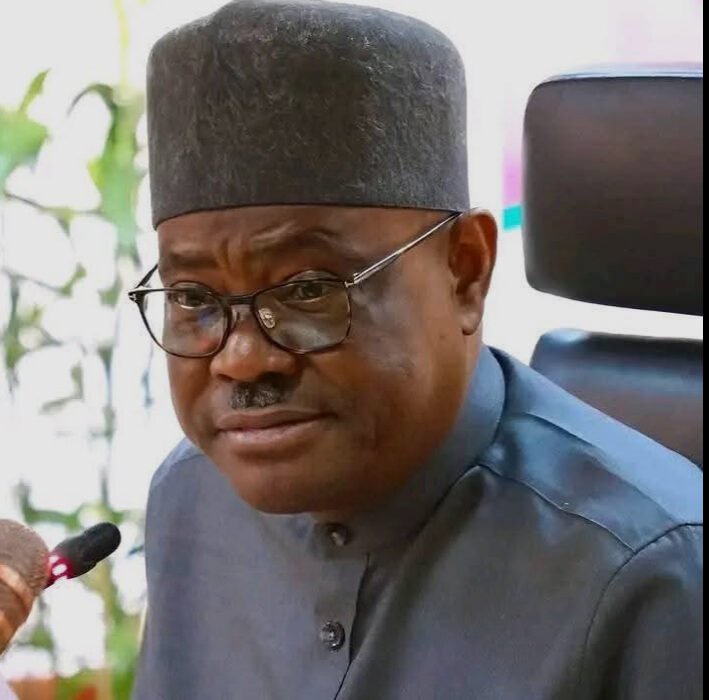
The dispute intensified after Wike criticised APC governors opposing the coalition, describing them as “politically lazy” and arguing that his decision to support Tinubu did not require him to abandon the Peoples Democratic Party (PDP) or prevent other political parties from fielding candidates.
The FCT minister, who spoke on Arise Television on Tuesday, maintained that his support for Tinubu was separate from the activities and electoral interests of political parties.
Wike also said the disagreement over his political activities was not new, recalling that some political actors had opposed his appointment as FCT minister and had earlier disagreed with him when he was governor of Rivers State.
The APC governors, however, have rejected any political arrangement that they believe could undermine the party’s candidates or create parallel structures ahead of the 2027 elections.
The chairman of the Progressive Governors Forum (PGF) and Imo State Governor, Hope Uzodimma, had said the governors would neither participate in, support nor endorse any alliance capable of weakening the APC or affecting Tinubu’s re-election campaign.
PCC calls for internal resolution
Reacting to the disagreement, Niboro said both Wike and the APC governors shared the broader objective of securing Tinubu’s return in 2027, despite their differences over political strategy.
“I consider this a quarrel among political siblings. They are all working in the same direction, but there are differences in the details. Both camps agree that President Tinubu must return in 2027,” he said.
He urged political actors to stop trading accusations in the media and concentrate on strengthening their respective grassroots structures.
Niboro said the disagreement had begun to affect political calculations at state and local government levels and therefore required effective management.
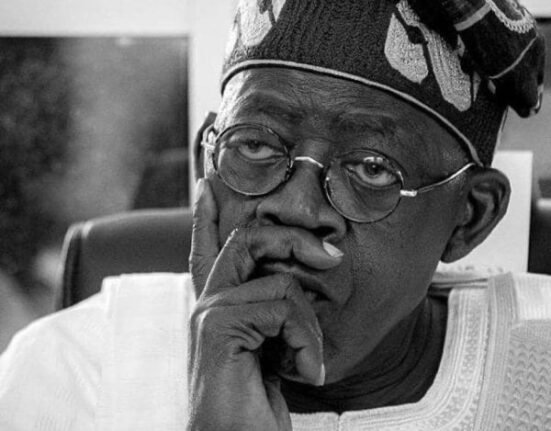
According to him, President Tinubu has extensive political experience and is in a position to manage the competing interests within the expanding political coalition.
He noted that large political parties often develop internal factions and disagreements, which, if not properly managed, could weaken their structures.
“The ultimate beneficiary of this entire process is the President. The quarrel we are talking about is a quarrel that is trickling down to states and local government areas. But both camps agreed on re-electing the President,” he said.
Niboro added that the disagreement should not necessarily be viewed as a direct challenge to Tinubu but as an internal political dispute requiring presidential intervention.
His comments followed an earlier appeal for Wike and the APC governors to end their public exchanges and focus on political mobilisation.
Igbokwe asks Wike to explain coalition to governors
Also weighing in, APC chieftain Joe Igbokwe urged Wike to meet with the party’s governors and explain the objectives of the Rainbow Coalition.
Igbokwe described Wike as an important political stakeholder whose influence could not simply be ignored, but said the minister should consult the governors over the proposed coalition.
“Wike is a critical stakeholder. You can ignore him to your own peril. He has a command. He has followers,” Igbokwe said.
He, however, questioned the timing and approach of the coalition, arguing that Wike should engage the governors and explain what he intended to achieve.
“Coming at this time, to put this (Rainbow Coalition) on the table, he has to listen to the majority, sit down with the governors and explain,” he said.
Igbokwe said the disagreement should be addressed through dialogue rather than public exchanges.
“No man is an island. Explain to your colleagues what you are trying to do,” he added.
Okechukwu cautions Tinubu against pressure to abandon Wike
Former Director-General of the Voice of Nigeria (VON), Osita Okechukwu, meanwhile, urged Tinubu to maintain a broad political coalition and resist pressure to abandon Wike.
Okechukwu argued that the disagreement should have been handled within the party rather than through public statements.
He questioned why the governors could not use existing party structures and channels to resolve their differences with the minister.
“In my 48 years in party politics, I have never seen where such an elementary issue was pretentiously thrown open. May I ask the governors: don’t you have access to Mr. President, and what is the proverbial caucus meant for?” he said.
Okechukwu also argued that Wike’s political network had contributed to Tinubu’s electoral support in 2023 and could remain relevant to the President’s broader coalition-building efforts ahead of 2027.
He said the President should not be forced to choose between the APC governors and Wike, arguing that the two political blocs could play complementary roles in the effort to mobilise support for the President.
“Mr. President has never overlooked the governors. All he wants is supplementary votes from Wike, especially in states where the electorate is angry and where some of the FPGs have alienated the people,” Okechukwu said.
He urged the APC governors to strengthen their relationship with their constituents while allowing the President to maintain a broad political alliance ahead of the 2027 elections.
The renewed disagreement comes amid wider political activity around the proposed Rainbow Coalition, which has generated contrasting reactions within and outside the APC. While supporters of the initiative have presented it as a cross-party mechanism for mobilising support for Tinubu, critics within the APC have expressed concern that parallel political structures could affect the party’s candidates and organisation at the state level.