
By Mukhtar Ya’u Madobi
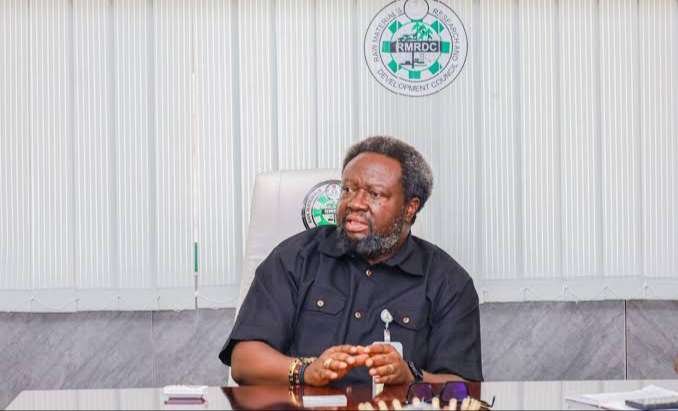
President Bola Ahmed Tinubu appointed Professor Nnanyelugo Martin Ike-Muonso as the Director-General and Chief Executive Officer of the Raw Materials Research and Development Council (RMRDC) in May 2024. No doubt, this is a strategic move to-wards strengthening Nigeria’s capacity to process local raw materials into finished prod-ucts, reduce dependence on imported goods, and promote industrial value addition.
Expectedly, the appointment has been widely described as putting a round peg in a round hole, considering Professor Ike-Muonso’s extensive expertise in natural resource eco-nomics, industrial development, and research commercialization.
Stakeholders believe the decision reflects a deliberate effort to accelerate Nigeria’s in-dustrialization agenda and enhance economic productivity through the effective utiliza-tion of local raw materials.
A renowned natural resource economist, policy strategist, and academic, Professor Ike-Muonso assumed office as the sixth substantive Director-General of the Council with more than three decades of experience in economic policy, raw materials markets, indus-trial chemical marketing, research commercialization, and supply chain management.
Since taking over the leadership of the Council, he has embarked on wide-ranging re-forms and institutional development initiatives aimed at repositioning RMRDC as a key driver of industrial growth, local value addition, and economic diversification in Nigeria.
Professor Ike-Muonso holds a PhD in Economics from ESEADE University and a Doctor of Business Administration (DBA) from SMC University in Argentina. He is also a Visiting Professor at the Enugu State University of Science and Technology (ESUT).
Before his appointment, he served as the Chief Executive Officer of ValueFronteira Lim-ited and was also an Associate Director at the Lagos Commodities and Futures Ex-change. He previously held a fellowship position at the University of Edinburgh and has authored more than ten books and over one hundred scholarly publications focusing on economic strategy, raw materials economics, market systems, and research commerciali-zation.
Industry observers note that his blend of academic excellence and private sector experi-ence has significantly influenced the reform-driven direction of the Council under his leadership.

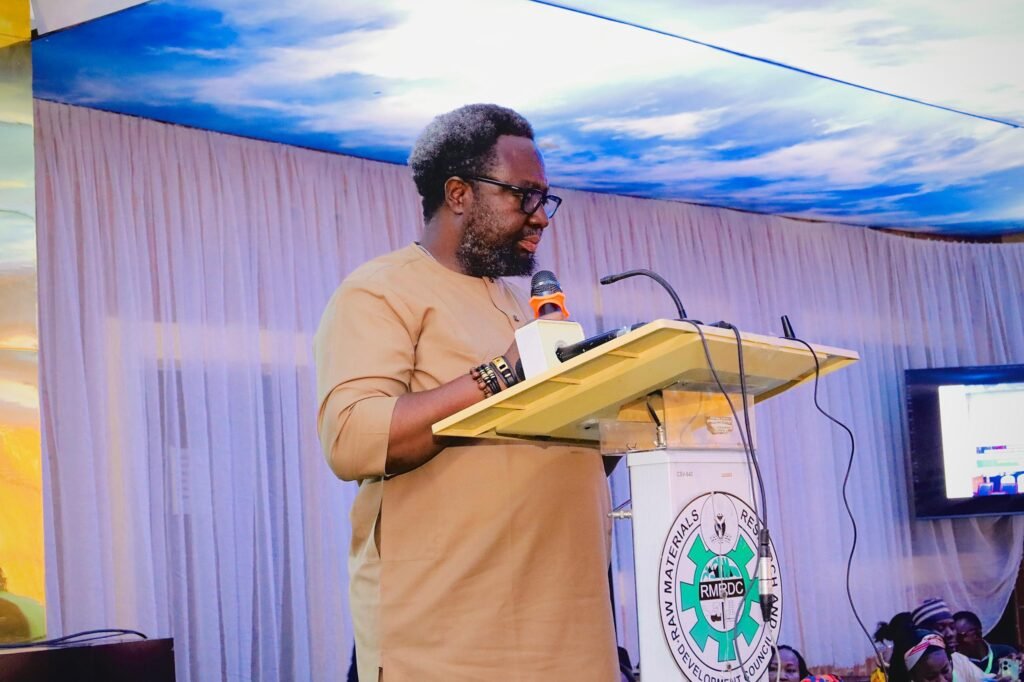
Upon assumption of office, Professor Ike-Muonso declared his commitment to trans-forming the Council into a more result-oriented institution capable of supporting Nige-ria’s industrial development objectives through improved local sourcing and utilization of raw materials.
At his inaugural meeting with members of staff, he emphasized productivity, accountability, operational efficiency, and institutional reforms, stressing that the Council must align with global best practices in research and industrial support services.
One of the major policy directions introduced under his administration is the strong advocacy for local value addition to Nigeria’s raw materials before export. According to him, Nigeria must move away from exporting raw resources in their unprocessed form while importing finished products at higher costs.
This policy position has gained momentum through the proposed amendment to the RMRDC Act, which seeks to mandate partial local processing of raw materials before exportation. Stakeholders believe the initiative could significantly reduce import dependence, conserve foreign exchange, stimulate local manufacturing, and create employment opportunities.
Under his leadership, the Council has intensified efforts toward promoting backward integration, industrial linkages, and domestic manufacturing capacity.
Professor Ike-Muonso has also initiated several institutional reforms targeted at improving operational efficiency within the Council. These include digitalization of administrative processes, strengthening of database systems, improved information technology infrastructure, and strategic restructuring of operational departments.
As part of efforts to modernize the institution, the management commenced arrangements for the procurement and distribution of computers and digital working tools to enhance productivity across departments and state offices.
Human capital development has also remained a major focus of his administration. The Council has organized training programmes, strategic retreats, and professional development initiatives designed to improve staff capacity and service delivery.
Employees of the Council have reportedly commended the administration’s attention to staff welfare, inclusiveness, and institutional growth.
Beyond internal reforms, the Director-General has continued to build strategic partnerships with universities, industries, researchers, and private sector stakeholders to strengthen research commercialization and industrial innovation in Nigeria.
He has also advocated the inclusion of Raw Materials Economics as a specialized post-graduate programme in Nigerian tertiary institutions to support manpower development for the industrial sector.
Under Professor Ike-Muonso’s leadership, RMRDC has continued to advance policy engagements across critical sectors including agriculture, mining, manufacturing, chemicals, and rubber production, with emphasis on sustainable value chain development and industrial competitiveness.
Analysts stated that the Council’s renewed focus on local content development and industrial processing aligns with the Federal Government’s broader economic diversification agenda under the Renewed Hope framework.
Within less than two years in office, Professor Ike-Muonso’s administration is already being associated with institutional repositioning, policy innovation, and renewed efforts to strengthen Nigeria’s raw materials sector as a foundation for industrial transformation.
Observers maintain that his tenure reflects a strategic shift toward building a more productive economy anchored on local manufacturing, value addition, and efficient utilization of Nigeria’s abundant natural resources.