
Oduduwa Republic: Yoruba Group Demands Independence, Proposes Restrictions on Non-Indigenes
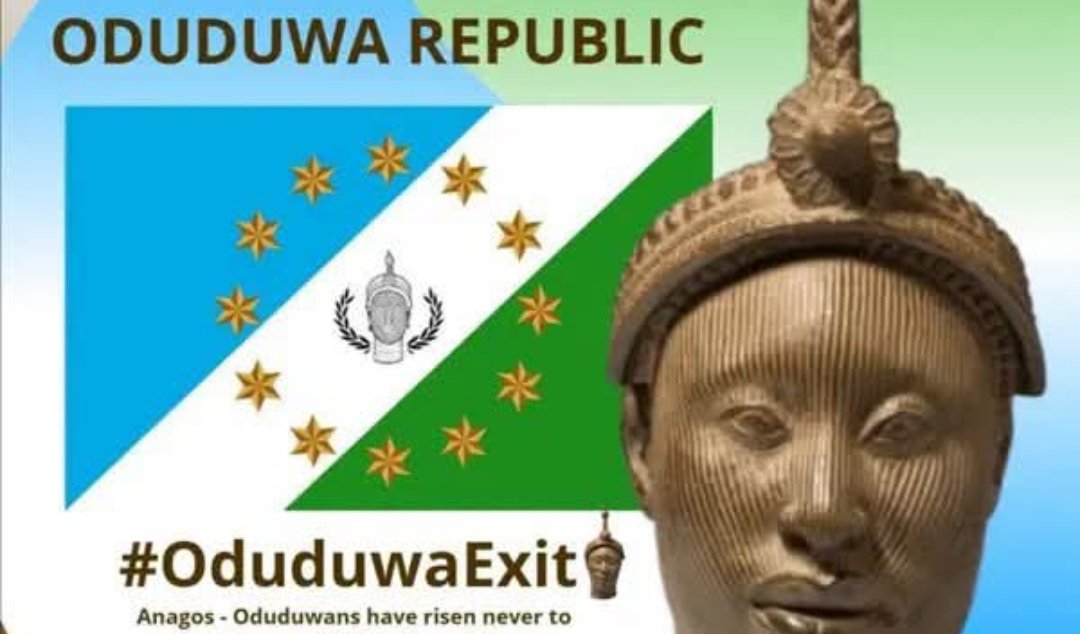
The Yoruba Self Determination Movement (YSDM) has renewed its call for an independent Oduduwa Republic, proposing restrictions on non-indigenes’ political participation, commercial activities and land leases across parts of South-West Nigeria.
The group made the demands on Wednesday during a press conference organised by the Yoruba Action Group at the Nigeria Union of Journalists (NUJ) Press Centre, Iyaganku, Ibadan.
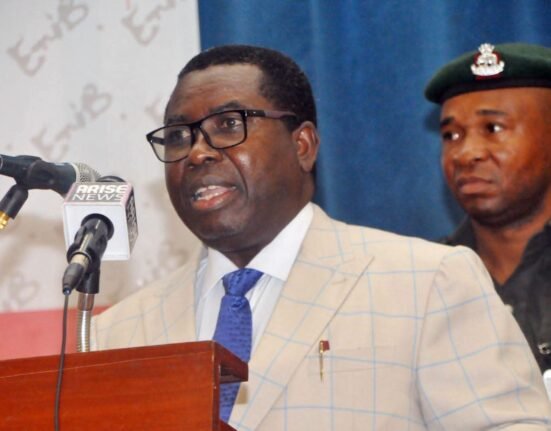
Its Deputy Leader (Homeland), Architect George Akinola, attributed the agitation to persistent insecurity, political tensions and disagreements over ethnic identity and territorial ownership, arguing that Nigeria’s challenges could no longer be resolved through restructuring or resource control.
Akinola said the movement had warned between 2017 and 2022 that the country was approaching a crisis, maintaining that the establishment of a sovereign Oduduwa Republic remained its preferred solution.
“The Yoruba people are angry and fed up with Nigeria. What we desire most, at this time, is to become a sovereign nation, separate from dysfunctional Nigeria and its many encumbrances on Yoruba potential,” he said.
The movement also called on political leaders and lawmakers across the South-West to introduce measures it said would protect indigenous interests, including restrictions on commercial spaces, property leases and electoral participation.
Proposes restrictions on political participation
The group declared that Igbo candidates should not contest elections in Yorubaland during the 2027 general elections, arguing that political participation should be determined by indigeneity.
“No vacancy for any Igbo candidate in Yorubaland,” Akinola said, urging those interested in seeking elective office to return to their states of origin.
The proposal raises questions about constitutional provisions guaranteeing Nigerian citizens protection against ethnic discrimination and the right to participate in political and economic activities across the federation.
Section 42 of the 1999 Constitution prohibits discrimination on grounds including ethnic group and place of origin, while Section 43 guarantees every Nigerian citizen the right to acquire and own immovable property anywhere in the country, subject to constitutional provisions.
The Constitution also promotes national integration and the free movement and residence of citizens across the federation.
Seeks 20% limit on market spaces
The YSDM urged governors, senators, members of the House of Representatives and state lawmakers to enact legislation protecting what it described as indigenous economic interests.
Among its proposals was a restriction limiting non-indigenes to occupying or controlling no more than 20 per cent of shops and commercial spaces in any market.
The group specifically mentioned Alaba, Ladipo and the Trade Fair Complex markets in Lagos, alleging that Yoruba traders had experienced intimidation and exclusion in some commercial spaces.
It called for the criminalisation of harassment against indigenous traders and urged authorities to investigate allegations of discriminatory practices in markets.
The movement also proposed limiting land leases granted to non-indigenes to 20 years or less, instead of the 99-year arrangements it cited.
Other demands included tighter migration controls in Yoruba urban centres, the return of non-Yoruba residents convicted of crimes to their states of origin, and the revocation of properties where, according to its allegations, hostile groups had gathered.
The group said the proposed measures were intended to prevent what it described as the concentration of economic and political power in the hands of particular ethnic communities.
Disputes claims over Lagos history
The movement rejected descriptions of Lagos as “No Man’s Land” and disputed claims concerning the contribution of Igbo residents to the development of the state, insisting that Lagos was historically and culturally part of Yorubaland.
It identified the Awori, Ijebu, Egba, Egbado, Remo, Ilaje and Egun communities, alongside Yoruba returnees from Sierra Leone, as groups associated with the historical development of Lagos.
Citing historical accounts attributed to Sola Ebiseni, the YSDM argued that Yoruba lineages had shaped the state’s traditional institutions, including the succession of its monarchs and the composition of prominent royal families.
It also disputed claims of historical Bini sovereignty over Lagos, maintaining that the traditional succession system reflected Yoruba ruling-house arrangements.
The group further alleged that the administration of former Lagos State Governor Bola Tinubu between 1999 and 2007 had enabled Igbo residents to expand their political representation and property ownership, developments it said contributed to current tensions.
The allegations reflect longstanding disagreements over history, indigeneity and political representation in Lagos, a major commercial centre with residents from diverse ethnic backgrounds.
Links agitation to insecurity
The movement cited insecurity in rural communities as another justification for its demand for independence, alleging that farmers and other residents had suffered kidnapping, killings, rape and attacks by armed groups operating in forests, villages and along highways.
It accused the Federal Government of failing to adequately address threats to Yoruba communities and argued that the security situation reinforced its position that the region should become an independent state.
The group also called for an end to open grazing in Yorubaland, urging cattle owners from outside the region to establish ranches in their states of origin.
Akinola warned that the Yoruba people would resist what he described as persistent provocations and attempts to undermine their territorial identity.
He cited historical episodes, including 19th-century conflicts involving Fulani incursions, the political crisis in the former Western Region in 1963, the disputed 1983 Ondo State governorship election and the annulment of the June 12, 1993 presidential election, widely believed to have been won by the late Chief Moshood Abiola.
The movement argued that these events demonstrated what it considered a longstanding struggle against political domination.
Challenges 1999 Constitution
The YSDM questioned the legitimacy of Nigeria’s 1999 Constitution, arguing that the document did not adequately reflect the consent of the country’s constituent ethnic nationalities.
It maintained that ethnic nationalities should be allowed to pursue self-determination and establish measures to protect their identities and interests.
However, Nigeria’s Constitution describes the country as an indivisible and indissoluble sovereign state and provides no unilateral constitutional procedure for a state or ethnic group to secede from the federation.
The movement said it would continue campaigning for an independent Oduduwa Republic, insisting that restructuring and other constitutional reforms would not resolve what it considers the country’s fundamental problems.
It urged political office-holders, traditional rulers and community leaders across the areas it identifies as Yorubaland to support its campaign.
The group’s proposed restrictions on political participation, property ownership and commercial activities would, if implemented, raise significant constitutional and legal questions concerning equality, freedom of movement and the rights of Nigerian citizens.