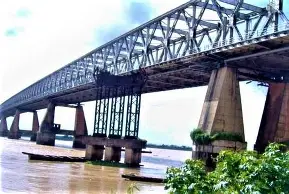


The reopening of major roads in Niger State has failed to restore full confidence among farmers, traders and transport operators, as recurring attacks, abductions and killings continue to disrupt the movement of people and agricultural produce across parts of the state
The situation has raised concerns about the wider impact of insecurity on Niger’s food economy, particularly in communities along the Mokwa-New Bussa corridor and parts of Borgu Kingdom
Earlier this month, commercial drivers operating on the Mokwa-New Bussa axis suspended passenger loading and blocked sections of the roads in protest against repeated attacks targeting motorists and travellers
The disruption was followed by police intervention, leading to the reopening of the affected routes on August 10
However, the resumption of traffic has not translated into a full return to normal economic activity
Farmers are struggling to move harvests to markets, traders are avoiding some rural routes, transporters are losing passengers and income, while reduced supplies in some markets are contributing to pressure on food prices
Six drivers killed, eight abducted
The extent of the danger faced by transport operators was highlighted by Alhaji Danladi Abdullahi, treasurer of the Niger State chapter of the National Union of Road Transport Workers, NURTW
Abdullahi told DAILY POST that NURTW executives in New Bussa and Wawa had alerted the state leadership after growing concerns among drivers over attacks along the routes
He said the situation eventually reached a point where the state executive was informed that drivers had stopped loading passengers because of the frequency of kidnappings and killings
According to Abdullahi, six drivers were killed during the period, while about eight others remained in captivity. He said the union had paid ransom to secure four victims, while another escaped
He explained that the union had not calculated its total expenditure because the incidents occurred at different locations, including Mokwa, Wawa, Gufanti and New Bussa
“We don’t spend less than N3 million to secure a victim,” he said, adding that kidnappers sometimes demanded motorcycles in addition to ransom, with each costing more than N2 million
He recalled a case in which the abductors demanded N80 million
“Where do we get that from?” He asked
Abdullahi said drivers were particularly vulnerable because an attack on them could expose everyone travelling in their vehicles
“If they get the driver, they will get the passengers,” he said
He added that some attackers blocked roads with large stones, leaving approaching vehicles with little option but to stop
The Chairman of the Niger State chapter of the National Association of Road Transport Owners, NARTO, Alhaji Alhassan Usman Shiroro, also expressed concern over the rising cases of kidnapping
He appealed to drivers to remain calm, saying the government was taking steps to address insecurity and restore safety along the affected routes
Security agencies intensify operations
The Niger State Police Command confirmed that kidnapping incidents had occurred on highways in the state but said it could not provide specific figures covering the incidents over a particular period
The Police Public Relations Officer, SP Wasiu Abiodun, said the police, military and other security agencies had carried out joint clearance operations and patrols along vulnerable routes
He said operational bases had also been established at designated locations, while armoured personnel carriers, patrol vehicles, gun trucks, lorries and vans had been deployed
According to him, the increased presence of security personnel had improved the agencies’ ability to respond to distress calls
“Our collective efforts as security agencies have a significant impact in reducing the level of attacks,” Abiodun said
He listed air operations, intelligence sharing, regular patrols and increased security visibility among measures being deployed to contain the attacks
The police spokesman added that arrests had been made, while some terrorists were neutralised during operations and arms, ammunition and abducted victims recovered
He assured that the measures would be intensified
Abdullahi also acknowledged the impact of the security deployment, particularly around Babana and communities close to the national park
He said patrol vehicles had been provided by the Niger State Government, Mokwa Local Government, the area commander and the emir as part of efforts to improve security along the affected routes
DAILY POST reports that following the intervention, NURTW officials met with Governor Mohammed Umaru Bago before meeting with drivers and appealing to them to resume operations
The union leadership also continued to circulate information about dangerous routes while urging drivers to report incidents to security agencies and local authorities
Security gains yet to restore public confidence
Despite the increased deployment, residents say fear remains a major factor influencing movement
Malam Abubakar, a resident of Wawa, told DAILY POST at Enagi that security had improved following the deployment of personnel, particularly around the national park
He said there had been no recent kidnapping incident in his immediate area but added that many residents were still reluctant to travel
“The situation has improved with the presence of security agencies, especially around the national parks where a lot of abductions and killings take place,” he said
“Many people don’t want to travel that route for now. There is a lot of panic among our people,” he added
The fragile sense of security was again tested on August 21 when the police reported that suspected terrorists had invaded Gidan-Zana and Kpenya villages through Dekara District of Borgu
The attackers later stormed Kpenya mosque during prayers and abducted an unspecified number of worshippers, while others escaped into a nearby forest
The police said no life was lost in the incident and that a joint security team had been deployed to assess the situation and commence rescue operations
Farmers struggle to connect farms with markets
For farmers in Borgu communities, insecurity is affecting both access to farmland and the ability to sell harvested produce
Musa Hamidu told DAILY POST that some farmers now transport their crops to markets in groups or depend on drivers who are prepared to take the risk
He said such drivers transport the produce to markets and hand it over to traders, who sell the goods and return the proceeds to the farmers
“But when tension rises”, Hamidu said, “farmers sometimes do not take their produce to market at all.”
The disruption has direct consequences for food prices, he explained
“When there are a lot of products in a market, prices could drop. When they are scarce because farmers are unable to bring them to the market, it raises the prices,” he disclosed
Hamidu said farmers could also suffer losses when they succeed in taking their produce to market but potential buyers are discouraged from coming
He added that agricultural activity had declined in security-prone parts of Borgu Kingdom, including Borgu and Agwara Local Government Areas, with some farmers abandoning their farms after parts of their communities were overtaken by bandits and terrorists
Hadiza Zubairu told our correspondent that markets in affected communities were no longer receiving the volume of agricultural produce they previously handled because farmers were unable to transport their harvests
She said the situation had made it more difficult for families to provide for their children, adding that some farmers now rely on farms belonging to other people because they can no longer access their own farmland
Insecurity forces traders away from rural markets
The disruption is also reshaping how food traders in Minna source their supplies
Hajiya Jummai, a Chanchaga-based trader who travels to markets across Niger State, said she previously visited Babana and other rural markets around Borgu to purchase grains and other food products
According to her, insecurity has forced her and other traders to stop visiting some of those locations
“I usually go to Babana and others such as Mariga and Kontagora in the state, but the security situation made us stop,” she stated
Jummai said traders were increasingly concerned about attacks on markets, recalling incidents in the Borgu area involving killings and abductions
She also disclosed that a fellow trader was kidnapped at a market in Shiroro more than two years ago and had yet to return
Another trader, Mama James, said the insecurity had particularly affected traders who previously travelled to distant villages to buy yams
“We don’t go far again,” she said, adding that many farmers who once supplied traders with yams had relocated because of insecurity in their communities
Minna markets become new supply points
As traders withdraw from some rural markets, markets closer to Minna have increasingly become alternative points for sourcing food
Mama James identified Tungan-Goro, Chanchaga, popularly known as Kasuwan Alert, Beji, Paiko and other nearby markets as places where traders now obtain supplies
Mallam Bello, a grain seller at Kure Ultra Modern Market, said traders have increasingly adopted an arrangement in which farmers bring their produce closer to the city
“We just wait for villagers to bring their foodstuff to the Wednesday or Saturday market at Kure market or Thursday around Kasuwan Gwari market. We buy from them and store, or we order, they bring them by themselves,” he said
Alternative supply chains offer limited relief
Buyers at Kasuwan-Gwadabe in Kure market said the increased volume of produce arriving from rural communities could sometimes result in lower prices
However, farmers say the arrangement comes with additional transportation costs that reduce their earnings
Mrs Hajara, a maize seller, said farmers now spend more money moving their harvest because traders who previously travelled directly to their villages are no longer willing to make the journey
She said the additional cost ultimately eats into the farmers’ profits
Rural markets lose traders and buyers
The disruption has also affected the traditional market network across the affected communities
Wawa holds its market on Wednesdays, Babana on Mondays and Gufanti on Sundays, while New Bussa operates markets on Mondays and Sundays
Residents said the markets once attracted buyers from different parts of Niger State, the South-East and South-West, as well as neighbouring countries
The markets were known for trading maize, guinea corn, beans, cattle, rams and farming inputs
Residents, however, said the level of commercial activity had declined considerably, particularly in Babana and Gufanti
Transporters count the cost
For drivers who depend on the affected routes for their livelihoods, reduced passenger movement has translated directly into financial hardship
Mohammed, who has operated on the routes for more than a decade, said insecurity had fundamentally altered the economics of transportation
“Because people don’t travel like before, it’s affecting our financial situation. It’s becoming hard to care for families.”
He said he continued to use the roads while praying for protection but acknowledged that fear had discouraged many passengers from travelling
Transport officials at Abuja Park in Minna, Lapai and Kpakungu similarly reported reduced movement along the affected routes, saying the insecurity had increased financial pressure on drivers
Food security remains vulnerable
The experience in Niger State shows how insecurity can extend beyond immediate threats to lives and property and disrupt the entire chain through which food reaches consumers
Farmers, traders and transporters have developed temporary ways to cope, including travelling in groups, changing markets, relying on trusted drivers and waiting for farmers to bring produce closer to urban centres
But such measures cannot replace safe and reliable transportation networks
Security agencies have increased patrols and deployments in parts of Borgu, while transport unions continue to exchange information about dangerous routes and encourage drivers to report suspicious activity
Farmers and traders have also adjusted their routes and markets to keep food moving
However, the August 21 attack at Kpenya Mosque demonstrates how quickly confidence can be shaken
For farmers, traders and drivers, meaningful recovery will therefore depend on more than reopening roads. It will require an environment where farmers can reach their fields safely, traders can return to rural markets and transport operators can move passengers and agricultural produce without fear
Until that happens, the reopening of roads will remain only a partial recovery, because when insecurity interrupts the journey from farms to markets, the economic consequences eventually reach every household that depends on those supplies.