
…As Commission Management Focus On Repositioning Nigeria’s Humanitarian Landscape
In today’s world, where natural disasters, emergencies, and environmental pressures unfold with unsettling frequency, the need for strong humanitarian institutions has never been more urgent. Nigeria, like many nations, confronts an expanding landscape of crises.
Flooding, communal clashes, human trafficking, irregular migration, banditry, and violent extremism have pushed millions into cycles of displacement, vulnerability, and uncertainty, often with no clear source of hope or relief.
Nigeria’s displacement crisis is not only vast but deeply complex. From insurgency in the northeast to climate-driven flooding in the Middle Belt, millions have been uprooted by insecurity and environmental shocks.
Standing at the heart of this prolonged emergency is the National Commission for Refugees, Migrants and Internally Displaced Persons (NCFRMI)—an institution once dismissed as marginal but now carving out a central role in Nigeria’s humanitarian architecture.
Established by Decree 52 of 1989, now codified in Cap. N21 of the Laws of the Federation of Nigeria 2004, the Commission derives its authority from international refugee protection instruments: the 1951 UN Refugee Convention, its 1967 Protocol, and the 1969 OAU Convention. Its mandate expanded in 2002 and 2009 to include Internally Displaced Persons (IDPs) and migration coordination.
Today, NCFRMI is tasked with protection, relief, resettlement, reintegration, empowerment, and the provision of durable solutions for refugees, asylum seekers, returnees, stateless persons, IDPs, and migrants.
Core Functions Of NCFRMI
The core responsibilities of the Commission included but not limited to the following:
Advise the Federal Government on Policy matters relating to refugees, migrants and internally displaced persons
Protect and assist IDPs and seek the collaboration of other MDAs for such protection and assistance
Coordinate migration issues, protect migrants and their families, including other Nationals resident in Nigeria, pursuant to the provisions of international conventions, protocols and treaties guiding the protection of rights and promotion of the welfare of migrants
Through the Consultative Committee, provide a platform for the uniform administration of migration for formulating, reviewing and implementing a national policy on migration and development
Work towards eliminating irregular migration and encourage orderly and regular migration of Nigerians
In collaboration with relevant agencies of government, ensure compliance with the provisions of the Kampala Convention
Support State Governments in the creation and maintenance of an updated register of all IDPs within their jurisdiction
Register and make personal documentation of IDPs
Identify, mobilize and coordinate refugees, migrants and internally displaced persons’ camp management agencies and other sectorial partners, towards ensuring effective co-ordination of other sectors responding to the provision of assistance and needs
Facilitate the restoration of communities displaced due to ecological induced occurrences
Coordinate the activities of all agencies on refugee, migration and internal displacement issues
Ensure that internally displaced persons are protected during and after displacement, return or resettlement and reintegration
Develop SOPs, in conjunction with relevant MDAs and inter-governmental or humanitarian agencies to return, re-admit and re-integrate, excluded migrants in line with extant legal instruments to promote the human rights and well-being of migrants
Develop policy framework to encourage and promote voluntary return of IDPs to their respective homes or place of habitual residence or resettle voluntarily in another part of the country in dignity
Proffer long lasting solutions to the problems of IDPs through reconstruction and renovation of destroyed homes and properties
Encourage and ensure capacity building and skill acquisition through training programs to Nigerians who are being repatriated in order to be self-dependent and gainfully engaged upon their return
Collaborate with the Ministry of Foreign Affairs to negotiate and facilitate the implementation of bilateral agreements with nations repatriating Nigerian citizens;
Collaborate with relevant agencies to negotiate the safe return of Nigerian migrants, where the host country has legitimate cause to return them or where they decide to return voluntarily;
Where there is a large-scale influx of persons claiming to fall within the meaning of refugees under this Act or massive internal displacement or in situations of mass return of deportees, the Commission shall, in consultation with other relevant stakeholders, provide emergency remedial measures and advise the Federal Government on the appropriate measures to be taken.
In spite of all these measures, the scale of the challenges in humanitarian sector continues to grow. According to the International Organization for Migration (IOM), Nigeria hosts over 3.6 million IDPs and 2.1 million returnees. The 2022 floods alone displaced 1.4 million people across 33 states, while persistent farmer–herder conflicts have uprooted over 2.2 million persons since 2019.
Historically overshadowed by UN agencies and the National Emergency Management Agency (NEMA), NCFRMI’s 2022 Act significantly broadened its scope, transforming it into a specialised hub for protection, resettlement, migration management, and inter-agency coordination.
Guiding this transformation is Hon. Tijani Ahmed Aliyu, appointed by President Bola Ahmed Tinubu in September 2023. Approaching two years in office, he has evolved from being a new entrant to becoming the primary force redefining NCFRMI’s direction. His leadership blends policy depth, community awareness, and decisive execution—qualities that are gradually shifting the Commission from reactive administration to a data-driven, technologically enabled, and partnership-oriented institution.
Under his stewardship, Nigeria has validated the National Durable Solutions Strategy and inaugurated the Technical Working Group (TWG) responsible for resettlement pathways and sustainable reintegration of IDPs. His personal story also shapes his leadership ethos. With Bachelor’s and Master’s degrees in Sociology and years of public service in Nasarawa State—ranging from Commissioner for Education to Secretary to the State Government—Ahmed brings a refined understanding of governance, social structures, and stakeholder management.
Upon assuming office, he introduced a five-point agenda centered on strategic international partnerships, institutional reform, staff welfare, enhanced rehabilitation services, and restoring public trust. Early engagement with UNHCR, IOM, and grassroots communities laid the foundation for collaborative intervention.
His influence also extends into cultural spaces. The conferment of the title Dan Amincin Lafia Bare-Bari by the Emir of Lafia in 2025 and his recognition of similar honours in Loko signify his emphasis on unity and social cohesion—values he believes must underpin displacement and migration management.
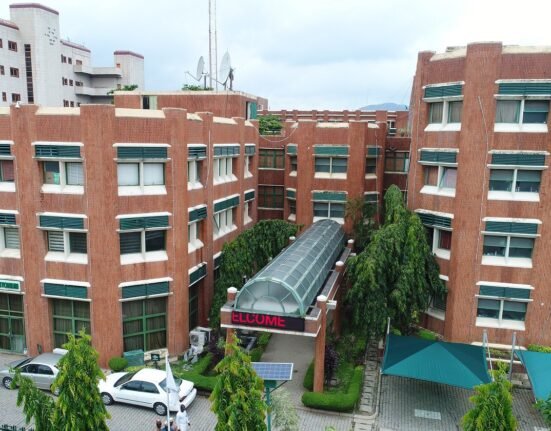
His tenure has not been without turbulence. Mid-2025 saw a protest at NCFRMI headquarters accusing the leadership of corruption, nepotism, and diversion of relief supplies. Initial optics were troubling. However, an investigation by the Civil Society Organisation Budget Implementation, Assessment, Monitoring and Evaluation Committee exposed the protest as a smear campaign orchestrated by actors resisting institutional accountability. The episode underscored a fundamental truth: meaningful reform inevitably disrupts entrenched interests.
From the early days, Ahmed established a tradition of field presence. His listening tours across displacement-affected communities signaled a break from distant bureaucratic routines. These visits verified caseloads, exposed gaps, and strengthened community-level trust. A notable result of such engagement was the creation of a dedicated CSO desk- a structural reform that fosters transparency, joint programming, and civil society oversight.
A major milestone under his leadership has been NCFRMI’s contribution to revising and validating the National Migration Policy (NMP 2025), which frames migration as a vehicle for national development and offers measurable implementation pathways. Yet effective policy demands robust systems. Thus, Ahmed has prioritised data interoperability with NIMC, NITDA, and IOM to ensure accurate targeting, prevent duplication, and optimize scarce resources.
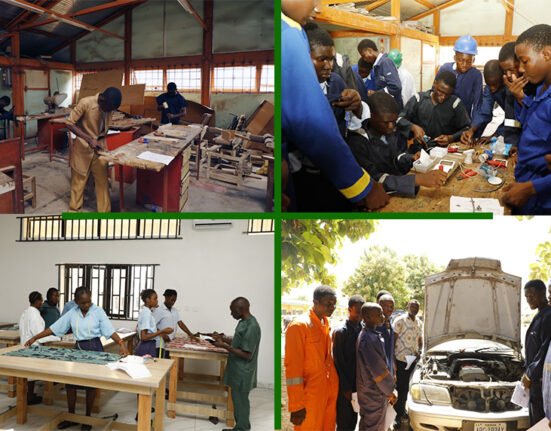
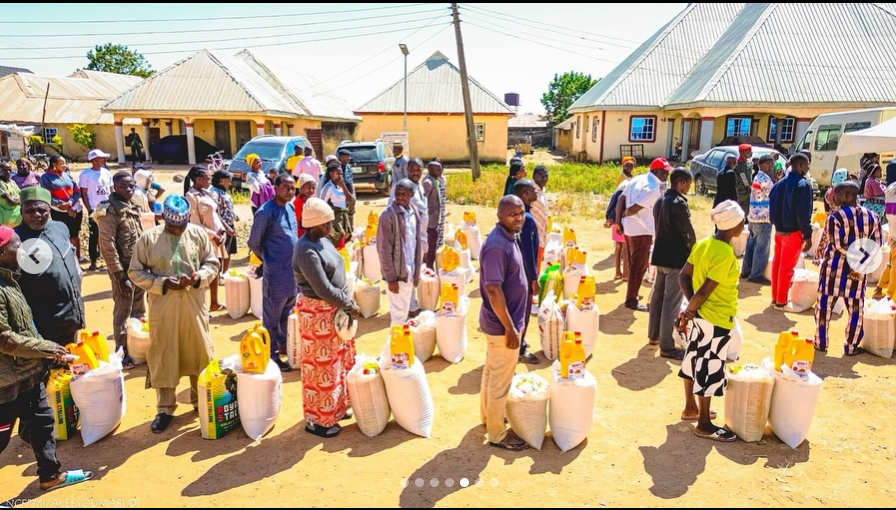
The Commission’s interventions have now moved decisively from ad-hoc response to structured, proactive programmes. Key achievements include coordinated voluntary humanitarian return flights from Sudan; the launch of the “Resettlement City” model—beginning with 300 IDPs in Keffi and additional units in Zamfara; digital inclusion initiatives with NITDA involving ICT hubs and digital skills training; and sustained investment in livelihoods, vocational empowerment, and MSME support for displaced women and youth.
Independent civil society assessments affirm that displaced families in these pilot resettlement schemes appreciate the housing, education, healthcare, and livelihood opportunities provided. These projects demonstrate that durable solutions when tied to dignity and economic opportunity, offer more promise than emergency relief alone.
Nevertheless, ambition must confront economic reality. Nigeria’s 2025 humanitarian financing projections reveal substantial funding gaps. Without stable resources, even the most promising pilots risk stagnation. NCFRMI’s growing transparency measures open-door engagement, a CSO desk, and improved data systems—are valuable beginnings, but must be complemented with public beneficiary lists, functional complaint mechanisms, independent audits, and participatory monitoring that meaningfully empowers affected communities.
Partnership remains NCFRMI’s strongest instrument. Collaboration with NITDA, IOM, UNHCR, UNICEF, WFP, and numerous local NGOs has expanded technical expertise, community outreach, and programme depth. However, such partnerships must be steadily guided to ensure that support reaches displaced persons equitably and sustainably without fostering dependency.
Looking ahead, the path to strengthening Nigeria’s humanitarian governance is clear: operationalise the National Migration Policy with measurable frameworks; secure multi-year funding for resettlement and digital empowerment; expand protection and documentation services; improve case management; and design host-community benefit packages that promote inclusion rather than tension. These steps complement President Tinubu’s broader agenda of rebuilding public trust and placing human dignity at the centre of national development.
Concrete inducators such as housing transitions, digital skills certification, employment outcomes, timely documentation for returnees, host-community perception surveys, and public audits—ultimately provide the basis for evaluating progress. Yet metrics alone cannot replace leadership that is visible, accountable, and committed to navigating the delicate intersection of politics, insecurity, and human need.
In the final analysis, the trajectory of NCFRMI under Hon. Tijani Ahmed Aliyu reflects an institution striving to evolve beyond emergency administration into a model of sustainable humanitarian governance. His leadership has injected energy, discipline, and a cooperation-driven ethos into the Commission.
For millions displaced by conflicts, climate shocks, and insecurity, genuine progress is seen not in policy proclamations but in resettled families, rebuilt livelihoods, and restored dignity. If current momentum is sustained, NCFRMI stands poised to transform from a once-peripheral agency into a national instrument of hope—one capable of steering Nigeria toward a future rooted in resilience, inclusion, and human flourishing.
In a country striving to rebuild trust, strengthen social cohesion, and protect its most vulnerable, NCFRMI stands poised to deliver not just humanitarian assistance—but lasting human dignity.