
By Comrade Dominic Ogakwu
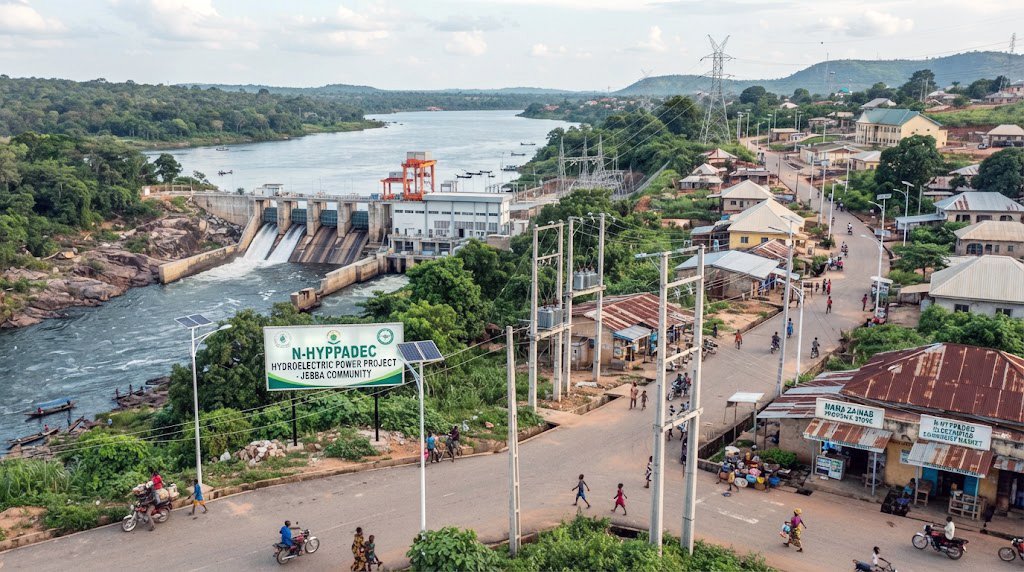
For communities that host Nigeria’s hydroelectric power infrastructure, the promise of electricity has often come with a difficult trade-off: environmental disruption, displacement, inadequate infrastructure and limited access to the economic benefits associated with national power generation.
While dams contribute to energy security and economic development, the communities around them have frequently continued to grapple with flooding, erosion, disrupted livelihoods and poor access to basic amenities.
The establishment of the National Hydroelectric Power Producing Areas Development Com-mission (N-HYPPADEC) was a legislative response to this development imbalance. Its mandate is anchored in a straightforward principle: communities that bear the environmental and socio-economic consequences of hydroelectric power production deserve deliberate, sustained in-vestment in their own development.
Over the years, the commission has sought to translate that principle into practical interventions spanning infrastructure, education, healthcare, agriculture, environmental protection and human-capital development.
Its evolving story offers an opportunity to examine both the progress made and the challenges that remain in transforming hydropower host communities into safer, more prosperous and resilient places to live.
From Legislative Response to Development Institution
N-HYPPADEC was established in 2010 through an Act of the National Assembly to address the ecological and socio-economic consequences of hydroelectric dam operations. The legislation was subsequently amended in 2013 and 2016, while the commission’s Governing Council was inaugurated in December 2020. Full operations commenced in 2021.
Initially covering six states—Benue, Kebbi, Kogi, Kwara, Niger and Plateau—the commission’s operational reach expanded in 2023 following amendments associated with the Electricity Act 2023. Kaduna, Nasarawa, Gombe and Taraba were added, bringing the number of member states to 10.
The expansion reflected the wider geographical spread of Nigeria’s hydroelectric power-producing communities and the need for a more inclusive approach to development planning.
N-HYPPADEC’s mission is to mobilise and deploy resources transparently, acceptably and cost-effectively to mitigate the adverse effects of hydroelectric dams. Its vision is centred on equita-ble and sustainable development across its areas of operation.
Its statutory responsibilities extend beyond the construction of public infrastructure. They in-clude policy formulation, development planning, ecological assessment, project implementation and monitoring, flood and environmental hazard mitigation, and support for state governments in addressing development challenges within hydroelectric power-producing areas.
The breadth of this mandate makes N-HYPPADEC more than an infrastructure-delivery agency. It positions the commission as an institution with responsibilities spanning environmental man-agement, social development and community resilience.
Translating Mandate into Community Impact
The effectiveness of a development institution is ultimately measured not by the breadth of its legislation, but by the difference its interventions make in people’s lives.
For N-HYPPADEC, that difference is reflected in projects and programmes addressing flood vulnerability, water scarcity, educational disadvantage, limited employment opportunities, agri-cultural constraints and the safety challenges associated with riverine transportation.
Its intervention portfolio cuts across flood and erosion control, water supply, education, healthcare, agriculture, youth empowerment, rural infrastructure, resettlement and maritime safety.
Taken together, these initiatives suggest an approach that recognises development as an inter-connected process in which environmental protection, social services and economic opportuni-ty reinforce one another.
Building Resilience Against Floods and Erosion
For communities located along riverbanks and around dams, flooding is far more than a seasonal inconvenience. It can destroy homes, roads, schools and farmlands, disrupt livelihoods and, in severe cases, threaten human lives.
N-HYPPADEC has responded through the construction of drainage systems, hydraulic struc-tures and erosion-control infrastructure in vulnerable communities.
Among its documented interventions are a 650-metre flood and erosion-control hydraulic drainage system at Koton-Karfe in Kogi State, incorporating four three-cell box culverts, and a 1,200-metre drainage project at the Idye Basin in Makurdi, Benue State.
The commission has also undertaken drainage construction in Idye, Benue State, and Patigi, Kwara State, while its broader intervention portfolio includes flood-control systems and water-channel desilting.
In Niger State, the ongoing embankment project at the Gurara waterfront in Muye, Lapai Local Government Area, illustrates the commission’s continuing attention to water-related hazards. An inspection of the project in August 2026 highlighted the importance of monitoring execution and maintaining focus on community-level resilience.
Such projects carry significance beyond the structures themselves. Effective flood mitigation can protect agricultural productivity, preserve transportation routes, reduce property damage and limit the disruption of local economic activities.
However, their long-term value will depend on sound engineering, proper maintenance and the ability to withstand changing environmental conditions.
Water, Education and Essential Services
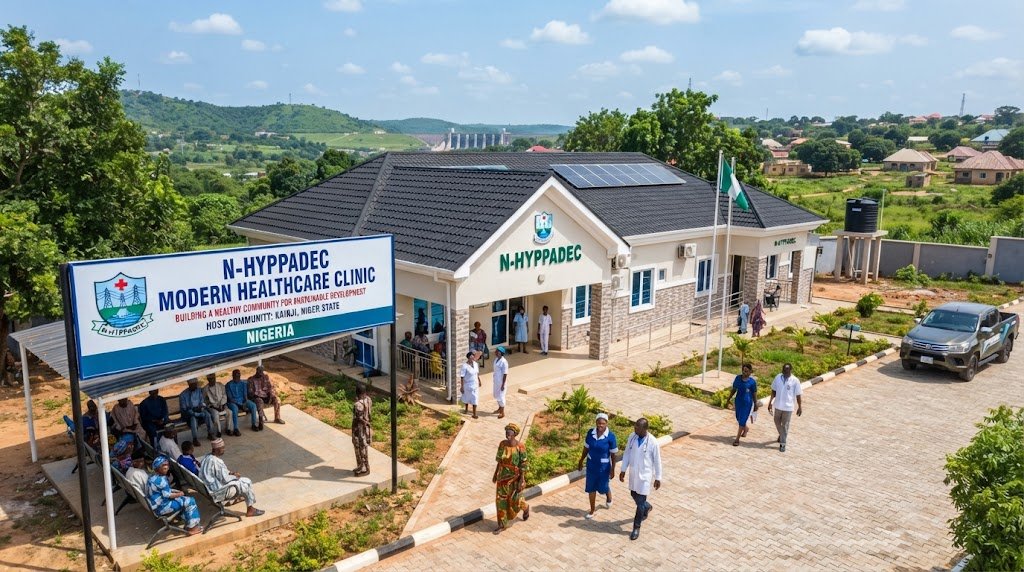
Access to safe drinking water remains fundamental to public health and community welfare. In response to water-supply challenges, N-HYPPADEC has constructed motorised solar-powered boreholes and supported the rehabilitation of waterworks, including facilities in Yauri and New Bussa.
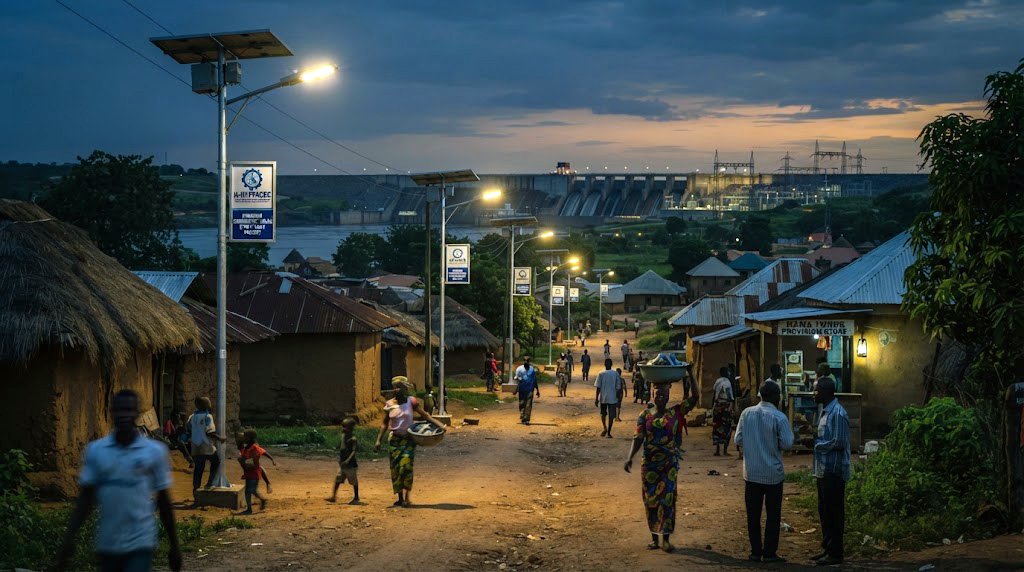
The commission has also reported the installation of solar-powered streetlights in host commu-nities, addressing practical concerns relating to public safety, mobility and evening economic ac-tivities.
Education is another important component of its development strategy.
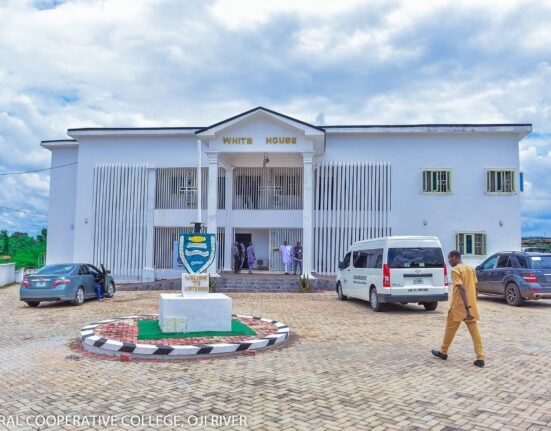
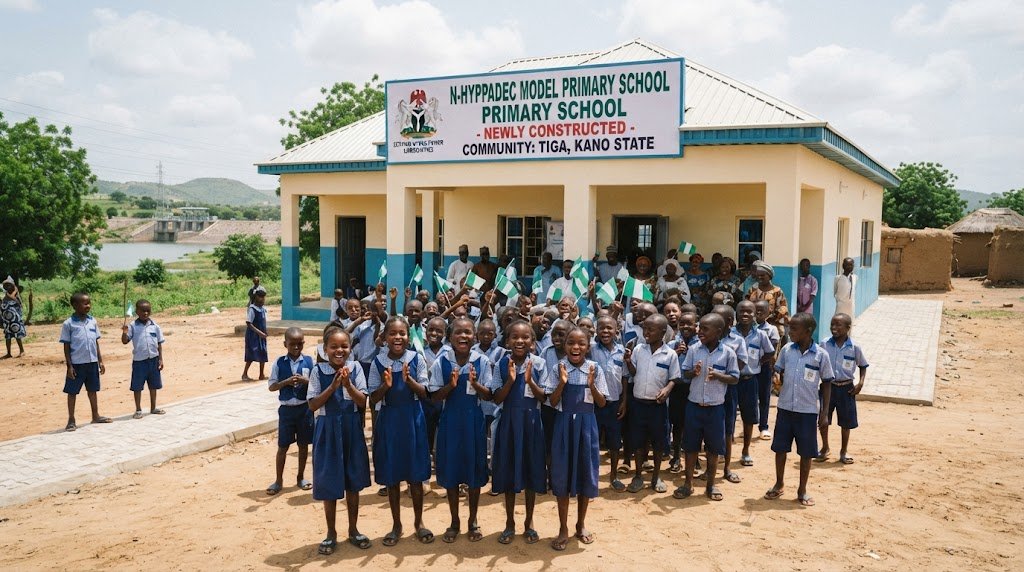
The commission’s documented initiatives include classroom construction and rehabilitation, ed-ucational support programmes and assistance to students pursuing their studies.
Its educational support programme reportedly sponsored 4,000 students to retake Senior School Certificate examinations conducted by the National Examinations Council, alongside scholarship assistance for tertiary institution students.
In Gombe State, support for indigent students through the payment of NECO fees was among the interventions highlighted during the commission’s engagement with the newly admitted state.
Such programmes address a persistent barrier to educational advancement: the inability of fi-nancially disadvantaged students to meet examination and other educational expenses.
For host communities, where household incomes may already be affected by environmental and economic disruptions, targeted educational support can help prevent financial hardship from becoming a permanent obstacle to human-capital development.
Empowering Young People and Strengthening Livelihoods
No development agenda can achieve lasting results without investing in the productive capacity of young people.
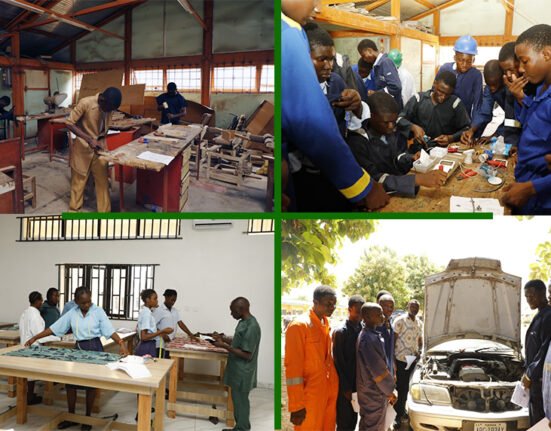
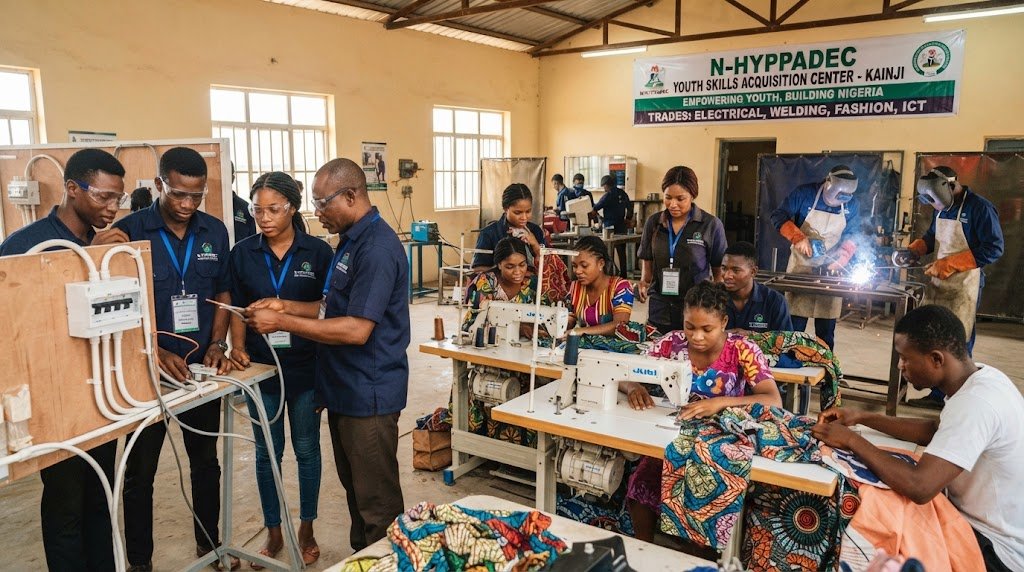
N-HYPPADEC’s Youth Transformation Programme stands out as one of its notable human-capital initiatives. The programme trained approximately 5,000 youths from its six pioneer states in various trades, providing participants with stipends during training and starter packs upon completion.
The initiative covered 28 trade areas, with training periods ranging from three to six months, depending on the chosen vocation.
Its stated objective is to promote self-reliance and equip beneficiaries with skills that can sup-port personal income generation and, potentially, employment creation for others.
This approach is particularly relevant in communities facing limited employment opportunities, economic vulnerability and restricted access to vocational training.
Skills acquisition, however, delivers its greatest value when accompanied by appropriate tools, mentorship, access to markets and follow-up support. These complementary measures deter-mine whether beneficiaries can move beyond training to establish sustainable livelihoods.
Agriculture also features in the commission’s intervention portfolio. Initiatives include the distri-bution of subsidised fertiliser and 13-horsepower hand-driven power tillers to farmers in host communities.
For predominantly agrarian populations, such support can improve access to productive inputs and strengthen local economic activity, provided it is sustained and matched with extension ser-vices, market access and appropriate agricultural planning.
Maritime Safety, Security and Community Protection
For many riverine communities, waterways serve as essential transportation routes linking set-tlements to markets, schools, healthcare facilities and other services.
Yet water transportation presents significant safety risks where protective equipment, naviga-tional infrastructure and emergency-response capacity are inadequate.
N-HYPPADEC has introduced interventions aimed at improving safety and mobility on water-ways, including the distribution of life jackets, clearance of obstructive water logs and provision of water transportation support.
The commission reports distributing 10,000 life jackets to boat operators in host communities. In Gombe State, interventions highlighted in January 2026 included 1,100 life jackets and an op-erational flying boat for Kupto Community.
These measures demonstrate how targeted development support can address multiple needs simultaneously—improving mobility, reducing transportation risks and facilitating access to es-sential services.
Security support is another component of the commission’s intervention portfolio. Its docu-mented programmes include the distribution of 2,500 motorcycles to security operatives in host communities, reflecting efforts to strengthen mobility and security coverage in difficult-to-reach areas.
Such interventions require effective coordination with relevant security agencies to ensure that equipment is deployed responsibly, maintained properly and aligned with identified operational needs.
Partnerships as a Force Multiplier
The scale and complexity of development challenges in hydroelectric power-producing areas make institutional collaboration indispensable.
N-HYPPADEC’s work involves engagement with state governments, traditional institutions, community leaders, government agencies, technical organisations and development partners.
These relationships are important for identifying local priorities, coordinating interventions, pre-venting duplication and ensuring that projects reflect the realities of beneficiary communities.
In Nasarawa State, the commission’s management engaged Governor Abdullahi Sule on collabo-ration covering water supply, education, agriculture, flood control and environmental sustaina-bility. The engagement also extended to traditional rulers, reinforcing the role of community leadership in development planning.
The commission’s environmental partnerships further illustrate its expanding institutional out-look.
In 2026, N-HYPPADEC participated in a UNESCO technical dialogue on flood preparedness, effective flood-risk management and societal resilience. It also took part in training on Climate Risk-Informed Decision Analysis in Minna, Niger State.
At the international level, the commission presented Nigeria’s biodiversity conservation and climate-resilience efforts at the 12th session of the Intergovernmental Science-Policy Platform on Biodiversity and Ecosystem Services in Manchester.
These engagements reflect the growing recognition that local development challenges are in-creasingly connected to wider environmental and climate concerns.
For N-HYPPADEC, partnerships with technical and international institutions can provide op-portunities to strengthen expertise, improve planning and align interventions with emerging ap-proaches to climate adaptation and environmental sustainability.
New Frontiers: Extending the Development Footprint
The admission of Kaduna, Nasarawa, Gombe and Taraba into N-HYPPADEC’s operational framework has expanded both the commission’s responsibilities and its potential impact.
In Gombe State, attention has focused on communities associated with the Dadin Kowa Hydro-power Dam. Beyond assessing existing interventions, the commission’s management has engaged state authorities, traditional rulers and local stakeholders to identify development priorities.
An inspection of the Dadin Kowa Hydropower Plant and an engagement with the Emir of Yamaltu formed part of this process.
Such engagements are important in ensuring that the expansion of N-HYPPADEC’s mandate is informed by local realities rather than approached as a simple increase in geographical coverage.
The success of the newly admitted states will depend on the quality of needs assessments, the coordination of stakeholders, the adequacy of funding and the commission’s capacity to sustain projects beyond their commissioning.
Challenges That Require Sustained Attention
Despite these gains, several challenges remain and require proper attention to ensure they are effectively addressed.
Funding, Project Sustainability and Maintenance Infrastructure delivery is only the beginning of meaningful development. The durability of drainage systems, boreholes, roads, schools and other public facilities depends on regular maintenance, community ownership and effective oversight.
Like other public development institutions, N-HYPPADEC faces the challenge of ensuring that its interventions remain functional long after commissioning.
A borehole that stops working, a drainage channel overwhelmed by subsequent flooding or a school facility left without adequate maintenance can substantially diminish the value of the orig-inal investment.
The commission must therefore strengthen project lifecycle management through post-completion monitoring, maintenance planning, transparent reporting and systematic assessment of outcomes.
Beneficiary communities should also be involved in protecting and maintaining facilities, while clear responsibilities for repairs and upkeep are established from the outset.
Environmental Risks and Climate Change
Climate variability and increasingly unpredictable rainfall patterns complicate flood management in riverine and dam-host communities.
The scale and timing of flooding can exceed the capacity of existing infrastructure, while erosion and ecological degradation continue to threaten settlements and agricultural land.
These realities make climate-resilient infrastructure and evidence-based environmental planning essential to N-HYPPADEC’s future operations.
The commission’s participation in climate-risk and flood-management initiatives is a useful step, but the real test will be the extent to which such knowledge informs project design, budgeting and implementation across its operational areas.
Coordination and Community Participation
Development interventions are more effective when they reflect beneficiary priorities and com-plement existing government programmes.
Potential obstacles include overlapping institutional responsibilities, delays in project execution, inadequate coordination among stakeholders and insufficient community participation in project selection and monitoring.
Traditional rulers, local governments, civil society organisations and community-based associa-tions can contribute significantly to identifying urgent needs, preventing project duplication and promoting accountability.
A stronger participatory approach would also help ensure that projects respond to actual community needs rather than assumptions made from administrative centres.
The Road Ahead: From Intervention to Sustainable Transformation
N-HYPPADEC’s record illustrates the evolution of a commission established to address the ecological consequences of hydroelectric power production into a broader platform for com-munity development.
Its interventions in flood control, education, water supply, youth empowerment, agriculture, maritime safety and rural infrastructure demonstrate the breadth of its responsibilities.
Its partnerships with governments, traditional institutions and technical organisations further underscore the importance of collaboration in addressing complex development challenges.
Yet the scale of vulnerability across hydropower-producing areas demands sustained invest-ment, rigorous project monitoring, transparent resource utilisation and stronger mechanisms for measuring long-term outcomes.
As the commission consolidates its presence in the four newly admitted states, it must ensure that expansion translates into meaningful improvements for communities—not merely an in-crease in project numbers.
This requires a development model built on accurate needs assessments, equitable resource al-location, climate-sensitive planning, community participation and institutional accountability.
The commission’s continuing work in flood-control infrastructure, environmental resilience and community development provides an opportunity to deepen that transition.
Ultimately, the enduring significance of N-HYPPADEC will be measured by whether communi-ties that have historically borne the environmental and social costs of hydroelectric power pro-duction can increasingly enjoy safer living conditions, stronger livelihoods and better prospects for future generations.
That is the central promise of equitable development and the standard against which the com-mission’s continuing journey should be assessed.