


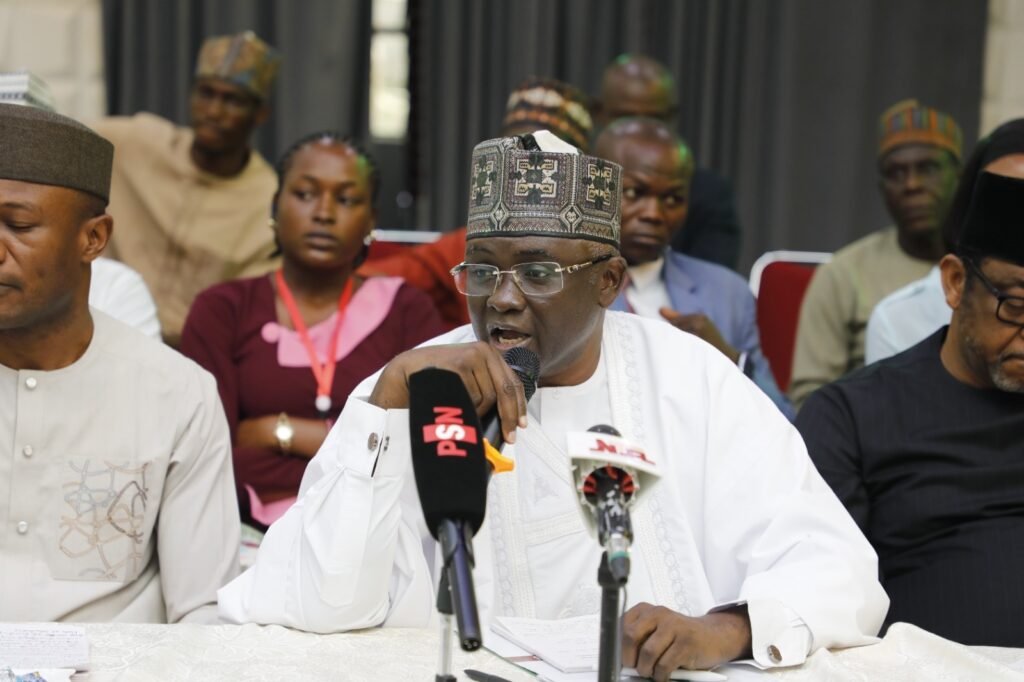
In his keynote address, the Director General of NTAC, Hon. Yusuf Buba Yakub, appreciated Civil Society Organisations for their role in engaging citizens and promoting awareness about government programmes.
He explained that before the establishment of NTAC, Nigeria primarily provided financial assistance to neighbouring African, Caribbean and other developing nations. However, in 1987, Nigerian leaders adopted a new approach by replacing financial donations with technical support that would directly impact communities.
According to him, this led to the establishment of the Nigerian Technical Aid Corps under the Federal Ministry of Foreign Affairs as an instrument of Nigeria’s soft power diplomacy. The programme later received legislative backing through the National Assembly Act in 1993.
The NTAC Director General stated that for 38 years, the scheme has strengthened South-South cooperation by deploying more than 10,000 Nigerian professionals to over 40 countries, including nations in Africa, the Caribbean and the Pacific regions.
He explained that the deployment process involves public advertisement, application screening, professional assessment, medical evaluation, immigration clearance and selection based on the specific needs of recipient countries.
Hon. Yakub noted that selected volunteers, including doctors, nurses, lecturers, engineers and other professionals, serve as representatives of Nigeria while contributing their expertise to communities abroad.
He added that many volunteers hold advanced academic qualifications, including master’s degrees and doctorates, and have contributed significantly to education, healthcare, governance and community development in host countries.
Global Impact of Nigerian Volunteers
The NTAC Director General highlighted several achievements recorded through the programme, including the establishment of a hospital in Liberia built by a Nigerian volunteer, which has become known as the Nigerian Hospital in the country.
He also disclosed that Nigerian volunteers have contributed to institutional development in countries such as Sierra Leone, where a medical nursing curriculum developed by a Nigerian expert was adopted, and another volunteer authored a legislative handbook adopted for national use.
In Jamaica, he cited the example of a Nigerian volunteer who promoted the country’s Adire textile heritage, eventually establishing a textile business after completing his service.
He further revealed that Nigerian volunteers have attained significant positions abroad, including appointments as university leaders and government officials, citing the appointment of Nigerian academics as vice chancellors and deputy vice chancellors in Gambian institutions.
NTAC Revival and Expansion of Volunteer Deployment
Yakub recalled that NTAC experienced operational challenges in 2023 due to foreign exchange pressures, which reduced volunteer deployment to fewer than 100 participants.
He, however, commended President Bola Ahmed Tinubu’s foreign policy initiatives, noting that renewed government support and improved funding have strengthened the programme.
According to him, volunteer deployment has increased from about 100 participants in 2023 to approximately 400 annually in 2026, with Nigerian professionals now serving in countries including The Gambia, Jamaica, Sierra Leone and Guinea-Bissau.
He explained that some recipient countries now sponsor the deployment of Nigerian experts, a development he described as a reflection of the growing demand for Nigerian skills and expertise internationally.
The NTAC boss also identified unemployment as one of Nigeria’s major challenges, noting that the expansion of legitimate international volunteer opportunities could provide young Nigerians with alternatives to irregular migration.
He said the programme promotes professional development, cultural exchange and knowledge transfer, allowing volunteers to return with improved skills and experiences that contribute to national growth.
CSOs as Strategic Partners for NTAC’s Sustainability
In his closing remarks, Yakub charged Civil Society Organisations to support NTAC by creating public awareness about the impact of the scheme and ensuring citizens understand its contributions to national development.
He described CSOs as essential partners in achieving NTAC’s objectives, adding that they also serve as accountability partners responsible for providing constructive oversight.
He urged stronger collaboration between NTAC and civil society groups to expand the reach of the programme, promote transparency and ensure sustainable impact.
The Director General also announced that applications for new volunteers had reopened, noting that the last recruitment exercise was conducted in 2024.
The engagement ended with a renewed commitment by stakeholders to strengthen partnerships between government agencies and civil society organizations in advancing accountable governance and projecting Nigeria’s expertise on the global stage.