
As Nigeria enters the Ember Months—a period traditionally defined by heightened travel, festive gatherings, and the lively tempo of Christmas and New Year celebrations, the nation’s highways are once again bracing for a surge in movement. Millions of Nigerians will take to the road to reunite with family, attend social engagements, or return to their hometowns for the holidays.
Yet, alongside the seasonal anticipation comes a familiar and troubling reality: the annual spike in road traffic crashes that too often turns a season of joy into one of heartbreak.
The pattern is longstanding. Year after year, the Ember Months record increased road accidents, injuries, and fatalities. The reasons are not mysterious. Heavy travel volume combines with the pressure many drivers face to complete multiple trips before year-end. Between January and September 2025 alone, more than 3,400 Nigerians lost their lives to road crashes, while over 22,000 others sustained varying degrees of injuries.
These tragedies are driven not only by poor road conditions but, more critically, by avoidable human factors including overspeeding, distracted driving, fatigue, reckless overtaking, driving under the influence, overloading, and poor vehicle maintenance. It is against this sobering backdrop that the Federal Road Safety Corps (FRSC) has launched its 2025 nationwide Ember Months Campaign with a resonant theme: “Take Responsibility for Your Safety—Stop Distracted Driving.”
The campaign, held annually, is FRSC’s most intensive road safety advocacy period, aimed at curbing crashes and saving lives during the high-travel season.
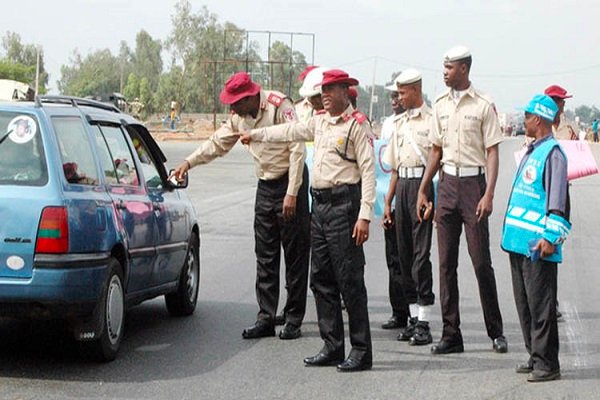
Across states including Kebbi, Lagos, Ogun, Ondo, and Imo etc., the Corps has deployed an array of proactive measures ahead of the festive peak. These include massive personnel deployment for enhanced corridor patrols, rigorous vehicle safety checks, strict enforcement of loading regulations, speed monitoring, and screening for drunk driving. The objective is to boost compliance, mitigate hazards, and deter risky behaviours on the highways.
Public enlightenment remains a central pillar of the campaign. FRSC teams have been engaging transport unions, drivers, passengers, and community leaders through motor-park rallies, sensitisation caravans, radio programmes, market outreaches, and town hall meetings. Their messages are direct: obey speed limits, avoid night journeys, use seatbelts, refrain from reckless driving, and stop the dangerous culture of fuel scooping at accident scenes.
The Corps Marshal, Mohammed Shehu, has repeatedly underscored the need for passengers to abandon passivity and become active defenders of their own safety. By encouraging commuters to speak up when drivers act irresponsibly, the Corps hopes to tackle one of the most stubborn causes of Ember Month carnage.
A significant innovation introduced ahead of the Yuletide season is the rollout of a contactless, biometric driver’s licence issuance system. FRSC believes this will reduce delays, curb the proliferation of fake licences, and ensure that only trained, verified drivers are entrusted with vehicles on Nigerian roads.
Despite these commendable efforts, the road to safety remains fraught with challenges. Overloading persists, driven by the desire to maximize profit during the festive rush. Many Nigerians still embark on late-night journeys on poorly lit roads with inadequate signage. Weak enforcement, poor road infrastructure, limited emergency response capacity, and a longstanding culture of non-compliance continue to undermine progress.
Without the full cooperation of drivers, fleet operators, state governments, and road users, even the most ambitious safety campaign will struggle to achieve its intended impact.
Still, the 2025 Ember Months Campaign presents a critical opportunity for Nigeria to rethink and reset the culture of road use during the festive period. Drivers must embrace discipline, conduct routine vehicle checks, avoid intoxication, and resist the pressure to speed. Passengers must demand safe behavior from drivers and report violations when necessary.
Transport unions must reinforce safety education among members. Governments must upgrade roads, expand rest areas, install adequate lighting, and strengthen emergency medical response systems. Meanwhile, the media, civil society, and faith-based organisations must amplify FRSC’s messages and sustain road safety conversations beyond the festive season.
The Ember Months do not have to be synonymous with tragedy. With FRSC’s strategic measures and the collective commitment of Nigerians, the season can be safer. Road safety is not the responsibility of the Corps alone; it is a shared civic duty.
If drivers act responsibly, passengers speak out, authorities enforce laws consistently, and communities support ongoing advocacy, Nigeria’s highways in December can become paths of celebration, not corridors of grief.
As the festivities draw near, every journey should be one that reunites families, not one that ends in needless sorrow.
FRSC And Ember Months: Why Nigerians Must Choose Safety Over Speed